









































































































































































































































































































FAQs

Video
Rs. 40,000 - Rs. 55 lakh
You may be eligible for a pre-approved offer
Enter mobile and OTP | Check offer | No branch visit needed
In summary
A 626 CIBIL Score can affect your chances of getting personal loans, credit cards, and other credit products, as lenders may see it as a low to average score. It reflects limited or inconsistent credit behaviour, so approval may come with stricter conditions.
To improve your score, you should:
- Pay all EMIs and bills on time
- Avoid using your full credit card limit
- Limit multiple loan or credit applications
- Check your credit report regularly and correct errors
With consistent discipline, your CIBIL Score can gradually improve over time.
Is a 626 CIBIL Score considered good?
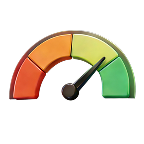
A 626 CIBIL Score is considered a low to average score. It shows limited credit strength and suggests that repayment history may not be very strong or well established. At this level, lenders may see higher risk.
Loan approval is still possible, but it may come with stricter conditions. You may get lower loan amounts, higher interest rates, or additional checks depending on your income, job stability, and existing EMIs.
Improving your CIBIL Score can help you access better loan offers and easier approvals in the future.
What factors do lenders evaluate apart from the CIBIL Score?
Lenders look beyond the CIBIL Score to understand a borrower’s overall financial health and repayment ability before approving a loan.
Key factors include:
- Monthly income and stability – Regular income helps assess repayment capacity
- Job or business stability – Steady employment or business history is preferred
- Existing EMIs and debt – Higher obligations may reduce eligibility
- Debt-to-income ratio – Lower ratio improves approval chances
- Credit history details – Past repayment behaviour, delays, or defaults are reviewed
- Recent credit enquiries – Multiple applications in a short time may signal risk
- Bank account activity – Income flow, savings, and spending patterns are checked
- Loan amount and tenure – Higher requests need stronger financial profiles
- Age and work experience – Stable earning years support approval
- Overall financial stability – Complete financial behaviour is assessed before decision-making
How does a 626 CIBIL Score affect personal loan approval?
A 626 CIBIL Score can negatively affect personal loan approval chances because it falls in the low to average range. It suggests limited credit strength and may indicate inconsistent repayment behaviour in the past.
With this score, loan approval is still possible, but lenders may apply stricter conditions. You may receive a lower loan amount, higher interest rate, or additional documentation requirements depending on your income, job stability, and existing EMIs.
Improving your CIBIL Score can help increase approval chances and access better loan offers in the future.
Does a 626 CIBIL Score impact interest rates?
A 626 CIBIL Score can impact interest rates because it falls in the low to average credit range. It indicates moderate credit behaviour, which may be seen as higher risk by lenders.
With this score, you are more likely to receive higher interest rates compared to borrowers with good or excellent scores. Lenders may also offer fewer benefits or stricter loan terms depending on your income, job stability, and existing EMIs.
Improving your CIBIL Score over time can help you qualify for lower interest rates and better loan offers.
CIBIL Score ranges explained
A CIBIL Score ranges from 300 to 900. It shows how well a person manages credit and repayments. A higher score reflects better financial discipline and lower credit risk.
| CIBIL Score Range | Rating | Meaning |
|---|---|---|
| 300 – 549 | Poor | Very high risk. Loan approval is difficult. |
| 550 – 649 | Average | Limited credit strength. Strict loan terms may apply. |
| 650 – 749 | Good | Stable repayment behaviour. Better approval chances. |
| 750 – 799 | Very Good | Strong credit profile. Better loan offers possible. |
| 800 – 900 | Excellent | Excellent credit discipline. Highest chances of approval. |
A higher CIBIL Score improves loan approval chances, interest rates, and credit limits.
How to improve CIBIL Score
Improving a CIBIL Score takes time and consistent financial discipline. Small changes in credit behaviour can make a strong difference.
- Pay all EMIs and credit card bills on time
- Keep credit utilisation below 30 percent
- Avoid multiple loan or credit card applications
- Clear overdue or pending dues quickly
- Maintain a healthy mix of secured and unsecured credit
- Do not close old credit accounts without reason
- Check credit report regularly for errors
- Reduce unnecessary debt and borrowing
With regular discipline, your CIBIL Score can gradually improve and help you get better loan approvals and lower interest rates.
Related Links:
| 550 Cibil Score | 600 Cibil Score |
| 627 Cibil Score | 655 Cibil Score |
| 689 Cibil Score | 722 Cibil Score |
Key offerings: 3 loan types
Personal loan interest rate and applicable charges
Type of fee | Applicable charges |
Rate of interest per annum | 10% to 30.5% p.a. |
Processing fees | Up to 4.13% of the loan amount (inclusive of applicable taxes). |
Flexi Facility Charge | Term Loan – Not applicable Flexi Loans –Up To Rs 1,999 To Up To Rs 18,999/- (Inclusive Of Applicable Taxes) |
Bounce charges | Rs. 700 to Rs. 1,200/- per bounce “Bounce charges” shall mean charges for (i) dishonor of any payment instrument; or (ii) non-payment of instalment (s) on their respective due dates due to dishonor of payment mandate or non-registration of the payment mandate or any other reason. |
Part-prepayment charges | Full Pre-payment:
Part Pre-payment
|
Penal charge | Delay in payment of instalment(s) shall attract Penal Charge at the rate of up to 36% per annum per instalment from the respective due date until the date of receipt of the full instalment(s) amount. |
Stamp duty (as per respective state) | Payable as per state laws and deducted upfront from loan amount. |
Annual maintenance charges | Term Loan: Not applicable Flexi Term (Dropline) Loan: Up to 0.295% (Inclusive of applicable taxes) of the Dropline limit (as per the repayment schedule) on the date of levy of such charges.
Up to 0.472% (Inclusive Of Applicable Taxes) Of The Dropline Limit During Initial Tenure. Up to 0.295% (Inclusive Of Applicable Taxes) Of Dropline Limit During Subsequent Tenure |
| Credit guarantee scheme fee | Up to 1.18% p.a. (pro-rated daily till 31st March) (inclusive of all applicable taxes) of the loan amount |
| Credit guarantee scheme renewal fee | Up to 1.18% p.a. (inclusive of all applicable taxes) on the outstanding loan amount as on April 01 of the subsequent Financial Year. *Renewal Fee to be collected only for 3 subsequent financial years. **If the Remaining Tenure is less than 12 months, the CG Fee in subsequent years shall be charged prorated. |
Not your nearest branch?

Frequently asked questions
Overview
A 626 CIBIL score is considered fair, not ideal. It may limit access to premium credit options, but improvement is possible with responsible credit habits. Check your eligibility for personal loan using just mobile number and OTP – 100% online process.
A 626 credit score is not bad but below average. It indicates some credit challenges that may need to be addressed to secure better financial opportunities.
Related articles




Disclaimer
Bajaj Finance Limited has the sole and absolute discretion, without assigning any reason to accept or reject any application. Terms and conditions apply*.
For customer support, call Personal Loan IVR: 7757 000 000