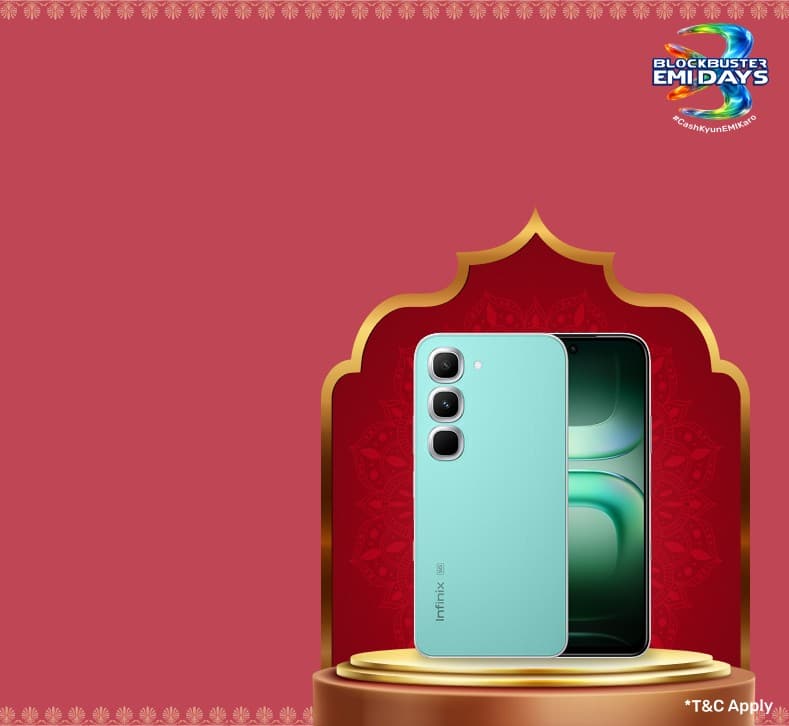
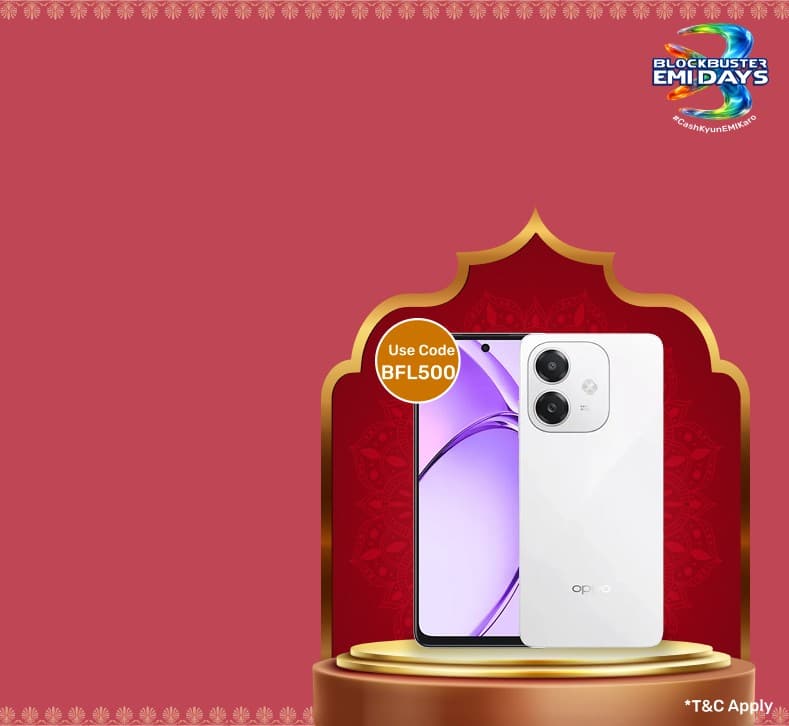
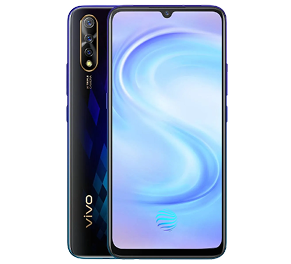
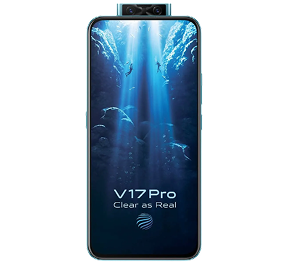
These two phones occupy very different price brackets — yet they share a few surface-level similarities that make the comparison worth examining. The detailed breakdown below covers every specification category that affects real-world use.
How do they compare in general specifications?
Both phones run Android 15 and support dual-SIM 5G, but differ significantly in software update commitments and form factor.
| Component | vivo X200 | realme 14 Pro+ 5G | What this means |
|---|
| Model | vivo X200 | realme 14 Pro+ 5G | — |
| Manufacturer | vivo | realme | — |
| SIM | 2 Nano SIMs; Nano SIM + eSIM (max 2 active) | Dual Nano SIM; Nano SIM + Nano SIM + eSIM (max 2 active) | Both support eSIM, useful for travel or dual-number setups without a physical second SIM |
| Network | 5G, 4G, 3G, 2G | 5G, 4G | vivo supports 3G/2G fallback in low-coverage areas |
| Dimensions | 160.27 × 74.81 × 7.99 mm | 163.5 × 77.3 × 8.0 mm | realme is taller and wider; vivo is easier to hold one-handed |
| Weight | 197–202 g | 194 g | Both are comparable; the realme is marginally lighter |
| Operating system | Android 15 | Android 15 | Same base OS at launch |
| Custom UI | Funtouch OS 15 | realme UI 6.0 | Different software experiences; Funtouch is generally cleaner |
| OS updates | 4 years | 3 years | vivo offers one additional year of Android version upgrades |
| Security updates | 5 years | 4 years | vivo commits to longer security support — matters for long-term use |
| Launch date | 12 December 2024 | 16 January 2025 | Both are recent devices |
| Warranty | 1 year | 1 year | Standard industry warranty |
-> Keep in mind: If you plan to keep your phone for 4+ years, vivo's longer update commitment is a practical advantage — your device stays secure and compatible with newer apps for longer.
How do the displays compare?
The vivo X200 has a significantly brighter panel at 4,500 nits versus the realme's 1,500 nits, which makes a real difference outdoors. The realme has a larger screen and higher PWM dimming rate, which is better for those sensitive to screen flicker.
| Component | vivo X200 | realme 14 Pro+ 5G | What this means |
|---|
| Screen size | 6.67-inch | 6.83-inch | realme gives more screen real estate for media and reading |
| Display type | AMOLED | OLED curved | Both are vibrant; the realme has a curved edge |
| Screen resolution | 2800 × 1260 pixels | 2800 × 1272 pixels | Virtually identical sharpness |
| Aspect ratio | 20:9 | 19.8:9 | Both are tall, widescreen formats |
| Pixel density | 460 ppi | 450 ppi | Marginal difference; both are sharp at normal viewing distance |
| Refresh rate | 120 Hz | 120 Hz | Identical smooth scrolling on both |
| Touch sampling rate | Not specified | 240 Hz | Higher touch sampling on the realme makes touch input feel more responsive, especially in gaming |
| Peak brightness | 4,500 nits | 1,500 nits | vivo is dramatically brighter; the difference is visible in direct sunlight |
| PWM dimming | 2,160 Hz | 3,840 Hz | Higher PWM on the realme is easier on the eyes during low-brightness, prolonged use |
| Screen protection | Not specified | Corning Gorilla Glass 7i | realme has confirmed drop and scratch resistance |
| Screen-to-body ratio | Not specified | 93.8% | realme has slimmer bezels |
| Water resistance | IP68 and IP69 | IP66, IP68, and IP69 | Both survive submersion; the realme adds IP66 (jet water) certification |
| Dust resistance | Yes | Yes | Both are dust-tight |
-> Pro tip: If you often use your phone outdoors or in bright sunlight, the vivo X200's 4,500 nits panel offers a noticeably clearer view. For indoor and night-time users who value eye comfort, the realme's 3,840 Hz PWM dimming is the better choice.
How do they compare in performance?
This is where the two phones diverge most sharply. The vivo X200's Dimensity 9400 is a flagship-class chip from 2024; the realme's Snapdragon 7s Gen 3 is a mid-range processor. The AnTuTu gap — over 2.5 million vs under 800,000 — reflects a fundamentally different performance tier.
| Component | vivo X200 | realme 14 Pro+ 5G | What this means |
|---|
| Processor | MediaTek Dimensity 9400 | Qualcomm Snapdragon 7s Gen 3 | vivo uses a flagship chip; realme uses a mid-range chip |
| CPU | Octa-core | Octa-core | Both are 8-core designs |
| CPU architecture | 64-bit | 64-bit | — |
| CPU core configuration | 1× Cortex-X925 + 3× Cortex-X4 + 4× Cortex-A720 | 1× Cortex-A720 + 3× Cortex-A720 + 4× Cortex-A520 | vivo uses more powerful core types across all clusters |
| CPU clock speed | Up to 3.626 GHz | Up to 2.5 GHz | vivo's peak speed is over 1 GHz faster |
| Fabrication | 3 nm | 4 nm | Smaller process = better energy efficiency on vivo |
| Graphics | Immortalis-G925 | Adreno 710 | vivo's GPU is significantly more powerful for gaming and video |
| RAM | 12 GB / 16 GB | 8 GB / 12 GB | vivo offers more RAM at base configuration |
| RAM type | LPDDR5X | LPDDR4X | vivo's RAM is faster; benefits app-switching and multitasking |
| Cooling | Vapour chamber | Vapour chamber | Both manage heat during sustained use |
| AnTuTu score | 2,537,181 | 796,785 | vivo is in a different performance class entirely |
| Fingerprint sensor | In-display optical | On-screen optical | Both are convenient; minimal practical difference |
| Audio | Stereo speakers | Stereo speakers | Both support dual-speaker audio |
-> *Pro tip: The AnTuTu gap here is not just a number — it translates to noticeably faster app loading, smoother gaming at higher settings, and better performance under sustained load. The realme handles everyday tasks well, but demanding games and video editing will show its limits.
How do the cameras compare?
Both phones share the same telephoto sensor (Sony IMX882) and have 32MP front cameras, but the vivo's main sensor is larger and faster, and its ultra-wide is a full 50MP versus the realme's 8MP. The realme supports higher digital zoom (120x vs 100x), but the physical optics on the vivo are stronger.
| Component | vivo X200 | realme 14 Pro+ 5G | What this means |
|---|
| Rear camera setup | 50MP + 50MP + 50MP | 50MP + 8MP + 50MP | vivo's 50MP ultra-wide captures significantly more detail |
| Primary camera | 50MP Sony IMX921, f/1.57, OIS | 50MP Sony IMX896, f/1.8, OIS | vivo has a wider aperture and larger sensor; better in low light |
| Ultra-wide camera | 50MP, f/2.0, 119° | 8MP, f/2.2, 112° | vivo's ultra-wide is dramatically sharper — useful for landscapes, architecture, and group photos |
| Telephoto camera | 50MP Sony IMX882, f/2.57, OIS | 50MP Sony IMX882, f/2.65, OIS | Identical sensor; vivo has a slightly wider aperture |
| Optical zoom | Up to 3x | Up to 3x | Same zoom reach on both |
| Digital zoom | Up to 100x | Up to 120x | realme goes further digitally, though quality at extreme zoom degrades on both |
| Autofocus | AF | Phase Detection Autofocus (PDAF) | PDAF on the realme locks focus faster in dynamic scenes |
| OIS | Yes | Yes | Both have optical image stabilisation for steady shots and video |
| Flash | LED | Triple LED | realme has a triple-LED flash for better-lit close-up shots |
| Front camera | 32MP, f/2.0 | 32MP, f/2.0 | Identical selfie hardware |
| Rear video | Up to 4K@60 fps | Up to 4K@30 fps | vivo records smoother 4K video at 60 fps vs realme's 30 fps cap |
| Front video | Up to 4K@60 fps | Up to 4K@60 fps | Both shoot 4K@60 fps from the front camera |
-> *Pro tip: If photography is a primary consideration, the vivo X200's 50MP ultra-wide is a meaningful differentiator. A downgraded ultra-wide on a phone marketed for cameras is one of the realme 14 Pro+'s clear weak points.
How do storage and connectivity compare?
The vivo X200 uses faster UFS 4.0 storage and supports Wi-Fi 7, NFC, and an IR blaster — all absent on the realme. The realme offers a third storage tier (512 GB) at a lower price.
| Component | vivo X200 | realme 14 Pro+ 5G | What this means |
|---|
| Storage | 256 GB / 512 GB | 128 GB / 256 GB / 512 GB | realme starts at 128 GB; vivo starts at 256 GB |
| Storage type | UFS 4.0 | UFS 3.1 | vivo reads and writes data significantly faster — quicker app installs, file transfers, and camera saves |
| Expandable storage | No | No | Neither supports microSD |
| Network support | 5G, 4G, 3G, 2G | 5G, 4G | vivo supports 3G/2G fallback |
| VoLTE | Yes | Yes | HD voice calls on both |
| Wi-Fi | Wi-Fi 6 / Wi-Fi 7 | Wi-Fi 6E | vivo supports Wi-Fi 7 for faster speeds on compatible routers |
| Bluetooth | 5.4 | 5.2 | vivo's newer Bluetooth version supports more efficient audio connections |
| NFC | Yes | No | vivo supports tap-to-pay and quick device pairing; realme does not |
| GPS | GPS, BeiDou, GLONASS, Galileo, QZSS, NavIC, A-GPS | A-GPS, GLONASS | vivo's NavIC support improves location accuracy in India |
| IR blaster | Yes | No | vivo can control TVs, ACs, and set-top boxes |
| USB | USB Type-C, USB 2.0 | USB Type-C | Both use Type-C; vivo's USB 2.0 standard limits wired data transfer speeds |
| Audio port | USB Type-C | USB Type-C | No 3.5mm jack on either |
-> *Pro tip: If you use your phone for UPI payments or contactless transactions, NFC on the vivo X200 is a practical daily-use advantage. The realme 14 Pro+'s lack of NFC is a notable omission at its price point.
How do the battery and charging compare?
The realme has a slightly larger battery and shows better real-world endurance in standardised tests (16h 10m vs 13h 52m on PCMark). The vivo charges faster at 90W, meaning it recovers more quickly despite the smaller capacity. Battery chemistry is different: the vivo uses a semi-solid-state silicon anode cell, the realme a Silicon Carbon cell — both are newer-generation technologies that improve capacity-to-size ratios over conventional lithium-ion.
| Component | vivo X200 | realme 14 Pro+ 5G | What this means |
|---|
| Battery capacity | 5,800 mAh | 6,000 mAh | realme holds slightly more charge |
| Battery type | Semi-solid state, 3rd-generation silicon anode | Silicon Carbon | Both use advanced battery chemistry for better longevity and energy density |
| Quick charging | 90W FlashCharge | 80W SUPERVOOC | vivo charges faster by 10W — a meaningful difference during quick top-ups |
| Wireless charging | No | No | Neither supports wireless charging |
| Reverse charging | Not specified | Not specified | — |
| Battery life (PCMark) | 13h 52m | 16h 10m | realme delivers over 2 hours more in standardised use — significant for heavy users |
-> *Pro tip: The realme 14 Pro+'s battery life advantage is real and consistent across benchmarks. If you travel frequently, go long stretches without a charger, or simply forget to charge at night, the realme's endurance is a meaningful practical win.