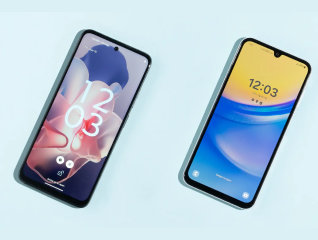
The differences between these processors affect overall smartphone performance, efficiency, and everyday usability. Snapdragon 6 Gen 1 features a newer architecture with faster memory support, improved AI processing, and advanced connectivity. Snapdragon 6s Gen 3 delivers reliable day-to-day performance with 5G support, making it a suitable choice for routine tasks, multimedia, and everyday multitasking.
CPU and architecture
The CPU configuration plays a major role in multitasking, gaming, and overall application performance.
| CPU specification | Snapdragon 6 Gen 1 | Snapdragon 6s Gen 3 |
|---|
| Architecture | Cortex-A78 + Cortex-A55 | Cortex-A78 + Cortex-A55 |
| Prime cores | 4 × Cortex-A78 @ 2.2GHz | 2 × Cortex-A78 @ 2.3GHz |
| Efficiency cores | 4 × Cortex-A55 @ 1.8GHz | 6 × Cortex-A55 @ 2.0GHz |
| Process node | 4 nm | 6 nm |
Snapdragon 6 Gen 1 features four Cortex-A78 performance cores, delivering stronger multitasking and better performance in gaming and demanding applications. Snapdragon 6s Gen 3 includes two Cortex-A78 cores and relies more on efficiency cores for balanced everyday performance.
Graphics and gaming
Gaming performance depends on GPU capability, graphics optimisation, and memory bandwidth.
| Graphics specification | Snapdragon 6 Gen 1 | Snapdragon 6s Gen 3 |
|---|
| GPU | Qualcomm Adreno GPU | Qualcomm Adreno GPU |
| Gaming capability | Higher | Moderate |
| Graphics efficiency | Better | Good |
Snapdragon 6 Gen 1 offers stronger graphics performance and smoother gameplay in supported titles, while Snapdragon 6s Gen 3 delivers reliable graphics performance for everyday gaming and multimedia use.
Memory and storage
Memory and storage support affect multitasking, app loading speeds, and overall smartphone responsiveness.
| Feature | Snapdragon 6 Gen 1 | Snapdragon 6s Gen 3 |
|---|
| RAM support | LPDDR5, LPDDR4X | LPDDR4X |
| Memory support | Higher memory bandwidth | Lower memory bandwidth |
| Storage support | UFS 3.1 | UFS 2.2 |
Support for LPDDR5 memory and UFS 3.1 storage gives Snapdragon 6 Gen 1 an advantage in app loading, multitasking, and file transfer speeds over Snapdragon 6s Gen 3.
Connectivity and camera
Connectivity and camera capabilities determine wireless performance, network speeds, and imaging potential.
| Feature | Snapdragon 6 Gen 1 | Snapdragon 6s Gen 3 |
|---|
| 5G support | Yes | Yes |
| Wi-Fi support | Wi-Fi 6E | Wi-Fi 5 |
| Camera support | Up to 200MP | Up to 108MP |
Snapdragon 6 Gen 1 supports newer Wi-Fi standards and cameras up to 200MP, making it suitable for feature-rich smartphones. Snapdragon 6s Gen 3 offers dependable 5G connectivity and supports cameras up to 108MP for everyday photography.
AI and multimedia
AI capabilities improve photography, voice recognition, background processing, and smart camera features. Multimedia support also affects video playback and content creation, making this comparison useful for everyday smartphone users.
| Feature | Snapdragon 6 Gen 1 | Snapdragon 6s Gen 3 |
|---|
| AI engine | 7th Gen Qualcomm AI Engine | Qualcomm AI Engine |
| Image signal processor | Qualcomm Spectra Triple ISP | Qualcomm Spectra ISP |
| Maximum camera support | Up to 200MP | Up to 108MP |
| Video capture | Up to 4K HDR | Up to 1080p |
| HDR support | HDR10+ | HDR |
Snapdragon 6 Gen 1 offers a newer AI engine and more advanced imaging capabilities, making it better suited for computational photography and high-resolution video recording. Snapdragon 6s Gen 3 focuses on delivering reliable multimedia performance for everyday use.
Power efficiency
Power efficiency determines how effectively a processor balances performance with battery consumption. A more efficient fabrication process can help reduce heat generation and extend battery life during everyday use.
| Feature | Snapdragon 6 Gen 1 | Snapdragon 6s Gen 3 |
|---|
| Manufacturing process | 4 nm | 6 nm |
| CPU efficiency | Higher | Good |
| Thermal efficiency | Better | Good |
| Overall power efficiency | Higher | Moderate |
The 4 nm manufacturing process gives Snapdragon 6 Gen 1 an advantage in power efficiency, helping compatible smartphones deliver better battery life and lower heat output than devices powered by Snapdragon 6s Gen 3.