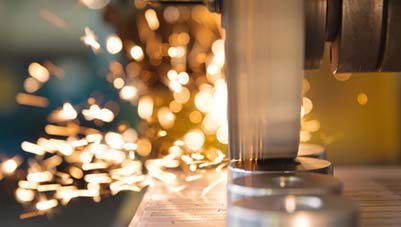
A screen printing machine is a specialised device used to transfer ink onto various surfaces, including fabrics, glass, plastic, metal, and ceramics, through a mesh screen and stencil technique. It is widely used across industries such as textiles, packaging, electronics, and promotional products. Screen printing machines are available in manual, semi-automatic, and fully automatic configurations, with prices in India ranging from Rs. 25,000 to Rs. 30,00,000, depending on the type and capacity.
Screen printing machines are essential for businesses and industries that require precise, high-quality printing on a variety of materials. They enable the consistent reproduction of designs, logos, and text on items such as textiles, glass, plastics, metals, and promotional products. By utilising these machines, manufacturers can enhance production efficiency, minimise wastage, and maintain uniform quality, making them a valuable investment for growing businesses.
What is a screen printing machine?
A screen printing machine is a device used to transfer ink onto a surface through a mesh screen. A stencil is applied to block specific areas, allowing ink to pass only through the desired pattern. Key points include:
- Used for printing on fabrics, ceramics, glass, plastic, and metal.
- Available in manual, semi-automatic, and fully automatic models, depending on production requirements.
- Produces high-quality, durable designs suitable for both small-scale and industrial production.
- Ensures consistency across large batches, thereby reducing errors and material wastage.
Key components of a screen printing machine
- Mesh screen:
A fine woven fabric, typically made of polyester or stainless steel, stretched over a frame to form the printing screen. The mesh count (threads per inch) determines the level of print detail. - Stencil/Emulsion:
A light-sensitive chemical coating applied to the screen, which hardens to create the design template, blocking ink in areas where printing is not required. - Squeegee:
A rubber-bladed tool used to push ink across the mesh screen, forcing it through the खुले areas onto the substrate beneath. - Ink:
Screen printing uses specialised inks such as plastisol ink (most commonly used for textiles), water-based ink, UV-curable ink, and discharge ink, depending on the substrate and application. - Printing bed/platen:
A flat surface on which the substrate (such as fabric or paper) is placed and held in position during the printing process. - Drying/Curing unit:
A heat tunnel or UV lamp used to cure the ink after printing, which ensures durability and improves resistance to washing and wear.
How does a screen printing machine work?
The screen printing process involves several stages:
- Step 1 – Design preparation:
A stencil or screen is created for the required pattern. The design is printed onto a transparent film and transferred onto a mesh screen coated with a light-sensitive emulsion. The screen is then exposed to ultraviolet (UV) light, which hardens the emulsion everywhere except in the design area. This area is washed out to create the open stencil for printing. - Step 2 – Screen setup:
The prepared screen is mounted onto the printing machine frame above the substrate, such as fabric, paper, glass, or other materials. Registration marks are used to ensure precise alignment, which is particularly important for multi-colour printing, where each colour requires a separate screen. - Step 3 – Applying ink:
The appropriate ink is placed onto the screen. Common types include plastisol ink (widely used for textiles due to its durability and vibrant colours), water-based ink (environmentally friendly with a softer finish), UV-curable ink (used for non-textile surfaces), and discharge ink (used to remove fabric dye and create a print). - Step 4 – Pressing the ink (squeegee stroke):
A squeegee is used to push ink through the open areas of the mesh onto the surface below. The pressure, angle, and speed of the squeegee stroke directly influence print quality and the thickness of the ink deposit. - Step 5 – Drying or curing:
The printed items are dried by heating, typically at temperatures between 160°C and 180°C in a heat tunnel, or by exposure to UV light, to fix the ink and ensure durability. For plastisol inks on textiles, proper curing is essential to achieve wash resistance. - Step 6 – Repetition and quality control:
The process is repeated to produce multiple copies efficiently. Automatic machines are capable of producing approximately 500 to 2,000 prints per hour. Regular quality checks are carried out to ensure colour consistency and accurate registration throughout the batch.
This method allows for precise, vibrant prints on a wide range of materials.
Types of screen printing machines
Screen printing machines are classified based on the level of automation and their intended application:
- Manual machines:
Low-cost machines suitable for small-scale operations. They require skilled operators to manage the printing process. - Semi-automatic machines:
Partly automated systems that offer faster production while still requiring some operator involvement. - Automatic machines:
Fully automated machines designed for high-volume industrial printing with minimal labour input. - Rotary screen printing machines:
Used for continuous printing on fabrics or cylindrical objects such as bottles and tubes.
Comparison of screen printing machine types
| Machine type | Best suited for | Print speed | Price range (India) | Key advantage |
|---|---|---|---|---|
| Manual flatbed | Start-ups, hobby use, small-batch T-shirt printing | 50–200 prints per hour (operator-dependent) | Rs. 25,000 – Rs. 1,50,000 | Lowest cost of entry, minimal investment |
| Semi-automatic | Growing businesses, medium-volume production | 200–500 prints per hour | Rs. 1,50,000 – Rs. 5,00,000 | Balanced speed and cost, suitable for scaling |
| Fully automatic | Large garment factories, industrial printing | 500–2,000+ prints per hour | Rs. 5,00,000 – Rs. 25,00,000 | High throughput with consistent quality |
| Rotary screen printing | Continuous fabric printing (such as sarees, fabric rolls) | Up to 5,000 metres per hour | Rs. 10,00,000 – Rs. 30,00,000 | Ideal for continuous yardage fabric printing |
| Cylindrical/Pad printing | Bottles, tubes, pens, and promotional items | Varies depending on substrate | Rs. 50,000 – Rs. 5,00,000 | Suitable for curved and irregular surfaces |
| Multi-colour/Carousel | Multi-colour garment printing (4, 6, 8 colours) | 300–800 prints per hour | Rs. 3,00,000 – Rs. 15,00,000 | Enables accurate multi-colour registration in one cycle |
Benefits of using a screen printing machine
- Consistent quality:
Ensures sharp, vibrant, and durable prints throughout the entire production run, with minimal colour variation between the first and last items in a batch. - Versatility:
Capable of printing on a wide range of surfaces, shapes, and sizes, including fabrics, glass, plastics, metals, ceramics, and paper, using the appropriate type of ink. - Cost efficiency:
Reduces labour and material wastage, particularly in bulk production. Screen printing offers a low cost per unit at high volumes, making it more economical than digital printing for orders above 50 to 100 units. - Customisation:
Ideal for producing personalised designs or limited-edition items. It supports spot colours as well as special effects such as metallic, glitter, puff inks, and other specialty finishes. - Long-lasting results:
Produces prints that can withstand repeated washing, exposure to sunlight, and regular handling. Properly cured plastisol prints on garments can last for the lifetime of the fabric. - High ink opacity:
Delivers thick, opaque ink layers that produce vibrant colours even on dark-coloured substrates, which is a significant advantage over digital printing, where opacity can be limited on dark fabrics.
Applications of screen printing machines
Screen printing machines are widely used across various industries for specialised printing requirements:
| Industry/Application | What gets printed | Recommended machine type |
|---|---|---|
| Textile and garments | T-shirts, hoodies, uniforms, sarees, leggings, bags, sportswear | Multi-colour carousel for garments; rotary machines for fabric yardage |
| Packaging | Boxes, bottles, containers, pouches, labels, shrink sleeves | Semi-automatic flatbed or cylindrical printing machine |
| Electronics and printed circuit boards | Printed circuit boards (PCBs), membrane keyboards, solar cells, LED panels | Precision flatbed screen printing machine with fine mesh screens |
| Promotional products | Pens, mugs, caps, tote bags, USB drives, keychains, signage | Pad printing or cylindrical screen printing machine |
| Industrial components | Equipment decals, safety labels, control panel markings, automotive parts | Heavy-duty flatbed or automatic screen printing machine |
| Ceramics and glass | Tiles, glassware, tableware, decorative items, trophy plates | UV-curable screen printing machine |
| Advertising and signage | Banners, hoardings, point-of-sale displays, outdoor signage, vehicle wraps | Large-format flatbed screen printing machine |
Price range of screen printing machines in India
The price of screen printing machines varies depending on the type, size, and features:
- Manual machines: Rs. 25,000 to Rs. 1,50,000
- Semi-automatic machines: Rs. 1,50,000 to Rs. 5,00,000
- Automatic machines: Rs. 5,00,000 to Rs. 25,00,000
- Rotary machines: Rs. 10,00,000 to Rs. 30,00,000
Factors such as brand, production capacity, and included features influence the final cost.
Detailed price breakdown by machine type and colour stations
| Machine type | Colour stations | Price range (India, 2026) | Recommended for |
|---|---|---|---|
| Manual flatbed | 1–2 colours | Rs. 25,000 – Rs. 75,000 | Hobby use, start-ups, custom boutique printing |
| Manual flatbed | 4–6 colours | Rs. 75,000 – Rs. 1,50,000 | Small printing shops, custom T-shirt businesses |
| Semi-automatic | 4–6 colours | Rs. 1,50,000 – Rs. 3,50,000 | Growing businesses, medium-volume production |
| Semi-automatic | 6–8 colours | Rs. 3,50,000 – Rs. 5,00,000 | Medium-scale multi-colour garment printing |
| Fully automatic | 6–10 colours | Rs. 5,00,000 – Rs. 15,00,000 | Commercial printing houses, garment factories |
| Fully automatic | 12+ colours | Rs. 15,00,000 – Rs. 25,00,000 | Large-scale industrial garment manufacturers |
| Rotary (Fabric) | Multi-colour, continuous | Rs. 10,00,000 – Rs. 30,00,000 | Textile mills, saree manufacturers, fabric converters |
Note:
Prices may vary depending on brand, import duties, and technical specifications. Goods and Services Tax (GST) is applicable on all machinery purchases. Financing options are available through machinery loans offered by financial institutions.
Key factors affecting screen printing machine price
The price of a screen printing machine is influenced by several factors:
- Level of automation:
Machines range from manual to semi-automatic and fully automatic systems. A fully automatic machine can cost up to ten times more than a manual machine but can deliver 10 to 20 times higher output capacity, significantly improving cost per print at scale. - Production capacity:
Output in terms of prints per hour or batch size has a direct impact on price. Machines with higher capacity, multiple print heads, or carousel stations are typically more expensive. - Material compatibility:
The ability to print on different substrates such as textiles, plastics, metals, or glass affects the cost. Machines designed for specialised applications, such as printed circuit boards (PCB) or cylindrical objects, are more complex and therefore costlier. - Brand and warranty:
Established brands may charge higher prices but generally provide better durability, reliable after-sales service, and easier availability of spare parts in India. Leading brands include M&R (USA), Anatol (USA), RPM Screen Printing Equipment, and Indian manufacturers such as Vastex and Sreema Enterprises. - Additional features:
Features such as multi-colour printing, integrated drying tunnels, digital control panels, automatic registration systems, and ink recirculation systems can significantly increase the overall cost. - Imported versus domestically manufactured machines:
Imported machines, particularly those from the USA, Germany, or China, may attract import duties of 15 to 25 per cent in addition to Goods and Services Tax (GST), thereby increasing the landed cost. Domestically manufactured machines are generally more competitively priced and benefit from stronger local service support.
How to choose a screen printing machine
When selecting a machine, businesses should consider the following criteria:
| Selection criterion | What to evaluate | Recommendation |
|---|---|---|
| Production requirements | Daily or monthly print volume and order size — number of items produced per shift | Less than 200 per day: Manual machine; 200 to 1,000 per day: Semi-automatic machine; 1,000+ per day: Fully automatic machine |
| Surface type | Material (fabric, glass, plastic, metal), shape (flat, cylindrical, irregular), and substrate size | Flat textiles: flatbed machine; Bottles and tubes: cylindrical machine; Continuous fabric: rotary machine |
| Number of colours | Number of colours required in typical designs | 1–2 colours: basic flatbed; 4–8 colours: carousel multi-colour; 10+ colours: automatic machine with registration system |
| Budget | Total cost of ownership, including purchase price, installation, ink, maintenance, and operator training | Allocate an additional 20 to 30 per cent over the machine price for ancillary equipment such as screens, squeegees, dryers, and emulsion |
| Space availability | Physical space required for the machine, drying unit, working area, and ink storage | Manual: minimum 3 × 3 metres; Semi-automatic: 5 × 5 metres; Automatic: 10 × 10 metres or more |
| After-sales service | Availability of spare parts, service engineers, and technical support in your location | Prefer brands with authorised service centres in India and review warranty terms carefully |
| Financing | Whether the machine will be purchased outright or through instalment-based financing | Machinery loans, such as those offered by financial institutions, can provide quick approval and flexible EMI options for screen printing machines |
Screen printing vs digital printing: which is better for your business?
One of the most common questions for businesses entering the printing industry is whether to invest in a screen printing machine or a digital printing setup. The following is a comprehensive comparison:
| Comparison factor | Screen printing machine | Digital printing machine |
|---|---|---|
| Print process | Ink is pushed through a mesh screen using a squeegee; one screen is required for each colour | Inkjet or laser-based direct-to-garment (DTG) or substrate printing |
| Minimum order size | More economical for 50 or more units, due to the setup cost per colour | More economical for 1 to 50 units, as there is no setup cost and it allows print-on-demand |
| Cost per unit (high volume) | Lower, typically Rs. 5 to Rs. 30 per print at scale | Higher, typically Rs. 30 to Rs. 150 or more per print at scale |
| Colour complexity | Best suited for 1 to 8 spot colours; each colour requires a separate screen | Capable of producing unlimited colours, including photographic prints, gradients, and full-colour designs |
| Print durability | Excellent; produces a thick ink layer that is wash-resistant and UV-stable | Good, but generally less durable than screen printing for textiles |
| Setup cost | Rs. 200 to Rs. 800 per screen (including emulsion, mesh, and exposure) | No setup cost; printing is done directly from a digital file |
| Print speed | High; approximately 200 to 2,000 or more units per hour once screens are prepared | Lower; typically 20 to 100 units per hour for DTG printing |
| Substrate range | Very wide; suitable for textiles, glass, metal, plastic, and ceramics | Primarily textiles (DTG) or paper and board (inkjet); limited by ink compatibility |
| Machine price (India) | Rs. 25,000 to Rs. 30,00,000 depending on type | Rs. 2,00,000 to Rs. 20,00,000 for DTG printers |
| Best suited for | Bulk orders, branded uniforms, promotional merchandise, and industrial applications | Custom one-off prints, photographic designs, and small-batch personalisation |
Screen printing machine maintenance tips
Proper maintenance of a screen printing machine extends its service life, ensures consistent print quality, and reduces downtime. The following maintenance practices should be followed:
- Daily cleaning of squeegees and flood bars:
Remove residual ink from squeegees, flood bars, and ink reservoirs after each production run. Dried ink can damage the edges of the squeegee and contaminate subsequent ink colours. - Screen cleaning and reclaiming:
Clean screens thoroughly after each use using an appropriate screen wash (solvent-based or water-based, depending on the ink type). Properly reclaim screens by removing the emulsion with an emulsion remover when changing the design. - Mesh screen inspection:
Inspect mesh screens regularly for holes, tears, or stretched areas that may cause ink bleeding or ghosting. Replace screens when the integrity of the mesh count is compromised. - Print bed and platen maintenance:
Keep the printing platen and print bed clean and free from adhesive residue. Reapply water-based platen adhesive regularly to ensure proper substrate adhesion during printing. - Squeegee blade maintenance:
Check squeegee rubber blades for nicks, cuts, or uneven wear, which can result in streaky prints. Sharpen or replace blades regularly, as they are considered consumable components. - Lubrication of moving parts:
Apply the manufacturer-recommended lubricant to all mechanical joints, slides, and moving parts on semi-automatic and automatic machines, following the intervals specified in the user manual. - Drying tunnel calibration:
Regularly check and calibrate the temperature of the drying tunnel or flash cure unit. Under-cured prints may wash out, while over-cured prints may crack. Use a heat gun or temperature probe for accurate verification. - Professional servicing:
Arrange annual professional servicing for semi-automatic and automatic machines, particularly for electrical components, motor drives, and pneumatic systems.
Financing options for screen printing machines
Businesses can acquire machines through flexible financing solutions, which help manage upfront costs:
- Spread payment over affordable EMIs.
- Finance multiple machines or upgrades in one plan.
- Quick approval with minimal documentation for industrial equipment.
- Consider Machinery Loan or Industrial Equipment Finance to plan purchases conveniently.
Conclusion
Screen printing machines are vital for achieving high-quality, efficient, and versatile printing across industries. Businesses can invest in these machines using business loan solutions, compare business loan interest rate, and verify affordability using the business loan eligibility calculator.