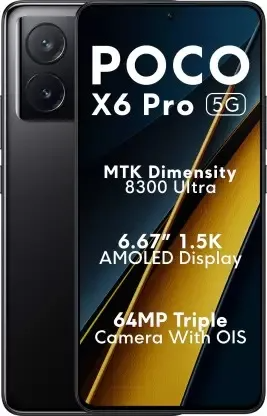
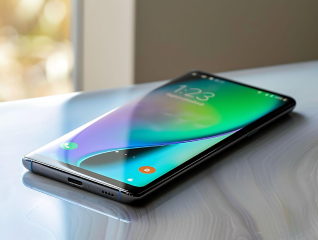
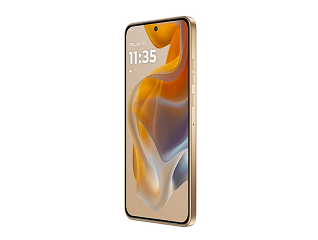
The POCO X7 Pro offers higher tested performance, a larger battery, faster charging, and stronger water protection, while the iQOO Neo 10R provides a larger 144Hz display.
General
Both are dual-SIM 5G smartphones running Android 15, while the iQOO Neo 10R is lighter at 196 g compared with around 195-198 g for the POCO depending on its finish.
| Spec | POCO X7 Pro | iQOO Neo 10R |
|---|
| Model | X7 Pro 5G | Neo 10R |
| Manufacturer | POCO | iQOO |
| SIM | Dual nano SIM | Dual nano SIM |
| Network support | 2G, 3G, 4G, 5G | 2G, 3G, 4G, 5G |
| Dimensions | 160.95 x 75.24 x 8.31 mm | 163.72 x 75.88 x 7.98 mm |
| Weight | Around 195 g | 196 g |
| Operating system | Android 15 | Android 15 |
| India availability | Available | Available |
The POCO is shorter, while the iQOO is slightly thinner. Their weight is closely matched, so display size and battery hardware are more useful decision points.
Display and design
The iQOO Neo 10R has the higher refresh rate at 144Hz, while the POCO X7 Pro provides a 6.67-inch AMOLED screen with Gorilla Glass 7i and stronger water protection.
| Spec | POCO X7 Pro | iQOO Neo 10R |
|---|
| Display size | 6.67-inch | 6.78-inch |
| Display type | AMOLED | AMOLED |
| Resolution | 2712 x 1220 pixel | 2800 x 1260 pixel |
| Refresh rate | Up to 120Hz | Up to 144Hz |
| Pixel density | 446 ppi | 453 ppi |
| Peak brightness | Up to 3,200 nits | Up to 4,500 nits |
| PWM dimming | 1,920Hz | 3,840Hz |
| Display protection | Corning Gorilla Glass 7i | Screen protection supported |
| Fingerprint sensor | In-display | In-display |
| Water and dust resistance | IP66, IP68, IP69 | IP65 |
The iQOO provides the larger screen, higher refresh rate, and higher peak-brightness figure. This can benefit supported games and outdoor viewing. The POCO offers much stronger ingress protection. Its IP68 and IP69 ratings provide a higher level of verified water resistance than the iQOO's IP65 rating.
→ Keep in mind: The 144Hz refresh rate does not operate in every app or game. Software support and display settings determine when the higher refresh rate is used.
Performance and software
The POCO X7 Pro uses the MediaTek Dimensity 8400 Ultra, while the iQOO Neo 10R uses the Snapdragon 8s Gen 3.
| Spec | POCO X7 Pro | iQOO Neo 10R |
|---|
| Processor | MediaTek Dimensity 8400 Ultra | Qualcomm Snapdragon 8s Gen 3 |
| Processor cores | Octa-core | Octa-core |
| Maximum CPU speed | Up to 3.25 GHz | Up to 3.0 GHz |
| GPU | Mali-G720 MC7 | Adreno 735 |
| Manufacturing process | 4 nm | 4 nm |
| RAM | 8GB / 12GB | 8GB / 12GB |
| RAM type | LPDDR5X | LPDDR5X |
| Operating system | Android 15 | Android 15 |
| User interface | HyperOS 2 | Funtouch OS 15 |
| Storage type | UFS 4.0 | UFS 3.1 / UFS 4.1, depending on variant |
The POCO records the higher overall AnTuTu and multi-core Geekbench scores. Its Dimensity 8400 Ultra provides more processing headroom in demanding games and processor-heavy applications. The iQOO records the higher Geekbench single-core result in the comparable testing data.
→ Buy this if: Choose the POCO X7 Pro if overall performance and graphics scores matter more. The iQOO remains suitable for demanding gaming and adds software features focused on sustained gameplay.
Camera features
Both phones have a 50MP main camera with optical image stabilisation and an 8MP ultra-wide camera, while the iQOO has the higher-resolution 32MP selfie camera.
| Spec | POCO X7 Pro | iQOO Neo 10R |
|---|
| Rear camera setup | Dual camera | Dual camera |
| Main camera | 50MP, OIS | 50MP Sony IMX882, OIS |
| Ultra-wide camera | 8MP | 8MP |
| Telephoto camera | No | No |
| Front camera | 20MP | 32MP |
| Rear video recording | Up to 4K at 60 fps | Up to 4K at 60 fps |
| Front video recording | Up to 1080p at 30 fps | Up to 4K at 30 fps |
| Optical image stabilisation | Yes | Yes |
The main rear camera specifications are closely matched. Both also support 4K rear-camera recording at up to 60 frames per second. The iQOO has the more capable front-camera specification. Its 32MP selfie camera also supports up to 4K video, which can matter for video calls, vlogging, and social content.
→ Pro tip: Neither phone includes a dedicated telephoto camera. If optical zoom is important, this is a trade-off worth considering before buying either model.
Storage and connectivity
The POCO X7 Pro comes with 256GB storage across its main India variants, while the iQOO Neo 10R offers 128GB and 256GB choices.
| Spec | POCO X7 Pro | iQOO Neo 10R |
|---|
| Storage options | 256GB | 128GB / 256GB |
| Expandable storage | No | No |
| Storage type | UFS 4.0 | UFS 3.1 / UFS 4.1 |
| Wi-Fi | Wi-Fi 6 | Wi-Fi 6E |
| Bluetooth | Supported | Bluetooth 5.4 |
| GPS | Supported | Supported |
| NFC | Supported | No |
| USB | USB Type-C | USB Type-C |
| 3.5 mm headphone jack | No | No |
Neither phone supports microSD expansion. The 256GB versions are therefore more suitable if you keep several large games or a large offline media library.
→ Pro tip: Storage speed varies by iQOO configuration. Check the exact variant before purchase if storage performance is important for large apps and file transfers.
Battery and other features
The POCO has a slightly larger 6,550 mAh battery with 90 W charging, while the iQOO has a 6,400 mAh battery with 80 W charging.
| Spec | POCO X7 Pro | iQOO Neo 10R |
|---|
| Battery capacity | 6,550 mAh | 6,400 mAh |
| Battery technology | Silicon-carbon | High-density battery |
| Wired charging | 90 W | 80 W |
| Reverse charging | Supported | 7.5 W |
| Wireless charging | No | No |
| Stereo speakers | Yes | Yes |
| Security | In-display fingerprint sensor | In-display fingerprint sensor |
| Water and dust protection | IP66, IP68, IP69 | IP65 |
The POCO has 150 mAh more battery capacity and 10 W more charging power. However, the iQOO records longer battery endurance in the comparable PCMark testing. The iQOO lasts 16 hours 22 minutes in that test, compared with 14 hours 53 minutes for the POCO. Actual endurance depends on refresh rate, network use, brightness, gaming, and background applications.