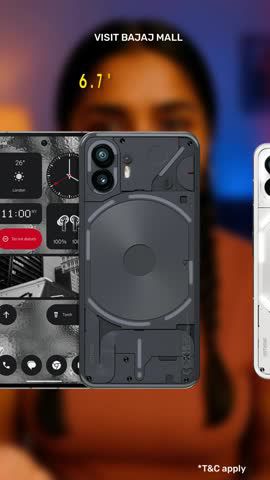
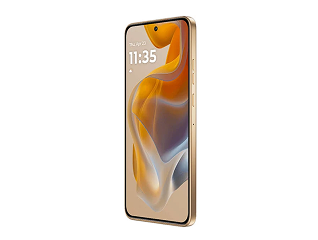
Phone (2a) and Phone (2) share a 6.7-inch display size and dual 50MP cameras, but they differ in build, processing power, storage speed, charging options and battery capacity.
General
Phone (2a) weighs 190 g with a plastic frame and rear, while Phone (2) weighs 201.2 g and combines a metal frame with a glass rear for a different build.
| Specification | Nothing Phone (2a) | Nothing Phone (2) |
|---|
| Manufacturer | Nothing | Nothing |
| Model | Phone (2a) | Phone (2) |
| SIM | Dual Nano-SIM | Dual Nano-SIM |
| Network support | 2G/3G/4G/5G | 2G/3G/4G/5G |
| Dimensions | 161.74 x 76.32 x 8.55 mm | 162.1 x 76.4 x 8.6 mm |
| Weight | 190 g | 201.2 g |
| Frame material | Plastic | Metal |
| Rear material | Plastic | Glass |
| Water and dust resistance | IP54 | IP54 |
| Warranty | 1-year manufacturer warranty | 1-year manufacturer warranty |
The 11.2 g lower weight of Phone (2a) may suit users who hold their phone for long periods. Phone (2) instead uses metal and glass materials.
Display and design
Both phones use 6.7-inch AMOLED displays with 120Hz maximum refresh rates, but Phone (2) adds LTPO technology and can reduce its refresh rate to 1Hz when appropriate.
| Specification | Nothing Phone (2a) | Nothing Phone (2) |
|---|
| Display size | 6.7-inch | 6.7-inch |
| Display type | Flexible AMOLED | Flexible LTPO AMOLED |
| Resolution | 1084 x 2412 pixel | 2412 x 1080 pixel |
| Pixel density | 394 ppi | 394 ppi |
| Refresh rate | Adaptive 30-120Hz | Adaptive 1-120Hz |
| Touch sampling rate | 240Hz | 240Hz |
| Peak brightness | 1,300 nits | 1,600 nits HDR peak |
| Display protection | Corning Gorilla Glass 5 | Corning Gorilla Glass 5 |
| HDR | HDR10+ | HDR10+ |
| Fingerprint sensor | In-display optical | In-display |
| Water and dust resistance | IP54 | IP54 |
Keep in mind: Phone (2)'s 1-120Hz LTPO range can lower the refresh rate more aggressively when high refresh is unnecessary. Phone (2a) starts its adaptive range at 30Hz.
Performance and software
Phone (2) uses the Snapdragon 8+ Gen 1 with Adreno 730 graphics and UFS 3.1 storage, while Phone (2a) uses Dimensity 7200 Pro with Mali-G610 MC4 graphics.
| Specification | Nothing Phone (2a) | Nothing Phone (2) |
|---|
| Processor | MediaTek Dimensity 7200 Pro | Qualcomm Snapdragon 8+ Gen 1 |
| CPU configuration | 2 x Cortex-A715 up to 2.8GHz + 6 x Cortex-A510 up to 2.0GHz | 1 x Cortex-X2 + 3 x Cortex-A710 + 4 x Cortex-A510 |
| Maximum CPU clock | 2.8GHz | Up to 3.0GHz on Nothing's official specification |
| GPU | Mali-G610 MC4 | Adreno 730 |
| Manufacturing process | 4nm TSMC N4P | 4nm TSMC |
| RAM options | 8GB/12GB | 8GB/12GB |
| RAM type | LPDDR4X | LPDDR5 |
| Storage type | UFS 2.2 | UFS 3.1 |
| Current operating system | Android 16 | Android 16 |
| Current user interface | Nothing OS 4.1 | Nothing OS 4.1 |
| Software support commitment | 3 Android version updates and 4 years of security updates | 3 Android version updates and 4 years of security updates |
Pro tip: Phone (2) is better suited to buyers who regularly run demanding games, editing apps or large multitasking workloads because its benchmark and storage results are substantially higher.
Camera features
Both phones have 50MP main and 50MP ultra-wide rear cameras with 32MP selfie cameras, but Phone (2) records 4K video at up to 60 frames per second.
| Specification | Nothing Phone (2a) | Nothing Phone (2) |
|---|
| Rear camera setup | 50MP main + 50MP ultra-wide | 50MP main + 50MP ultra-wide |
| Main camera | 50MP, f/1.88, OIS and EIS | 50MP Sony IMX890, f/1.88, OIS and EIS |
| Ultra-wide camera | 50MP, f/2.2, 114-degree field of view | 50MP Samsung JN1, f/2.2, 114-degree field of view |
| Macro capability | No dedicated macro camera | Ultra-wide supports 4 cm macro |
| Front camera | 32MP | 32MP Sony IMX615 |
| Rear video | Up to 4K at 30 frames per second | Up to 4K at 60 frames per second |
| Front video | Up to 1080p at 60 frames per second | Up to 1080p at 60 frames per second |
| Main camera stabilisation | Optical and electronic | Optical and electronic |
Buy this if: Phone (2) is the more suitable option if 4K60 video matters. Phone (2a) still provides the same headline 50MP + 50MP rear resolution for still photography.
Storage and connectivity
Phone (2) offers up to 512GB of UFS 3.1 storage, while Phone (2a) tops out at 256GB with UFS 2.2 storage; neither supports expandable microSD storage.
| Specification | Nothing Phone (2a) | Nothing Phone (2) |
|---|
| Storage options | 128GB/256GB | 128GB/256GB/512GB |
| Storage type | UFS 2.2 | UFS 3.1 |
| Expandable storage | No | No |
| Wi-Fi | Wi-Fi 6 | Wi-Fi 6 |
| Bluetooth | Bluetooth 5.3 | Bluetooth 5.3 |
| GPS | GPS, GLONASS, BeiDou, Galileo and QZSS | Dual-band GPS with GLONASS, BDS, Galileo, QZSS and NavIC |
| NFC | Yes | Yes |
| USB | USB-C | USB-C |
| 3.5mm headphone jack | No | No |
| Infrared blaster | No | No |
| 5G | Yes | Yes |
Keep in mind: Choose the storage capacity carefully because neither model accepts a memory card. Phone (2)'s 512GB option gives more room for large videos, games and offline media.
Battery and other features
Phone (2a) has the larger 5,000 mAh battery, while Phone (2) has a 4,700 mAh battery but adds 15 W wireless charging and 5 W reverse wireless charging.
| Specification | Nothing Phone (2a) | Nothing Phone (2) |
|---|
| Battery | 5,000 mAh | 4,700 mAh |
| Wired charging | 45 W | 45 W |
| Wireless charging | No | 15 W Qi |
| Reverse wireless charging | No | 5 W |
| Full wired charge | About 59 minutes under Nothing test conditions | About 55 minutes under Nothing test conditions |
| Speakers | Stereo | Dual stereo speakers |
| Fingerprint security | In-display optical | In-display |
| Face unlock | Supported | Supported |
| Water and dust protection | IP54 | IP54 |
Buy this if: Phone (2a) suits buyers prioritising battery capacity and lower weight. Phone (2) is better suited to users who already use Qi chargers or wirelessly charge compatible accessories.