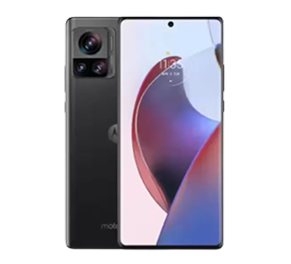
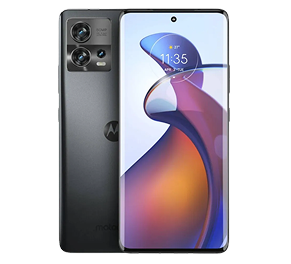
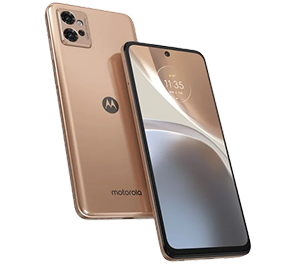
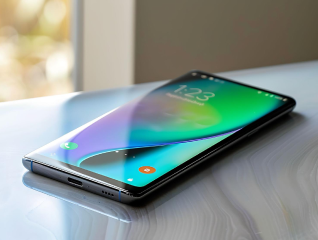
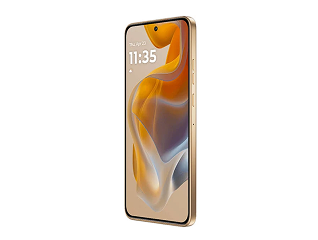
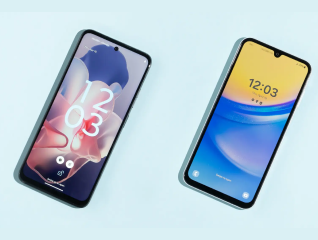
The two phones share 5G connectivity, IP68 protection, 144 Hz pOLED displays, stereo speakers and 50MP primary cameras. The edge 50 fusion adds a larger battery and longer software support, while the edge 40 offers wireless charging and faster UFS storage.
General
The motorola edge 50 fusion and motorola edge 40 are dual-SIM 5G smartphones with IP68 protection, in-screen fingerprint sensors and USB Type-C connectivity. Both support 4G and 5G networks, while their dimensions and weight suit users seeking slim curved-screen phones.
| Component | motorola edge 50 fusion | motorola edge 40 |
|---|
| Model | motorola edge 50 fusion | motorola edge 40 |
| Brand | motorola | motorola |
| Manufacturer | motorola Mobility | motorola Mobility |
| SIM | Dual SIM, Nano SIM + Nano SIM | Dual SIM, Nano SIM + eSIM |
| Network support | 5G, 4G | 5G, 4G |
| VoLTE | Yes | Yes |
| Dimensions | 161.9 x 73.1 x 7.9 mm | 158.43 x 71.99 x 7.49 mm |
| Weight | 175 g | 167 g |
| IP rating | IP68 | IP68 |
| Warranty | 1 year | 1 year |
| Fingerprint sensor | Optical, on-screen | Optical, on-screen |
Display and design
The motorola edge 50 fusion provides a larger 6.67-inch curved pOLED display with 144 Hz refresh rate and 1,600 nits peak brightness. The motorola edge 40 has a smaller 6.55-inch curved pOLED panel with the same 144 Hz refresh rate and 1,200 nits peak brightness.
| Component | motorola edge 50 fusion | motorola edge 40 |
|---|
| Screen size | 6.67-inch | 6.55-inch |
| Display type | P-OLED, curved | P-OLED, curved |
| Screen resolution | 1080 x 2400 pixel | 1080 x 2400 pixel |
| Aspect ratio | 20:9 | 20:9 |
| Pixel density | 395 ppi | 402 ppi |
| Refresh rate | 144 Hz | 144 Hz |
| Peak brightness | 1,600 nits | 1,200 nits |
| HDR support | HDR10+ | HDR10+ |
| Screen-to-body ratio | 92% claimed | 92.7% claimed |
| Build | PMMA, vegan leather options | Vegan leather and PMMA options |
| Water and dust resistance | IP68 | IP68 |
Performance and software
The motorola edge 50 fusion uses the Snapdragon 7s Gen 2 with four Cortex-A78 cores at 2.4 GHz and four Cortex-A55 cores at 1.95 GHz, while the motorola edge 40 uses the Dimensity 8020 with four Cortex-A78 cores at 2.6 GHz and four Cortex-A55 cores at 2.0 GHz. Both use Adreno or Mali graphics respectively.
| Component | motorola edge 50 fusion | motorola edge 40 |
|---|
| Processor | Qualcomm Snapdragon 7s Gen 2 | MediaTek Dimensity 8020 |
| CPU architecture | 64-bit | 64-bit |
| Processor core | Octa-core | Octa-core |
| CPU | 4x Cortex-A78 + 4x Cortex-A55 | 4x Cortex-A78 + 4x Cortex-A55 |
| CPU clock speed | Up to 2.4 GHz | Up to 2.6 GHz |
| Fabrication | 4 nm | 6 nm |
| GPU | Adreno 710 | Mali-G77 MC9 |
| RAM | 8GB / 12GB | 8GB |
| RAM type | LPDDR4X | LPDDR4X |
| Operating system at launch | Android 14 | Android 13 |
| Custom UI | Hello UI | Hello UI |
| OS updates | 3 years | 2 years |
| Security updates | 4 years | 3 years |
| AnTuTu score | 620,648 | 675,325 |
| Boot-up time | 19.0 seconds | 18.0 seconds |
Camera features
Both smartphones use a dual rear-camera arrangement with a 50MP primary sensor, 13MP ultra-wide camera, OIS and 32MP front camera. The edge 50 fusion uses a Sony LYT 700C primary sensor, while the edge 40 uses an OmniVision primary sensor with a wider f/1.4 aperture.
| Component | motorola edge 50 fusion | motorola edge 40 |
|---|
| Rear camera setup | 50MP + 13MP | 50MP + 13MP |
| Primary camera | 50MP, f/1.8, Sony LYT 700C, 1/1.56-inch, 1 µm | 50MP, f/1.4, 1/1.5-inch, OmniVision, 1 µm |
| Ultra-wide camera | 13MP, f/2.2, 1.12 µm | 13MP, f/2.2, 1.12 µm |
| OIS | Yes | Yes |
| Autofocus | Quad Phase Detection Autofocus | Omni-directional Phase Detection Autofocus |
| Flash | LED | LED |
| Digital zoom | Up to 8x | Digital zoom |
| Front camera | 32MP, f/2.4 | 32MP, f/2.4 |
| Rear video recording | 4K at 30 fps, Full HD at 60 fps | 4K at 30 fps, Full HD at 60 fps, HD at 120 fps |
| Front video recording | 4K at 30 fps, Full HD at 30 fps | 4K at 30 fps, Full HD at 30 fps |
| Camera features | HDR, burst, macro, dual video, slow motion | HDR, burst, dual video, slow motion, audio zoom |
Storage and connectivity
The motorola edge 50 fusion offers 128GB and 256GB storage configurations with UFS 2.2, while the edge 40 provides 256GB UFS 3.1 storage. Both phones support 5G, Wi-Fi, Bluetooth, NFC, GPS and USB Type-C connectivity.
| Component | motorola edge 50 fusion | motorola edge 40 |
|---|
| Internal storage | 128GB / 256GB | 256GB |
| Storage type | UFS 2.2 | UFS 3.1 |
| Expandable storage | No | No |
| SIM | Dual SIM | Nano SIM + eSIM |
| Network support | 5G, 4G | 5G, 4G |
| VoLTE | Yes | Yes |
| Wi-Fi | Wi-Fi 5, dual-band | Wi-Fi 6E, dual-band |
| Bluetooth | 5.2 | 5.2 |
| NFC | Yes | Yes |
| GPS | GPS, A-GPS, GLONASS, Galileo, BeiDou, QZSS | GPS, A-GPS, GLONASS |
| USB port | USB Type-C, USB 2.0 | USB Type-C |
| Audio | USB Type-C | USB Type-C |
| Stereo speakers | Yes | Yes |
| Audio features | Dolby Atmos | Dolby Atmos |
Battery and other features
The motorola edge 50 fusion has a 5,000 mAh battery with 68 W charging, giving it a larger battery reserve for streaming, gaming and navigation. The edge 40 has a 4,400 mAh battery, 68 W wired charging and 15 W wireless charging.
| Component | motorola edge 50 fusion | motorola edge 40 |
|---|
| Battery capacity | 5,000 mAh | 4,400 mAh |
| Quick charging | 68 W TurboPower charging | 68 W TurboPower charging |
| Wireless charging | No | 15 W |
| Reverse charging | No | 5 W reverse wireless charging |
| Battery life | 9 hours 53 minutes PCMark | 9 hours 05 minutes PCMark |
| Charging time | 54 minutes, 20% to 100% | 44 minutes 19 seconds, 20% to 100% |
| Sensors | Proximity, ambient light, accelerometer, gyroscope, e-compass | Light, proximity, accelerometer, compass, gyroscope |