






Health insurance goes beyond hospitalization—it covers OPD visits, medicines, ambulance charges, preventive checkups, and even alternative treatments, giving you all-around financial security.

Check health insurance plans with comprehensive coverage
Get Quote
Health plans from leading insurers | Comprehensive coverage | Offers multiple optional add-ons to enhance coverage
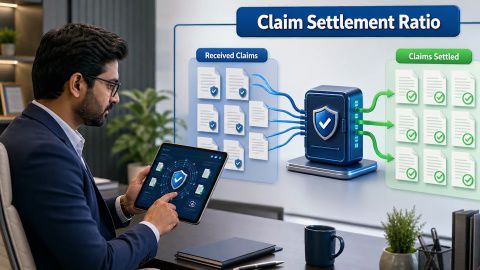
Niva Bupa Health Insurance Claim Settlement Ratio Explained
In summary
Empanelled network hospitals across India provide Niva Bupa policyholders with comprehensive cashless medical care, subject to active network status and timely pre-authorisation submission.
- Nationwide cashless hospital network: Policyholders can access cashless hospitalisation across more than 10,000 accredited facilities throughout India, eliminating immediate cash deposits during medical emergencies. Source: Insurance Regulatory and Development Authority of India
- Statutory cashless turnaround: IRDAI mandates that partner standalone health insurers communicate emergency cashless pre-authorisation decisions within 60 minutes of ticket submission by hospital Third-Party Administrator (TPA) desks. Source: National Health Authority
- Dynamic empanelment protocol: Medical facility network lists undergo continuous reviews, meaning policyholders must verify active cashless status on the insurer digital locator portal prior to hospital visits. Source: General Insurance Council
- Daycare surgical coverage: Advanced procedures like laparoscopic surgeries, cataract removal, and chemotherapy infusions are covered under 24-hour daycare provisions without mandatory multi-day hospitalisation. Source: Ministry of Health and Family Welfare
Digital comparison and advisory via Bajaj Finance: Evaluating sum insured options up to Rs. 1 crore and checking nationwide hospital density is streamlined by comparing check health insurance plans on Bajaj Finance.
You can explore plans on Bajaj Finance to compare available health insurance options and find coverage suited to your needs.
Niva Bupa Health Insurance: An overview of the national healthcare network
Niva Bupa Health Insurance: An overview reveals that Niva Bupa Health Insurance Company Ltd. (formerly Max Bupa Health Insurance) was founded through a joint venture between Fettle Tone LLP and the UK-based Bupa Group. Combining global clinical governance expertise with deep domestic market insight, the insurer has built an extensive cashless healthcare infrastructure spanning over 10,000 network hospitals across major metropolitan cities, state capitals, and expanding Tier-2 and Tier-3 urban centres.
What is a network hospital? A network hospital is a medical facility that has entered into a formal contractual agreement with an insurance provider to offer cashless medical treatment to insured policyholders. Under this direct billing arrangement, the insurer settles admissible hospitalisation bills directly with the medical institution, sparing the patient and their family from paying large cash sums upfront.
Crucially, hospital empanelment is an active, dynamic process rather than a static list. Healthcare institutions frequently revise their contractual agreements, alter bed quotas for specific clinical categories, or update operational terms. While historical printed directories may display past associations, policyholders must always cross-check active network status through the official digital hospital locator portal of the partner insurance provider before scheduling elective or non-emergency procedures.
Did you know?
Under updated IRDAI healthcare directives, standalone health insurers must maintain dedicated cashless facilitation desks operating 24 hours a day, ensuring emergency pre-authorisation requests receive preliminary confirmation within 60 minutes. *Source: Insurance Regulatory and Development Authority of India*
Pro tip
Benefits of network hospitals: Why choose cashless healthcare facilities?
Benefits of network hospital empanelment encompass substantial financial and procedural protections that make private hospitalisation predictable and manageable:
- Zero upfront deposit burden: Policyholders avoid arranging cash reserves between Rs. 1 lakh and Rs. 5 lakh for room reservations, intensive care unit (ICU) admissions, or scheduled surgical suites.
- Direct insurer-to-hospital settlement: Admissible inpatient charges, doctor consultations, nursing care, surgical fees, and pharmacy supplies are settled directly between Niva Bupa and the medical centre.
- Preferential tariff standards: Empanelled facilities adhere to agreed institutional pricing structures, mitigating unreasonable hospital markups and reducing out-of-pocket proportional co-payments.
- Expedited discharge clearances: Partner hospitals route final billing summaries directly through digital TPA channels, reducing administrative waiting times during patient discharge.
- Coverage for advanced daycare surgeries: Treatments such as dialysis, cataract phacoemulsification, and radiotherapy that conclude within a few hours qualify for cashless settlement without requiring a continuous 24-hour ward admission.
The following analytical matrix compares healthcare journeys between empanelled network hospitals and non-network healthcare providers across India:
| Evaluation dimension | Empanelled network hospital | Non-network hospital (reimbursement) | Administrative and financial impact |
| Initial admission deposit | Waived upon pre-authorisation approval | Mandatory cash deposit (Rs. 50,000 to Rs. 2,00,000) | Immediate strain on personal emergency liquidity |
| Pre-authorisation window | 1 to 2 hours via hospital TPA desk | Not applicable (patient pays full bill upfront) | Digital verification removes physical paperwork |
| Claim documentation | Handled directly by hospital desk | Patient must compile and submit all original papers | Risk of document loss and prolonged audit queries |
| Claim settlement timeline | Direct settlement upon discharge | 15 to 30 days post-discharge physical claim scrutiny | Prolonged liquidity deficit for the family |
| Billing tariff protection | Regulated under negotiated insurer caps | Unregulated hospital retail rack rates applied | Higher risk of non-payable expense deductions |
Source: Benchmarking of operational cashless protocols compiled from General Insurance Council guidelines.
Quick fact:
Availing cashless treatment at a verified network hospital prevents policyholders from facing unexpected non-medical item deductions, as empanelled providers operate under standardised consumable schedules. *Source: General Insurance Council*
Show More
Show Less
Popular plans for you



List of Niva Bupa Health network hospitals: How can you discover active facilities nationwide?
The nationwide list of Niva Bupa Health network hospitals spans thousands of accredited medical centres. Hospital network lists are dynamic; medical centres may undergo infrastructure upgrades, temporary bed quota revisions, or renegotiate empanelment terms with insurers. Consequently, relying on printed or static hospital directories exposes policyholders to the risk of visiting a facility with suspended cashless facilities.
Policyholders should always verify active cashless empanelment in real time through the official digital hospital locator portal of the partner insurer, which displays live empanelment status, geographical maps, and specialist departments. Rather than searching static lists, policyholders can identify leading healthcare institutions across major regions including:
- North India (Delhi NCR, Chandigarh, Lucknow, Jaipur): Comprehensive tertiary multi-speciality institutions offering dedicated oncology, cardiology, robotic surgery, and organ transplant centres.
- West India (Mumbai, Pune, Ahmedabad, Surat): Premier hospital networks and surgical centres providing advanced cardiac care, neurosurgery, and paediatric specialities.
- South India (Bengaluru, Chennai, Hyderabad, Kochi): Internationally renowned super-speciality medical centres and university teaching hospitals with world-class clinical capabilities.
- East India (Kolkata, Bhubaneswar, Patna, Guwahati): Established tertiary medical centres and regional super-speciality clinics offering comprehensive critical care.
To confirm whether a specific hospital across India currently supports cashless admissions for your active policy, follow these digital verification steps on the official insurer network locator portal:
- Open the official web portal or mobile application of Niva Bupa Health Insurance.
- Navigate to the Network Hospital Locator section.
- Select your desired State and City.
- Enter your area pin code or landmark to filter nearest hospitals.
- Review the live empanelment badge, contact details for the hospital TPA desk, and available cashless specialities.
Quick fact:
The partner insurer digital locator is updated continuously, preventing policyholders from encountering outdated hospital lists or un-empanelled facilities during critical emergencies. *Source: General Insurance Council*
Show More
Show Less
What are the step-by-step procedures for cashless hospitalisation under Niva Bupa?
Executing a seamless cashless hospitalisation requires adhering to distinct protocols depending on whether the admission is scheduled in advance or necessitated by an acute emergency.
Planned admission workflow
Planned admissions involve elective procedures recommended by a physician, such as joint replacements, hernia repairs, or planned surgical interventions. Follow this timetable:
- Step 1 (72 to 48 Hours Prior): Visit the hospital TPA / Insurance desk with your health card, active policy schedule, and doctor prescription.
- Step 2: The hospital desk completes Cashless Pre-Authorisation Form Part A and the attending doctor fills Part B, detailing the clinical diagnosis and estimated costs.
- Step 3: The hospital transmits the pre-authorisation request electronically to the partner insurer underwriting desk.
- Step 4: The insurer issues an initial pre-authorisation guarantee letter detailing approved sum limits within 2 to 4 hours.
- Step 5: On admission day, present your photo identification and the initial approval letter to secure bed allotment without cash advance.
Emergency admission workflow
In acute situations such as severe trauma, cardiac events, or respiratory distress, clinical stabilisation precedes administrative formalities:
- Immediate action (0 to 4 hours): Admit the patient to the emergency care unit immediately and notify the hospital insurance desk.
- Formal intimation (within 24 hours): Submit policy documentation and national ID to the TPA desk, requesting immediate emergency pre-authorisation transmission to the insurer.
- Interim approval: The insurer reviews medical reports and communicates an emergency pre-authorisation decision within 60 minutes.
- Discharge settlement: Upon discharge, the hospital submits final itemised bills, diagnostic summaries, and pharmacy vouchers for final cashless settlement.
Did you know?
Under IRDAI Master Circular guidelines, health insurers are required to issue final cashless discharge clearances within 3 hours of receiving final bills from the hospital, reducing unnecessary bed retention charges. *Source: Insurance Regulatory and Development Authority of India*
Show More
Show Less
What are the primary reasons for cashless claim rejections and how can you avoid them?
While cashless claims at empanelled hospitals across India offer substantial convenience, insurers may occasionally decline initial cashless pre-authorisation. Understanding common rejection triggers helps policyholders take corrective action:}
- Pre-existing disease waiting periods: Hospitalisation arising from chronic ailments (such as diabetes, hypertension, or joint degeneration) during the first 24 to 36 months of policy inception is not admissible under cashless terms if the specific waiting period has not elapsed.
- Incomplete clinical substantiation: If the pre-authorisation form lacks complete diagnostic records, laboratory reports, or physician clinical notes, the insurer claims team may issue an information query or decline initial cashless approval.
- Non-payable and consumable expenses: Expenses incurred for PPE kits, sanitisation materials, admission kits, gloves, and administrative processing fees are non-medical consumables excluded from standard base policies unless backed by a specific add-on cover.
- Policy lapsation: If premium payments were delayed past the 30-day grace period, the policy ceases to be in force, resulting in automatic rejection of cashless services.
When pre-authorisation is declined, it is crucial to recognise that a cashless denial does not equal a claim rejection. The policyholder can settle hospital dues out of pocket and subsequently submit a reimbursement claim with complete treatment records, bills, and discharge summaries.
Health Insurance in different cities

Health Insurance in Bangalore

Health Insurance in Jaipur

Health Insurance in Pune

Health Insurance in Mumbai

Health Insurance in Kerala
Compare types of Health Insurance Plans
Tax-savings plans for you
What our customer say about us
+ Customers
Play Store Rating
Reviews
Arjun Mehta
13 Jul 2025
I opted for the Health Infinity plan for my parents. The digital onboarding was incredibly fast with no medical tests required since they are under 50. We had a minor daycare procedure last month, and the cashless approval came through in less than 2 hours. Very impressed with the efficiency.
Priya Sharma
28 Feb 2025
The Bajaj Finance Health app is a lifesaver. I use it for my regular OPD consultations and medicine orders. The 10% discount on pharmacy bills and the easy reimbursement for doctor visits make it much more than just a 'hospitalization' policy. It’s daily health support.
Sneha Kapoor
15 Mar 2025
Switched my family floater to Bajaj General this year. The network of hospitals in my city (Pune) is excellent. The only downside was a slight delay in getting my physical card, but the digital copy on the app works everywhere. The 'Wellness Rewards' for hitting step goals is a cool touch!
Practical scenario: How Vikram managed an emergency hospitalisation while travelling
To understand the practical importance of nationwide cashless hospital empanelment, consider the experience of Vikram Malhotra, a 40-year-old corporate operations vice president from Gurugram.
Vikram had secured a high-value family floater policy of Rs. 50 lakh via Bajaj Finance covering himself, his spouse, and his elderly parents residing in Chandigarh. While visiting his parents in Chandigarh, his 71-year-old father suffered an acute ischaemic stroke with sudden right-sided facial drooping and speech impairment. Vikram immediately transported him to an empanelled multi-speciality tertiary hospital in Mohali.
Emergency neuro-imaging confirmed an acute cerebral infarction requiring immediate intravenous thrombolysis and admission to the neuro-intensive care unit. Vikram approached the hospital 24-hour TPA desk with his father's Aadhaar card and digital Niva Bupa health card stored on his smartphone.
The hospital coordination team transmitted an electronic pre-authorisation request of Rs. 2,80,000 to Niva Bupa. Within 40 minutes, the insurer issued an initial cashless sanction of Rs. 2,40,000, enabling the stroke management team to initiate advanced therapies without requiring Vikram to arrange emergency funds in another city.
Following five days of neuro-ICU monitoring and comprehensive post-stroke rehabilitation, the final hospital bill totalled Rs. 3,45,000. Niva Bupa approved Rs. 3,28,000 under cashless settlement, with Vikram paying only Rs. 17,000 for non-medical consumables and incidental hospital kits. Having comprehensive pan-India coverage via Bajaj Finance protected Vikram from liquidating long-term investments during an interstate medical emergency.
Decision framework: Do's and Don'ts for nationwide cashless hospitalisation
The following decision matrix outlines crucial operational guidelines to ensure flawless cashless claims at Niva Bupa network hospitals across India:
| Do | Why it matters | Don't | Risk to avoid |
| Verify active network empanelment on the partner insurer locator portal before hospital visits | Hospital empanelment contracts are subject to dynamic updates and bed quota limits | Don't rely on printed hospital lists or past marketing pamphlets | Visiting a de-empanelled facility forces you into cumbersome out-of-pocket reimbursement |
| Intimate emergency hospitalisations to the insurer within 24 hours of patient admission | Statutory guidelines mandate timely claim notification for cashless pre-authorisation review | Don't postpone insurance desk intimation until discharge day | Belated intimation leads to cashless rejection and forces cash payment |
| Carry government photo identification and active digital health policy cards | TPA desks require patient KYC verification before transmitting pre-authorisation files | Don't submit illegible photocopies or outdated insurance documents | Identity discrepancies delay initial approvals beyond critical medical windows |
| Retain copies of all diagnostic reports, medical prescriptions, and discharge summaries | Post-hospitalisation OPD bills require comprehensive documentation for reimbursement | Don't discard itemised pharmacy bills or payment receipts for non-medical items | Inability to claim post-hospitalisation follow-up medications and doctor fees |
What to do next: Step-by-step roadmap for accessing cashless healthcare nationwide
Follow this structured action roadmap to secure cashless medical coverage across India:
- Phase 1: Coverage review: Evaluate your current family health insurance sum insured against private hospital tariffs in major metropolitan centres, aiming for a floater sum insured of at least Rs. 25 lakh to Rs. 50 lakh.
- Phase 2: Digital plan comparison: Visit Bajaj Finance to compare comprehensive health insurance plans from trusted insurance partners offering extensive pan-India hospital empanelment.
- Phase 3: Facility mapping: Use the insurer online locator tool to identify 3 to 4 empanelled tertiary hospitals within a 15-minute radius of your home, parental residence, and frequent travel hubs.
- Phase 4: Digital health card storage: Save digital health insurance cards for all family members onto your smartphone to ensure instant accessibility during midnight emergencies.
- Phase 5: Pre-authorisation readiness: Familiarise your family members with the location of the hospital TPA desk and the mandatory 24-hour intimation requirement.
Policyholders seeking to evaluate hospital coverage and calculate tailored premiums can explore plans across partner providers.
Sources and references
| Source / reference authority | Document / research topic | Relevant insights and context | Publication month and year |
| Insurance Regulatory and Development Authority of India | Master circular on health insurance claims | Mandates 60-minute cashless initial approvals and 3-hour discharge clearances | October 2026 |
| General Insurance Council | Network hospital standards and cashless protocols | Framework governing hospital empanelment criteria and cashless operational guidelines | October 2026 |
| National Health Authority | Hospital empanelment guidelines and quality framework | Accreditation standards and quality benchmarks for multi-speciality network providers | October 2026 |
| Ministry of Health and Family Welfare | Daycare surgical classifications and clinical standards | Guidelines governing advanced 24-hour daycare procedures and medical tariffs | October 2026 |
Glossary of terms
| Technical term | Definition and regulatory context |
| Cashless hospitalisation | A claim settlement mechanism where the insurer pays admissible hospitalisation bills directly to the network medical facility. |
| Third-party administrator (TPA) | An IRDAI-licensed entity contracted by insurers to process health claims, manage hospital empanelment, and coordinate cashless pre-authorisation. |
| Pre-authorisation approval | Written preliminary guarantee issued by the insurer confirming coverage for an estimated treatment expenditure at a network hospital. |
| Daycare procedure | A medical treatment or surgical operation requiring advanced technology that is concluded within 24 hours without prolonged overnight hospitalisation. |
| Non-payable consumables | Medical and administrative items (gloves, PPE kits, admission files) excluded from base health insurance reimbursement under IRDAI standard terms. |
Conclusion: Maximising nationwide healthcare security
India's diverse healthcare landscape offers extraordinary clinical care, but rapid healthcare inflation makes access to a dependable nationwide cashless hospital network essential. Relying on out-of-pocket financing for emergency admissions or planned surgeries during travel or at home can destabilise household finances and deplete hard-earned investments.
By holding comprehensive health insurance, verifying active network hospitals through the partner insurer digital portal, and mastering pre-authorisation timelines, policyholders can focus entirely on patient recovery rather than billing logistics. Evaluating policy terms and comparing plans via Bajaj Finance empowers families across India with financial resilience and immediate access to top-tier healthcare facilities.
For additional insights on health policy management, explore related resources such as consumables cover in health insurance and does health insurance cover diagnostic charges to optimise your medical coverage portfolio.
| Read more | ||
| Niva Bupa Hospitals Ghaziabad | Niva Bupa Hospitals Jaipur | Niva Bupa Hospitals Delhi |
Explore and stay informed
Can you buy health insurance on EMI
Why buy health insurance
Health Insurance for family
Health Insurance Claim settlement ratio
Health Insurance waiting period
Importance of health insurance
Health Insurance for Senior Citizens
Health Insurance tax benefits
Health Insurance for parents
Health Insurance premium calculator
Health Insurance for Other Diseases

Antral Gastritis

Hepatomegaly Symptoms Causes & Treatment

Blood Pressure Range

PCOS Causes and Symptoms

Health insurance for Obesity
Frequently asked questions
Empanelment and Network Discovery FAQs
Pre-Authorisation and Admission Protocols FAQs
Costs, Exclusions, and Post-Discharge FAQs
How do you verify if a hospital is currently empanelled with Niva Bupa?
You can verify real-time empanelment status by accessing the official digital hospital locator on the partner insurer web portal or mobile application, where hospital listings are updated dynamically.
Can you receive cashless hospitalisation at non-network hospitals across India?
Cashless hospitalisation is generally limited to empanelled network hospitals; however, under recent IRDAI Cashless Everywhere initiatives, cashless treatment may be requested at non-network facilities subject to hospital consent and prior insurer notification.
What should you do if an empanelled hospital denies cashless admission?
If an empanelled hospital refuses cashless facilities, immediately contact the insurer customer support helpline and obtain written clarification from the hospital TPA desk before settling dues for reimbursement filing.
What documents do you need to submit at the hospital TPA desk for cashless admission?
You must present your active health insurance policy card, government-issued photo ID (such as Aadhaar or PAN), treating doctor prescription, and relevant diagnostic investigation reports.
How long does the partner insurer take to approve emergency cashless pre-authorisation?
Statutory IRDAI guidelines require general and standalone health insurance partners to communicate initial emergency pre-authorisation decisions within 60 minutes of receiving completed clinical forms from the hospital TPA desk.
How many hours in advance must you submit pre-authorisation for planned surgeries?
For scheduled or planned surgical admissions, you should submit the cashless pre-authorisation request at the hospital insurance desk at least 48 to 72 hours prior to the scheduled admission date.
What expenses are not covered during cashless hospitalisation under Niva Bupa?
Standard non-medical expenses such as admission registration fees, visitor passes, toiletries, sanitiser bottles, and specific surgical consumables are non-payable out-of-pocket costs unless covered by an add-on.
Can you claim post-hospitalisation follow-up expenses after a cashless discharge?
Yes, medical expenses incurred for outpatient consultations, prescribed medicines, and diagnostic tests within 60 to 90 days following discharge can be claimed under post-hospitalisation reimbursement.
Is a continuous 24-hour hospital stay mandatory for all cashless insurance claims?
No, modern daycare medical procedures such as dialysis, chemotherapy, cataract surgery, and radiotherapy qualify for cashless settlement without requiring 24 hours of ward confinement.



Articles and Insights


Disclaimer
*T&C Apply - Bajaj Finance Limited (‘BFL’) is a registered corporate agent of third party insurance products of Bajaj Allianz Life Insurance Company Limited, HDFC Life Insurance Company Limited, Life Insurance Corporation of India (LIC), Bajaj Allianz General Insurance Company Limited, SBI General Insurance Company Limited, ACKO General Insurance Company Limited, HDFC ERGO General Insurance Company, TATA AIG General Insurance Company Limited, ICICI Lombard General Insurance Company Limited, New India Assurance Limited, Chola MS General Insurance Company Limited, Zurich Kotak General Insurance Co. Limited , Star Health & Allied Insurance Co. Limited, Care Health Insurance Company Limited, Niva Bupa Health Insurance Company Limited , Aditya Birla Health Insurance Company Limited and Manipal Cigna Health Insurance Company Limited under the IRDAI composite CA registration number CA0101. Please note that, BFL does not underwrite the risk or act as an insurer. Your purchase of an insurance product is purely on a voluntary basis after your exercise of an independent due diligence on the suitability, viability of any insurance product. Any decision to purchase insurance product is solely at your own risk and responsibility and BFL shall not be liable for any loss or damage that any person may suffer, whether directly or indirectly. Please refer insurer's website for Policy Wordings. For more details on risk factors, terms and conditions and exclusions please read the product sales brochure carefully before concluding a sale. Tax benefits applicable if any, will be as per the prevailing tax laws. Tax laws are subject to change. Tax laws are subject to change. BFL does NOT provide Tax/Investment advisory services. Please consult your advisors before proceeding to purchase an insurance product. Visitors are hereby informed that their information submitted on the website may also be shared with insurers. BFL is also a distributor of other third-party products from Assistance Services providers such as CPP Assistance Services Pvt. Ltd., Bajaj Finance Health Ltd. etc. All product information such as premium, benefits, exclusions, sum insured, value added services, etc. are authentic and solely based on the information received from the respective insurance company or the respective Assistance service provider company.
Note – While we have made all efforts and taken utmost care in gathering precise information about the products, features, benefits, etc. However, BFL cannot be held liable for any direct or indirect damage/loss. We request our customers to conduct their research about these products and refer to the respective product’s sales brochures before concluding their sale.