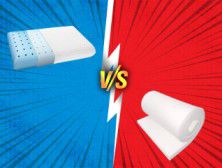








HR foam and memory foam are both types of polyurethane foam used in mattresses, but they behave very differently under the sleeper. The choice between them comes down to whether you want firm, responsive support (HR foam) or slow-contouring pressure relief (memory foam).
- HR foam: High Resilience foam — springs back immediately when pressure is removed; firmer feel; better airflow than memory foam; more durable; suits back sleepers, heavier body weights, and hot Indian climates
- Memory foam: Viscoelastic polyurethane — responds to body heat and weight by slowly contouring to body shape; remains compressed for a moment after you move; excellent pressure relief; better motion isolation; suits side sleepers and joint pain; retains more heat than HR foam
- Key difference in feel: Sit on an HR foam mattress and stand up — it springs back immediately; sit on a memory foam mattress — it slowly recovers its shape over 3–5 seconds. This is the defining distinction.
- For back sleepers and heavier weights (above 80 kg): HR foam — firmer surface maintains spinal alignment without excessive sinking
- For side sleepers and joint pain: Memory foam — contouring reduces pressure at hips and shoulders
- For hot Indian climate without AC: HR foam — better cell structure allows more airflow; memory foam retains body heat
- Prices: HR foam (standard/high-density PU foam) single from Rs. 4,000; memory foam Queen from Rs. 6,699 (Wakefit, 6-inch)
Convert the cost of your new mattress into Easy EMIs using Bajaj Finance's financing options at over 1.5 lakh partner stores such as Reliance Digital, Croma, Vijay Sales, and more.