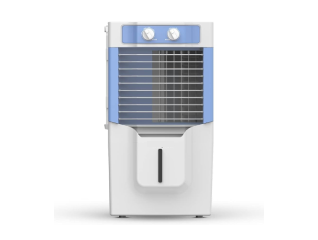
Five factors determine whether a cooler is the right fit for your room. Here is what to check:
Room size
Measure the length, width, and height of your room before buying. Larger rooms need coolers with higher air delivery rates to ensure the cool air reaches all corners effectively. As a general rule, a room of approximately 150–200 sq ft suits a personal cooler; rooms above 300 sq ft typically need a desert cooler.
Air delivery rate
The air delivery rate — measured in cubic metres per hour (CMH) — tells you how much air the cooler can circulate. A higher CMH means faster, more effective cooling for larger spaces. Always check the CMH specification listed on the product before buying, particularly if your room is large or has high ceilings.
Cooling pad area
Larger cooling pads allow more air to pass through the water-soaked surface, which improves the cooling output. When comparing models, check the size and material of the cooling pads. Honeycomb pads generally deliver better cooling than wood wool pads and also last longer before needing replacement.
Water tank capacity
A larger water tank means longer continuous use without refills. For a bedroom where you run the cooler through the night, a tank of at least 30–40 litres is practical. Smaller personal coolers have tanks of 15–20 litres — sufficient for a few hours of use but requiring more frequent refills.
Ventilation
Air coolers work best in well-ventilated spaces. They add moisture to the air as they cool, so a room with open windows or good cross-ventilation allows the humid air to escape and maintains cooling efficiency. In a closed room with no ventilation, the air can become excessively humid over time, reducing the cooler's effectiveness.
One important trade-off to factor in: desert coolers cool large spaces effectively but add more moisture to the air. If you live in a humid coastal city, a desert cooler may make your room uncomfortably damp. In humid climates, an air conditioner or a personal cooler with lower water output may be a better choice.