How Does Photovoltaic Panel Technology Work

How Does Photovoltaic Panel Technology Work

Learn how photovoltaic solar panels convert sunlight into electricity using solar cells and how the generated power is used in homes.

Get a pre-approved loan offer of up to Rs. 5 lakh

Quick approval | Flexible tenure options | Zero approval fees

In summary

Photovoltaic panels convert sunlight into electricity using solar cells, making them an efficient renewable energy solution for homes and businesses. Their performance depends on factors such as panel efficiency, sunlight availability, and system capacity.


  • Photovoltaic panels use semiconductor materials, usually silicon, to convert solar energy into electrical power.
  • A typical residential solar system can range from 1 kW to 10 kW capacity depending on energy requirements.
  • Solar panels generally have a lifespan of around 25 years, making them a long-term energy investment.
  • Monocrystalline panels offer higher efficiency compared to many traditional panel types due to their advanced cell structure.
  • Regular cleaning and proper installation can help maintain consistent energy generation.

You can also buy a new solar panel on Easy EMIs at over 1.5 lakh Bajaj Finance partner stores across 4,000 cities, including Reliance Digital, Croma, and Vijay Sales. 

What are photovoltaic panels?

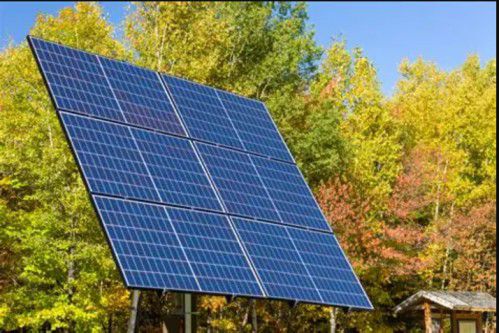
Photovoltaic panels are devices that convert sunlight directly into electricity using solar cells made from semiconductor materials, most commonly silicon. When sunlight strikes these cells, it generates an electric current that can be used to power electrical appliances or be stored for later use. Photovoltaic panels are widely used in residential, commercial, and industrial solar power systems because they provide a clean and renewable source of energy. A single solar panel is made up of multiple interconnected solar cells, while several panels work together to form a larger solar array capable of generating higher amounts of electricity. Most residential photovoltaic modules typically contain 60–72 cells, depending on their design, capacity, and intended application, allowing systems to be scaled according to different energy requirements.

What is the photovoltaic effect in solar panels?

The photovoltaic effect is the process that enables solar panels to convert sunlight directly into electricity. First discovered in 1839 by Alexandre Edmond Becquerel, it occurs when photons transfer sufficient energy to electrons within a photovoltaic cell, generating an electric current. In silicon solar cells, photons must overcome the material's 1.1 electron volt (eV) band gap for electricity generation to begin.


  1. Sunlight reaches the photovoltaic cell: Sunlight falls on the photovoltaic cell, where photons are absorbed by the silicon semiconductor material. This light energy initiates the conversion process inside the solar panel.
  2. Electrons become energised: When the absorbed photons carry enough energy to exceed the silicon band gap of approximately 1.1 eV, electrons are released from their atoms and become free to move through the semiconductor.
  3. Electric current is generated: The movement of these free electrons creates a continuous flow of direct current (DC) electricity. Conductive metal contacts within the photovoltaic cell collect this electrical energy for further use.
  4. Electricity is converted for use: The generated DC electricity is transferred to an inverter, which converts it into alternating current (AC). This converted electricity can then power household appliances, commercial equipment, or be supplied to the electricity grid.

The photovoltaic effect is the scientific principle that makes solar power generation possible. By converting sunlight into usable electricity without fuel combustion or direct emissions, photovoltaic panels provide an efficient and environmentally friendly source of renewable energy for residential, commercial, and industrial applications.

How do photovoltaic panels convert sunlight into electricity?

Photovoltaic panels convert sunlight into electricity by using solar cells that absorb light energy and transform it into direct current (DC) through the photovoltaic effect. Each solar cell plays a specific role in this process, and when multiple cells work together, they generate enough electricity to power homes, businesses, and other electrical systems.


  • Sunlight is absorbed: Photons from sunlight strike the silicon photovoltaic cells on the panel. These cells are specially designed to capture solar energy and begin the electricity generation process as soon as they receive sufficient sunlight.
  • Electrons become energised: The absorbed light transfers energy to electrons within the silicon semiconductor. Once the photons provide enough energy, the electrons break free from their atoms and begin moving through the cell, creating an electrical charge.
  • Direct current is generated: Each photovoltaic cell typically produces about 0.5 V of direct current (DC). Since a single cell generates only a small amount of electricity, multiple cells are connected together within a panel so that their combined output can produce a useful electrical supply.
  • Electricity is collected and transferred: The generated DC electricity is collected through conductive metal contacts and wiring built into the photovoltaic panel. The electrical output from several panels can also be combined to increase the overall system capacity.
  • Electricity is converted for everyday use: The collected DC electricity is sent to an inverter, which converts it into approximately 230 V AC. This alternating current is compatible with household appliances, lighting systems, and most electrical equipment used in homes and commercial buildings.

After conversion, the electricity can be used immediately to power electrical devices, stored in compatible battery systems for later use, or exported to the electricity grid in grid-connected solar installations, helping maximise the benefits of renewable energy generation.


What materials are used in photovoltaic panels?

Photovoltaic panels use semiconductor materials that absorb sunlight and generate electricity. The material used affects panel efficiency, cost, durability, weight, and suitability for different solar installations.

Cell typeMaterialTypical efficiencyBest suited for
MonocrystallineSingle-crystal siliconAround 20%–24%Homes with limited roof space and higher efficiency requirements
PolycrystallineMulti-crystal siliconAround 15%–18%Residential installations where affordability is important
Thin-filmCdTe, amorphous silicon, or other thin-film semiconductorsGenerally lower than crystalline siliconLarge installations and applications where lightweight modules are useful
PerovskitePerovskite semiconductor compoundsHigh efficiencies demonstrated in research cellsEmerging and next-generation solar applications

Monocrystalline silicon is widely used where higher efficiency and limited installation space are important. Polycrystalline and thin-film technologies offer alternatives for specific cost and installation requirements, while perovskite technology remains an emerging option with significant potential for future solar applications.


What are the benefits of using photovoltaic panels?

Photovoltaic panels offer a reliable way to generate clean electricity from sunlight, helping reduce dependence on conventional energy sources while lowering long-term electricity costs. They are widely used because they combine environmental benefits with long service life and low maintenance requirements.


  • Long operational lifespan: Most photovoltaic panels are designed to operate efficiently for around 25–30 years, providing long-term renewable energy generation.
  • Lower electricity costs: A properly sized photovoltaic system can significantly reduce grid electricity consumption, helping households save on monthly energy bills over its lifetime.
  • Low maintenance requirements: Solar panels generally require cleaning only 2–4 times per year, depending on local dust and weather conditions, making maintenance simple and cost-effective.
  • Environmentally friendly energy: A 1 kW rooftop solar system can help reduce carbon emissions by approximately 1–1.5 tonnes per year, depending on location and electricity usage.
  • Reliable performance: Modern photovoltaic panels typically retain around 80%–90% of their original output even after 25 years of operation under normal conditions.

While photovoltaic panels provide long-term savings and environmental benefits, they require a higher initial investment, and their performance gradually declines by approximately 0.5% per year, making proper system design and installation important for maximising efficiency.

Save more with Smart Savings Calculator

Combine the best offers, EMI plans, and exclusive vouchers with Smart Savings Calculator to save big.

20k+ people used their offers at the store

Get electronics and appliances on Easy EMIs with Bajaj Finance

Upgrading your home with the latest electronics and appliances is now easier and more affordable with Bajaj Finance’s flexible financing options. Follow these steps to get started:


  • Explore products on Bajaj Mall: Browse a wide range of electronics and appliances from trusted brands on Bajaj Mall. Compare features like energy ratings, storage capacity, performance settings, and design to choose the right product for your home.
  • Visit a partner store: Once you shortlist a model, step into any of Bajaj Finance’s 1.5 lakh partner stores across 4,000 cities in India. See the product in person, talk to experts, and make a confident decision.
  • Choose the Easy EMI Loan option: At checkout, select the Bajaj Finance Easy EMI Loan. Avail financing of up to Rs. 5 lakh and split the cost into convenient monthly instalments. Some products also come with a zero down payment option.
  • Check your loan eligibility online: Plan better by checking your loan eligibility in minutes. Simply enter your mobile number and OTP to know your pre-approved limit.
  • Use the Insta EMI Card for purchases up to Rs. 3 lakh: Already own the Bajaj Finance Insta EMI Card? Use it for instant, paperless checkout and convert your purchases of up to Rs. 3 lakh into Easy EMIs.

Frequently asked questions

General

How do photovoltaic panels generate electricity from sunlight?

Photovoltaic panels generate electricity by converting sunlight into direct current (DC) through the photovoltaic effect. When sunlight strikes the silicon solar cells, photons energise electrons, creating an electric current. Each cell typically produces about 0.5 V of DC electricity, and multiple cells work together to increase the output. An inverter then converts the DC electricity into approximately 230 V AC, making it suitable for powering homes and electrical appliances.

Photovoltaic panels can be installed on most roof types, including concrete, metal, tiled, and flat roofs, provided the structure is strong enough to support the system. The roof should receive adequate sunlight with minimal shading for better performance. A professional site assessment helps determine the roof's load-bearing capacity, orientation, and installation method to ensure safe mounting and efficient electricity generation.

Modern photovoltaic panels are highly efficient at converting sunlight into electricity, with performance varying by the type of solar cell used. Monocrystalline panels typically achieve 20%–24% efficiency, while polycrystalline panels usually range between 15%–18%. Thin-film panels generally offer 10%–13% efficiency but are suitable for specific applications. Actual performance depends on factors such as sunlight intensity, temperature, panel orientation, shading, and regular maintenance.

Monocrystalline photovoltaic panels are generally the most efficient type available for commercial use. They typically achieve efficiency levels of 20%–24%, allowing them to generate more electricity from the same installation area than other panel types. Polycrystalline panels usually offer 15%–18% efficiency, while thin-film panels range between 10%–13%. Although monocrystalline panels have a higher upfront cost, they are often preferred for installations where roof space is limited.

Photovoltaic panels are designed to provide reliable performance for 25–30 years with proper installation and regular maintenance. Most manufacturers also offer performance warranties of around 25 years, during which the panels are expected to retain approximately 80%–90% of their original power output. While electricity generation gradually decreases by about 0.5% per year, well-maintained photovoltaic panels can continue producing usable electricity even beyond their expected service life.

Show More Show Less

Disclaimer

While care is taken to update the information, products, and services included in or available on our website and related platforms/websites, there may be inadvertent inaccuracies or typographical errors or delays in updating the information. The material contained in this site, and on associated web pages, is for reference and general information purpose and the details mentioned in the respective product/service document shall prevail in case of any inconsistency. Subscribers and users should seek professional advice before acting on the basis of the information contained herein. Please take an informed decision with respect to any product or service after going through the relevant product/service document and applicable terms and conditions. In case any inconsistencies observed, please click on reach us.

*Terms and conditions apply