Understanding Refrigerator Wattage : Power Consumption and Efficiency

Understanding Refrigerator Wattage : Power Consumption and Efficiency

Discover how many watts your refrigerator uses, factors influencing power consumption, and tips for improving energy efficiency to save on electricity costs.

Check pre-approved loan offer

Check pre-approved loan offer

Refrigerator wattage usage - Overview

Understanding the wattage of your refrigerator is essential for managing your household energy consumption. Refrigerators typically consume between 100 - 800 watts, depending on their size, model, and efficiency rating. Energy-efficient models, such as those with a 5 Star rating, use less power and can help reduce your electricity bills. For instance, opting for a 5 Star single door refrigerator can significantly reduce energy usage, making it a cost-effective choice in the long run. To explore energy-efficient options. These models not only provide excellent performance but also help in creating a more sustainable and economical household.


If you are looking for a new refrigerator, head to any of Bajaj Finance’s 1.5 lakh partner stores in 4,000 cities in India. Choose your ideal model, pay with Easy EMIs, and enjoy zero down payment on select deals. Simply check your loan eligibility now and bring home your desired refrigerator without worrying about overspending.
How many Watts does a refrigerator use

Refrigerator power consumption varies significantly by type, capacity and energy rating. This table covers the typical wattage range for the most common refrigerator categories available in India.


Refrigerator typeCapacity rangeRunning watts (approx.)Starting watts (approx.)Annual electricity units (approx.)
Single door direct cool80 to 200 litres30 to 80W150 to 300W120 to 250 units
Double door frost-free235 to 340 litres100 to 180W300 to 500W300 to 500 units
Double door inverter235 to 340 litres60 to 130W200 to 400W200 to 380 units
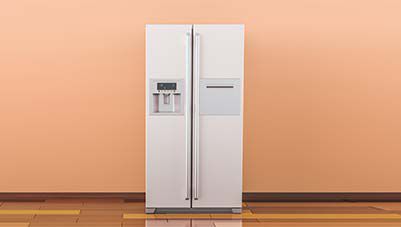
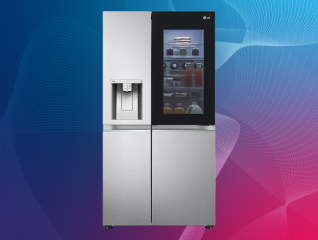
Side by side500 to 700 litres150 to 250W400 to 700W500 to 800 units
French door600 to 700 litres150 to 280W400 to 750W550 to 850 units
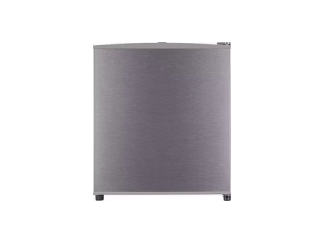
Mini fridge50 to 100 litres25 to 60W100 to 200W80 to 180 units
Commercial refrigerator300 to 600 litres200 to 400W600 to 1,000W700 to 1,400 units

Note: Running watts refer to steady-state consumption. Starting watts are the brief surge drawn when the compressor starts. Inverter refrigerators run at variable wattage and consume significantly less at partial load.


Also read: Blue Star 500-litre freezer

Energy efficiency and your refrigerator: Calculating wattage and savings

Understanding your refrigerator's actual electricity consumption helps you estimate monthly costs accurately and identify how much you could save by upgrading to a more energy-efficient model.


Calculation stepFormulaExample
Daily electricity consumptionRunning watts x hours per day divided by 1,000150W x 24 hours divided by 1,000 = 3.6 units per day
Monthly electricity consumptionDaily units x 303.6 x 30 = 108 units per month
Monthly electricity costMonthly units x electricity tariff108 x Rs. 7 = Rs. 756 per month
Annual electricity costMonthly cost x 12Rs. 756 x 12 = Rs. 9,072 per year
Saving by upgrading from 3 star to 5 starAnnual saving estimateApproximately Rs. 1,500 to Rs. 3,000 per year
Saving by upgrading to inverter compressorAnnual saving estimateApproximately Rs. 2,000 to Rs. 4,000 per year

How many volts and amps does a refrigerator use

Refrigerators typically operate on a standard voltage of 120V in the U.S. or 220-240V in many other countries. The amp draw can vary based on the model, but most refrigerators consume between 3 to 6 amps. To convert this to watts, multiply volts by amps, resulting in refrigerator wattage ranging from 360 to 720 watts. Thus, understanding the refrigerator in watts helps in assessing energy consumption.

How much does it cost to power a refrigerator

The cost to power a refrigerator depends on its wattage and local electricity rates. For example, if a fridge uses 600 watts, running it for 24 hours would consume about 14.4 kWh per day. If electricity costs Rs. 8 per kWh, the monthly cost would be approximately Rs. 1,152. Thus, knowing refrigerator watts is essential for budgeting energy expenses.
 

Monthly and yearly costs to run a refrigerator


Here is a table with the estimated monthly and yearly costs to run a refrigerator in India:


CityMonthly Cost (Rs.)Yearly Cost (Rs.)
MumbaiRs. 1,200Rs. 14,400
DelhiRs. 1,000Rs. 12,000
BangaloreRs. 900Rs. 10,800
KolkataRs. 800Rs. 9,600
ChennaiRs. 800Rs. 10,200

These costs are based on an average electricity tariff and refrigerator power consumption of 200-300 watts. Actual costs may vary depending on your specific refrigerator model and usage patterns.

Choosing the right refrigerator: Wattage considerations for optimal performance

When selecting a refrigerator, understanding its wattage is key to ensuring optimal performance and energy efficiency. The wattage of a refrigerator influences its energy consumption and can impact your electricity bills. Here are some important considerations and tips for choosing the right refrigerator based on wattage:


  • Assess your needs: Determine the size and type of refrigerator that suits your household needs. Larger families may require a double door or French door refrigerator, which typically have higher wattage but offer more storage space.
  • Check the energy rating: Look for refrigerators with high energy efficiency ratings (such as 4-star or 5-star ratings). These models consume less electricity while providing optimal cooling, resulting in lower energy bills.
  • Consider advanced features: Modern refrigerators come with features like inverter technology, which adjusts the compressor speed based on cooling demand, leading to reduced energy consumption. Other features like LED lighting and smart sensors also contribute to energy savings.
  • Calculate annual energy consumption: To estimate the energy consumption of a refrigerator, multiply its wattage by the number of hours it runs daily and then by 365 days. For example, a 300-watt refrigerator running 24 hours a day will consume approximately 2,628 kWh annually.
  • Opt for energy-efficient models: Investing in energy-efficient models can lead to significant long-term savings. While the initial cost may be higher, the reduction in electricity bills over time can offset the initial investment.
  • By carefully considering these factors, you can choose a refrigerator that not only meets your cooling needs but also helps you save on energy costs.


Also read: Signs that mean that your fridge needs repair

Get electronics and appliances on Easy EMIs with Bajaj Finance

Upgrading your home with the latest electronics and appliances is now hassle-free with Bajaj Finance's flexible financing options. Follow these steps to get started:


  • Explore products on Bajaj Mall: Browse a wide range of electronics and appliances from trusted brands on Bajaj Mall. Compare features to find a model that meets your needs.
  • Visit a partner store: Once you shortlist a model, step into any of Bajaj Finance’s 1.5 lakh partner stores across 4,000 cities in India. See the product in person, talk to experts, and make a confident decision.
  • Choose the Easy EMI Loan option: At checkout, select the Bajaj Finance Easy EMI Loan. Avail financing of up to Rs. 5 lakh and split the cost into convenient monthly instalments. Some products also come with a zero down payment option.
  • Check your loan eligibility online: Plan better by checking your loan eligibility in minutes. Simply enter your mobile number and OTP to know your pre-approved limit.
  • Use the EMI Network Card for purchases up to Rs. 3 lakh: Already own the Bajaj Finance EMI Network Card? Use it for instant, paperless checkout and convert your purchases of up to Rs. 3 lakh into Easy EMIs.

Save more with Smart Savings Calculator

Combine the best offers, EMI plans, and exclusive vouchers with Smart Savings Calculator to save big.

20k+ people used their offers at the store

Why use the Smart Savings Calculator

Bajaj Finance’s Smart Savings Calculator helps you unlock maximum savings every time you shop at partner stores. It brings together all available brand, dealer, and scheme offers—so you can see your total savings instantly and shop smarter with Easy EMIs.


1. Dealer offers - Grab exclusive in-store deals at over 1.5 lakh partner stores across India. Enjoy local discounts and special prices you will not find online.

2. Brand offers - Access limited-time discounts from top brands across electronics, appliances, and more. Discover brand-specific savings selected just for you.

3. Bajaj offers - Unlock exclusive Bajaj Finance deals on popular products—available only to our customers. More rewards, more value.

4. Scheme offers - Take advantage of time-sensitive offers on select EMI schemes. Get extra benefits after paying just 3 EMIs—visible during EMI selection at checkout.


Calculate your extra savings today!

FAQs

EMI details

Energy consumption

General

Can I buy a refrigerator on EMI?

Yes, you can easily bring home your preferred refrigerator using Bajaj Finance’s Easy EMI options. Whether you already have the Insta EMI Card or are new to it, here is how to begin:


If you have the Bajaj Finance Insta EMI Card:

  • Explore refrigerators on Bajaj Mall: Choose from a wide range of popular brands.
  • Visit a partner store: Check out the product in person at any of Bajaj Finance’s 1.5 lakh partner stores across 4,000 cities in India.
  • Use your Insta EMI Card at checkout: Convert the cost into Easy EMIs that fit your monthly budget.
  • Zero down payment on select models: Take your chosen refrigerator home without paying anything upfront.


If you do not have an Insta EMI Card:

Check your Insta EMI Card eligibility online using your mobile number and OTP. If you are eligible, apply instantly and enjoy a smarter, more affordable way to buy your favourite refrigerator on Easy EMIs.

The wattage required for a refrigerator to operate depends on its size, model, and efficiency. On average, a typical household refrigerator needs about 100 - 250 watts to run. Larger models, especially those with additional features like ice makers and water dispensers, may require more power.

To calculate the watt hours (Wh) of a refrigerator, you need to multiply the wattage of the refrigerator by the number of hours it runs per day. For example, if your refrigerator uses 200 watts and runs for 24 hours a day, it would consume 4,800 watt-hours per day. This figure helps estimate the daily energy consumption.

Inverter refrigerators are known for their energy efficiency. The wattage used by an inverter refrigerator can vary significantly depending on the model and size, but generally, they use about 100 - 200 watts. Inverter technology allows these refrigerators to operate at varying speeds, which conserves energy by adjusting the compressor speed according to the cooling demand.

The number of units of electricity consumed by a fridge can be calculated by converting the watt hours to kilowatt hours (kWh), since one unit of electricity is equal to one kWh. Using the earlier example, a refrigerator using 4,800 watt-hours per day would consume about 4.8 kWh per day. This equates to approximately 144 kWh per month, which can be multiplied by your local electricity rate to estimate the cost.

A mini fridge generally uses between 50 to 100 watts, depending on its size, features, and energy efficiency. Some models may consume less, especially energy-efficient ones, making them ideal for small spaces like dorm rooms, offices, or as secondary cooling units.

Frost-free refrigerators typically have a wattage range of 200 to 400 watts, depending on their capacity and features. This type of fridge uses a fan to circulate cold air, preventing frost buildup and maintaining consistent temperatures, which can slightly increase energy consumption compared to traditional models.

Not necessarily. While higher wattage indicates more power consumption, energy efficiency ratings and usage patterns play crucial roles. A higher wattage fridge may use more electricity, but an energy-efficient model can operate effectively with lower overall consumption, leading to reduced electricity bills over time.

Yes, you can use a low-wattage refrigerator with a generator, provided the generator's output meets the fridge's wattage requirements. Ensure that the generator can handle the starting wattage, as refrigerators may require more power when starting up, typically for a few seconds.

Show More Show Less

Disclaimer

While care is taken to update the information, products, and services included in or available on our website and related platforms/websites, there may be inadvertent inaccuracies or typographical errors or delays in updating the information. The material contained in this site, and on associated web pages, is for reference and general information purpose and the details mentioned in the respective product/service document shall prevail in case of any inconsistency. Subscribers and users should seek professional advice before acting on the basis of the information contained herein. Please take an informed decision with respect to any product or service after going through the relevant product/service document and applicable terms and conditions. In case any inconsistencies observed, please click on reach us.

*Terms and conditions apply