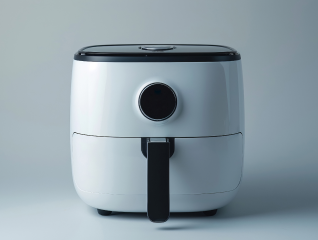
Air frying works through a combination of three physical processes: conduction, convection, and radiation. Together, these create the crispy result you expect from an air fryer. Here is how each one contributes.
The six steps below break down exactly what happens inside an air fryer each time you use it.
Step 1 — Rapid air circulation
A high-speed fan inside the air fryer circulates hot air continuously around the food. This creates a convection effect — the same principle used in convection ovens — ensuring that all sides of the food receive consistent heat exposure. The result is even cooking without hot spots.
Step 2 — Heat transfer mechanisms
Three types of heat transfer happen simultaneously:
- Conduction: Heat transfers directly through physical contact between the food and the hot basket surface
- Convection: Circulating hot air moves heat around the food from all sides, cooking it evenly
- Radiation: Some air fryer models use infrared heating elements for faster and more efficient cooking
Step 3 — The Maillard reaction
The Maillard reaction is the chemical process that browns food and enhances its flavour. It is triggered when food is exposed to high temperatures — typically 149–204 degree Celsius (300°F–400°F) — causing proteins and sugars in the food to react and form hundreds of flavour compounds. This is what creates the golden-brown, crispy exterior on air-fried chips, chicken, and similar foods.
Step 4 — Oil usage and crispiness
Unlike deep frying, air fryers use just 1–2 tablespoons of oil — either sprayed or brushed lightly onto the food. The hot air dries out the surface of the food, removing moisture and creating a crunchy texture that mimics traditional frying. Some frozen or pre-coated foods contain enough oil in their coating to require no additional oil at all.
Step 5 — Midway adjustments
Some foods cook more evenly when shaken or flipped halfway through the cooking cycle. This is particularly true for foods like chips, nuggets, or vegetables where all surfaces need equal exposure to the circulating hot air for uniform crispiness.
Step 6 — Cooking efficiency
Air fryers cook 20–30% faster than conventional ovens due to their compact size and rapid air circulation. Preheating takes just 1–3 minutes, compared to 10–15 minutes for a standard oven. The enclosed chamber retains heat efficiently, which further reduces overall cooking time per session.