








Rs. 2 lakh – Rs. 80 lakh
Check your pre-approved medical equipment loan
Enter mobile and OTP | Check offer | Know your exact loan terms
In summary
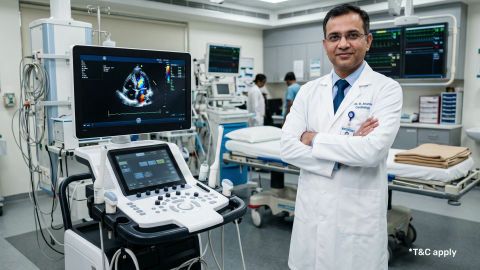
Echo Machine for Cardiac Care
- It produces real-time images of the heart and its chambers, valves and blood flow
- ECHO machines are used in hospitals, diagnostic centres, cardiac clinics and healthcare settings
- Different types include 2D, 3D, Doppler and stress echocardiography systems
- The cost can vary significantly depending on the machine type, features, image quality and brand
- Portable and handheld ECHO machines are also available for use in different clinical settings
What is an ECHO machine?
-
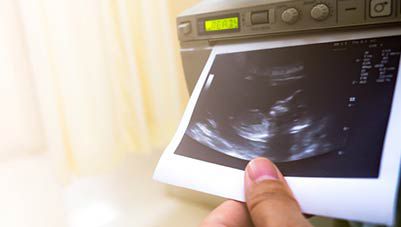
An ECHO machine is an ultrasound-based medical device used to examine the heart. It sends high-frequency sound waves into the body through a transducer, and the returning echoes are processed to create images of the heart. An echocardiogram can show the size and shape of the heart, movement of its walls, functioning of the valves and the direction and speed of blood flow. Unlike X-rays and CT scans, echocardiography does not use ionising radiation.
How does an ECHO machine work?
An ECHO machine works by sending and receiving ultrasound waves through a transducer. The basic process involves the following steps:
- Ultrasound transmission: The transducer sends high-frequency sound waves into the chest.
- Echo reception: The waves bounce back when they encounter different tissues and structures in the heart.
- Signal processing: The machine processes the returning signals.
- Image generation: The processed signals are converted into images displayed on the monitor.
- Clinical assessment: A trained healthcare professional examines the images and other measurements to assess heart function.
Where is an ECHO machine used?
ECHO machines are used in several healthcare settings where cardiac imaging is required.
| Healthcare setting | Common use |
|---|---|
| Hospitals | Cardiac assessment and diagnosis |
| Cardiology clinics | Routine and detailed heart examinations |
| Diagnostic centres | Echocardiography and related imaging |
| Emergency departments | Rapid assessment of certain heart conditions |
| Intensive care units | Monitoring heart function in critically ill patients |
| Mobile healthcare units | Cardiac imaging using portable equipment |
Check your pre-approved medical equipment loan offer
Types of echo machines
Different ECHO systems are designed for different imaging requirements. Here are few types:
- 2D ECHO Machine
A 2D ECHO machine produces two-dimensional images of the heart in real time. It is commonly used for examining heart chambers, valves and heart muscle movement.
2. 3D ECHO Machine
A 3D ECHO machine produces three-dimensional images of cardiac structures. It can provide additional detail about the shape and structure of the heart and may be used when more detailed assessment is required.
3. Doppler ECHO Machine
Doppler echocardiography measures the movement of blood through the heart and blood vessels. It can provide information about the direction and speed of blood flow.
4. Colour Doppler ECHO Machine
Colour Doppler uses colour-coded imaging to represent blood flow. It can help visualise the direction and pattern of blood movement through cardiac chambers and valves.
5. Stress ECHO Machine
A stress echocardiogram examines how the heart functions when it is under stress, which may be produced through exercise or medication. It combines echocardiographic imaging with a controlled stress protocol.
6. Portable ECHO Machine
Portable ECHO machines are compact systems that can be moved between locations. They may be used in hospitals, clinics, emergency settings and other locations where mobility is important.
7. Handheld ECHO Machine
Handheld ultrasound devices are smaller than conventional systems and can be used for point-of-care cardiac assessment. Their capabilities depend on the specific device and software.
ECHO machine cost in India
The cost of an ECHO machine in India can vary considerably depending on its specifications and intended use.
| Type of ECHO machine | Indicative cost range |
|---|---|
| Basic or entry-level system | Rs. 5 lakh – Rs. 10 lakh |
| Mid-range system | Rs. 10 lakh – Rs. 25 lakh |
| Advanced cardiac ultrasound system | Rs. 25 lakh – Rs. 50 lakh |
| High-end 3D or specialised system | Rs. 50 lakh and above |
| Portable or handheld system | Varies significantly by model and features |
These are indicative ranges rather than fixed prices. Actual prices can differ based on the manufacturer, transducers, software, imaging capabilities, warranty, installation and service arrangements.
Get professional loan for your needs
Personal loan for doctors for wedding
Get doctor loan for for wedding

Chartered accountant loan
Get CA loan with minimal documents
CA loan for setting practice
Get CA loan for setting up your practice
CA loan for office renovation
Get CA loan for renovating office

Business loan for lawyer
Get business loan for lawyer today

Business loan for CA
Get business loan for CA today
Medical equipment finance for diagnostic centre
Setup diagnostic centre with medical equipment finance

Personal loan for lawyer
Get a personal loan for lawyer

Personal loan for doctors for wedding
Get a personal loan for wedding

Personal loan for doctors
Get a personal loan for doctor

Personal loan for CA
Get a personal loan for CA
Medical equipment finance
Get a medical equipment finance

Lawyer loan to start firm
Get a lawyer loan to start firm

Lawyer loan for Chamber
Get a lawyer loan for Chamber

Lawyer loan
Get a lawyer loan

Hospital loan
Get a hospital loan

Doctor loan for setting up practice
Get a doctor loan for setting up practice
Doctor loan for clinic renovation
Get a doctor loan for clinic renovation

Doctor loan
Get a doctor loan
What Is the difference between ECHO and ECG?
ECHO and ECG are both commonly used for cardiac assessment, but they provide different types of information.
| Feature | ECHO | ECG |
|---|---|---|
| Full form | Echocardiography | Electrocardiography |
| Main purpose | Creates images of the heart | Records electrical activity |
| Technology | Ultrasound waves | Electrical signals |
| Shows | Heart structure, movement and blood flow | Heart rhythm and electrical patterns |
| Common equipment | Ultrasound imaging system | ECG machine |
Healthcare professionals may use both tests because they provide different information about the heart.
Finance your ECHO machine equipment cost with a medical equipment finance
- Manage upfront costs: An ECHO machine can involve a significant upfront expense, especially advanced systems with 3D imaging, Doppler technology and specialised cardiac applications.
- Finance medical equipment: Medical Equipment Finance can be considered to fund eligible medical equipment purchases, subject to the lender’s terms and eligibility criteria.
- Spread the cost: Eligible applicants can use financing to avoid paying the entire equipment cost upfront and repay the borrowed amount over a selected tenure.
- Check loan terms: The financing amount, interest rate, repayment tenure and applicable charges depend on the lender and the applicant’s financial profile.
- Check equipment eligibility: Confirm whether the ECHO machine and related equipment qualify for Medical Equipment Finance under the selected financing option.
- Compare repayment obligations: Review the interest rate, applicable charges and total repayment amount before choosing a financing option.
- Keep documents ready: Applicants may need to submit professional, identity, address and financial documents as specified by the lender.
- Assess affordability: Understanding the EMI and repayment schedule beforehand can help determine whether the equipment purchase fits within the available budget.
An ECHO machine is an ultrasound-based medical imaging system used to examine the structure and function of the heart. It can provide information about heart chambers, valves, muscle movement and blood flow without using ionising radiation. Medical Equipment Finance can be considered to fund the purchase of eligible ECHO equipment, subject to applicable lender terms and eligibility criteria. Different systems are available, including 2D, 3D, Doppler, stress, portable and handheld ECHO machines. Their capabilities and applications vary according to the technology, transducers and software included. MEF can help eligible healthcare professionals and medical establishments manage the cost of purchasing such equipment by spreading the expense over a selected repayment tenure, subject to the financing provider’s terms.
Our loan variants
Use our popular calculators



Types of doctor loan

Business loan for doctors

Business loan for chartered accountants

Set up a diagnostic centre with medical equipment finance

How to start a law firm in India

Doctor loan for clinic renovation
Frequently asked questions
Overview
Technology and Cost
What is the full form of echo?
The full form of echo is echocardiography, which is a diagnostic test that uses ultrasound waves to produce images of the heart's structures and functions.
How expensive is an echocardiogram machine?
An echocardiogram machine can cost from around Rs. 5 lakh to Rs. 50 lakh or more in India. The price depends on its type, imaging technology, features, transducers, brand and specifications.
What is a portable echo machine?
A portable echo machine in India is a compact, mobile device designed for performing echocardiograms outside traditional hospital settings. These machines are lightweight and can be easily carried by healthcare professionals to remote locations or in emergency situations. They offer the same diagnostic capabilities as stationary machines, providing real-time heart images for accurate assessment.
What is Doppler in an ECHO machine?
Doppler technology is used to assess blood flow. It can provide information about the direction and speed of blood moving through the heart and blood vessels. Colour Doppler can display blood-flow information using colour-coded images.
What is the difference between 2D and 3D ECHO?
A 2D ECHO produces two-dimensional views of the heart, while a 3D ECHO can create three-dimensional images of cardiac structures. The appropriate method depends on the clinical information required and the equipment available.
Is a portable ECHO machine cheaper than a conventional machine?
Portable ECHO machines may cost less than some high-end cart-based systems, but price depends on their specifications and features. Some portable systems include advanced imaging and Doppler capabilities and may therefore have a relatively high purchase price.
Which factors should be checked before buying an echo machine?
Before buying an ECHO machine, consider image quality, imaging modes, transducer options, portability, software features, ease of use, warranty, maintenance support, brand reputation and overall cost. Choose specifications based on the intended clinical applications and examination requirements.
What do our customers say about us
Dr. Rohan Mehta
Reviewed on
I applied for a doctor loan to upgrade my clinic infrastructure, and the experience was excellent. The application process was simple, the documentation was minimal, and the approval came through quickly. The team guided me throughout the process and ensured a seamless experience. I would highly recommend this financing option to medical professionals looking for reliable funding support.
Dr. Priya Sharma
Reviewed on
The doctor loan helped me manage my professional expenses without any financial stress. The loan disbursal was fast, and the customer support team was always available to answer my questions. The repayment options were flexible and suited my financial requirements perfectly. Overall, I am very satisfied with the service and support provided.
Dr. Arvind Nair
Reviewed on
I availed a doctor loan to purchase advanced medical equipment for my practice. The entire process was smooth, transparent, and completed within a short time. The competitive interest rates and hassle-free documentation made the experience even better. The support team remained helpful at every stage, making the loan journey convenient and stress-free.
Dr. Neha Kapoor
Reviewed on
I needed financial assistance to expand my healthcare practice, and this doctor loan proved to be the right solution. The approval process was quick, and the team provided clear guidance from application to disbursal. The flexible repayment tenure helped me plan my finances effectively. I am pleased with the overall experience and would recommend it to fellow doctors.
More articles
CT Scan Machine: Complete Guide to Types, Uses, and Price in India (2026)
Read More
6 benefits of medical equipment loans
Read More
Set up a diagnostic centre with Medical Equipment Finance
Read More

Why choose Bajaj Finance medical equipment finance?
Read More
Disclaimer
Bajaj Finance Limited has the sole and absolute discretion, without assigning any reason to accept or reject any application. Terms and conditions apply*.