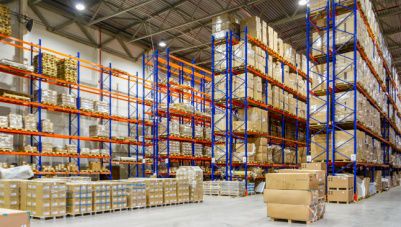
Contract manufacturing is a business arrangement where one company outsources product manufacturing to a third-party manufacturer under agreed specifications, quality standards and timelines. Businesses in India use contract manufacturing across sectors such as pharmaceuticals, FMCG, textiles, electronics and automotive components to reduce production costs and scale operations efficiently.
Companies can use contract manufacturing to reduce capital expenditure, access specialised manufacturing facilities and improve production flexibility without setting up their own factories. This page covers how contract manufacturing works, its types, examples, benefits, opportunities in India, comparison with in-house manufacturing and how businesses can choose the right manufacturing partner.
In summary
- Contract manufacturing allows businesses to outsource production to third-party manufacturers while retaining control over branding, product specifications and distribution
- Indian industries such as pharmaceuticals, food processing, textiles, electronics and automotive manufacturing widely use contract manufacturing to reduce operational costs and improve production efficiency
- Businesses can manufacture products without investing in factories, machinery or large-scale workforce infrastructure, helping reduce upfront capital expenditure
- Manufacturing agreements usually define production quantity, quality benchmarks, pricing, intellectual property rights, delivery timelines and compliance requirements
- For example, a skincare brand may outsource cosmetic manufacturing to a certified production facility while focusing on marketing, packaging and retail distribution
What is contract manufacturing?
Contract manufacturing is a production model where a company appoints an external manufacturer to produce goods on its behalf according to predefined specifications, quality standards and production volumes. The contracting company usually controls branding, marketing and product distribution, while the manufacturer manages production processes, machinery and workforce operations.
This model is widely used in India by businesses that want to expand production without investing in manufacturing infrastructure. Contract manufacturing agreements generally include production timelines, pricing terms, confidentiality clauses, quality benchmarks and compliance responsibilities. Industries such as pharmaceuticals, electronics, food processing, cosmetics and garments frequently use contract manufacturing to improve operational efficiency and reduce production costs.
How does contract manufacturing work?
Contract manufacturing works by assigning product manufacturing responsibilities to a specialised third-party production company under a formal agreement.
- Product requirement identification
A business defines the product design, specifications, production quantity, quality standards and packaging requirements before selecting a manufacturing partner. - Manufacturer selection
The company evaluates manufacturers based on production capacity, certifications, compliance standards, infrastructure and previous industry experience. - Agreement and pricing finalisation
Both parties sign a manufacturing contract specifying production cost, delivery timelines, confidentiality terms, intellectual property ownership and quality benchmarks. - Prototype and sample approval
The manufacturer develops product samples or prototypes for testing and approval before full-scale production begins. - Mass production process
After approval, the manufacturer starts large-scale production using its machinery, workforce and operational systems. - Quality inspection and compliance checks
Products undergo quality inspections and regulatory compliance checks before dispatch to ensure consistency and safety standards. - Delivery and distribution
Finished products are delivered to the contracting business for branding, warehousing, distribution or retail sales.
At Bajaj Finance, manufacturing businesses can explore funding solutions to manage inventory purchases, machinery upgrades and operational expansion requirements.
Types of contract manufacturing: a complete breakdown
Businesses use different types of contract manufacturing depending on production requirements, industry standards and operational control preferences.
- Private label manufacturing
Manufacturers produce standardised products that businesses sell under their own brand names. This model is common in cosmetics, food products and consumer goods. - Component manufacturing
Manufacturers produce individual parts or components used in final product assembly. Automotive and electronics industries commonly use this model. - Labour subcontracting
Businesses outsource only labour-intensive manufacturing tasks while retaining control over raw materials and product design. - End-to-end manufacturing
The manufacturer handles sourcing, production, packaging and quality control under one agreement. - Original Equipment Manufacturing (OEM)
OEM manufacturers produce products or components that another company markets under its own brand identity. - Third-party pharmaceutical manufacturing
Pharmaceutical companies outsource medicine production to manufacturing units compliant with regulatory requirements issued by the Central Drugs Standard Control Organisation (CDSCO).
Contract manufacturing structures vary depending on product complexity, intellectual property ownership and compliance obligations.
Contract manufacturing example
A consumer electronics company based in Bengaluru may design wireless earphones but outsource manufacturing to a specialised electronics manufacturing unit in Noida. The contracting company controls branding, online sales and customer support, while the manufacturing partner manages component sourcing, assembly, testing and packaging.
This arrangement helps businesses reduce infrastructure investment and improve production scalability.
Example workflow
- A skincare startup in Mumbai develops a cosmetic formula
- The company partners with a certified cosmetic manufacturer in Gujarat
- The manufacturer produces 50,000 units every month based on agreed specifications
- Packaging is customised according to the startup’s branding guidelines
- Finished products are shipped to warehouses for online and retail distribution
Similarly, textile exporters in Tiruppur and automotive suppliers in Pune frequently use contract manufacturing to fulfil bulk export orders without expanding internal production facilities.
Key benefits of contract manufacturing for businesses
Contract manufacturing helps businesses improve operational efficiency while reducing infrastructure and production costs.
- Reduces capital expenditure on factories, machinery and workforce infrastructure
- Provides access to specialised manufacturing expertise and production technology
- Improves scalability for seasonal demand and large-volume production requirements
- Enables faster product launches through existing manufacturing facilities
- Supports cost optimisation through bulk procurement and operational efficiencies
- Allows businesses to focus on branding, sales and distribution activities
- Reduces operational risk associated with factory maintenance and workforce management
- Improves supply chain flexibility across multiple production locations
- Helps startups and MSMEs enter manufacturing sectors with lower upfront investment
Many Indian MSMEs use contract manufacturing to expand operations across Tier 2 and Tier 3 cities without establishing dedicated production facilities.
Contract manufacturing opportunities in India: Industries and sectors
India offers significant contract manufacturing opportunities due to its industrial infrastructure, skilled workforce and expanding domestic consumption market.
Major sectors using contract manufacturing
- Pharmaceuticals and healthcare products
- FMCG and packaged food manufacturing
- Textile and garment production
- Electronics and mobile accessories
- Automotive components and spare parts
- Cosmetics and personal care products
- Chemicals and industrial products
- Medical devices and healthcare equipment
India’s pharmaceutical manufacturing sector is among the largest users of contract manufacturing due to export demand and regulatory compliance requirements. Electronics manufacturing clusters in Noida, Chennai and Bengaluru also support growing contract production activity.
Government initiatives such as Make in India and Production Linked Incentive (PLI) schemes have increased manufacturing investments across sectors including electronics, semiconductors and automotive production. Businesses expanding manufacturing capacity often require working capital support, inventory financing and machinery funding during scaling operations.
Contract manufacturing vs in-house manufacturing: Key differences
| Parameter | Contract manufacturing | In-house manufacturing |
|---|---|---|
| Infrastructure ownership | Third-party manufacturer owns facilities | Business owns production infrastructure |
| Capital investment | Lower upfront investment | High machinery and factory investment |
| Operational control | Shared operational control | Full operational control |
| Production scalability | Easier scalability through outsourcing | Expansion requires additional infrastructure |
| Workforce management | Managed by manufacturer | Managed internally |
| Quality supervision | Defined through agreements and audits | Controlled directly by business |
| Production flexibility | Suitable for fluctuating demand | Better for stable long-term production |
| Setup time | Faster production start | Longer setup and compliance timelines |
| Risk exposure | Shared production risk | Full operational risk with business |
Businesses usually choose contract manufacturing when reducing infrastructure costs and improving production flexibility are higher priorities than direct operational control.
Pros and cons of contract manufacturing for businesses
Contract manufacturing offers operational and financial advantages, but businesses should also evaluate potential risks before outsourcing production.
Pros
- Lower manufacturing setup costs
- Faster production scaling capability
- Access to specialised technical expertise
- Reduced equipment maintenance responsibilities
- Improved operational efficiency
- Easier entry into new product categories
Cons
- Reduced direct control over manufacturing operations
- Potential quality consistency challenges
- Dependence on external production schedules
- Intellectual property and confidentiality risks
- Supply chain disruptions can affect delivery timelines
- Regulatory non-compliance by manufacturers can affect brand reputation
Businesses can reduce these risks through detailed manufacturing agreements, periodic audits, compliance verification and quality inspections.
How to find and choose the right contract manufacturer
Selecting the right contract manufacturing partner directly affects product quality, delivery timelines and operational reliability.
- Assess the manufacturer’s industry experience and production capabilities
- Verify compliance certifications, licences and regulatory approvals
- Evaluate production capacity and scalability for future demand
- Review quality control systems and inspection processes
- Check previous client references and industry reputation
- Assess infrastructure, machinery and technology capabilities
- Confirm confidentiality protection and intellectual property safeguards
- Compare production pricing, logistics capabilities and delivery timelines
- Conduct factory visits and operational audits before agreement finalisation
- Define service-level agreements (SLAs) for quality and delivery standards
Businesses should also ensure manufacturers comply with regulations issued by authorities such as the Bureau of Indian Standards (BIS), Food Safety and Standards Authority of India (FSSAI) or Central Drugs Standard Control Organisation (CDSCO), depending on the product category.
Conclusion
Contract manufacturing helps businesses expand production capacity, reduce infrastructure investment and improve operational flexibility across industries such as pharmaceuticals, electronics, textiles and FMCG. Businesses can use this model to optimise costs, scale efficiently and focus on branding and market expansion while outsourcing production responsibilities to specialised manufacturers.
Companies planning production expansion or inventory scaling can explore business loans to manage operational funding requirements. Borrowers can also compare applicable business loan interest rate options and estimate monthly repayments using the business loan EMI calculator before applying.