
Published Jun 2, 2026 · 3 min read

Overview

Choosing the right oven is essential for achieving consistent baking results, whether you are preparing cakes, cookies, bread, pizzas or other baked dishes. The best ovens for baking offer accurate temperature control, even heat distribution and sufficient capacity to handle different recipes and batch sizes. Modern baking ovens are available in various types, including OTG (Oven Toaster Grill), convection ovens and built-in ovens. They come with features such as multiple cooking modes, adjustable temperature settings, timers, convection fans and preset baking functions that help improve baking performance and convenience. Selecting an oven based on capacity, heating technology, energy efficiency and baking requirements can help ensure better cooking results and a more enjoyable baking experience.


Explore ovens at any of Bajaj Finance’s 1.5 lakh partner stores in 4,000 cities in India. Choose your ideal model, pay with Easy EMIs, and enjoy zero down payment on select deals. Simply check your loan eligibility now and bring home your desired product without worrying about overspending.

Features of the best ovens for baking

The best ovens for baking include features that help ensure even cooking, accurate temperature control and consistent baking results. Understanding these features can help you choose an oven that matches your baking requirements and kitchen needs.

  • Precise temperature control: Allows accurate adjustment of cooking temperatures for different baking recipes and food types.
  • Even heat distribution: Ensures consistent baking by spreading heat evenly throughout the oven cavity.
  • Convection technology: Uses a fan to circulate hot air, helping food cook faster and bake more uniformly.
  • Multiple cooking modes: Supports baking, grilling, toasting and roasting for greater versatility.
  • Adjustable timer settings: Helps monitor cooking time and prevents overbaking or undercooking.
  • Large interior capacity: Accommodates larger baking trays, multiple dishes and family-sized meals.
  • Durable heating elements: Provides reliable performance and consistent heat generation over time.
  • Easy-to-use controls: Features user-friendly knobs, touch panels or digital displays for convenient operation.
  • Interior lighting: Allows users to monitor food without opening the oven door and losing heat.
  • Energy-efficient operation: Helps reduce electricity consumption while maintaining effective baking performance.
  • Removable trays and racks: Makes cleaning easier and supports flexible cooking arrangements.
  • Preset cooking functions: Offers predefined settings for common baking and cooking tasks.

Types of ovens for baking

Different types of ovens are designed to meet different baking requirements, ranging from simple home baking tasks to advanced and large-scale cooking needs. Understanding how each type works can help you select the most suitable oven for your kitchen, baking frequency and budget.


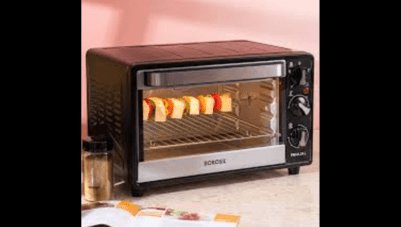
  • OTG (Oven Toaster Grill): An OTG is one of the most commonly used ovens for home baking. It uses heating rods located at the top and bottom of the oven to generate heat for baking, grilling and toasting. OTGs provide good temperature control, support a variety of baking trays and are ideal for preparing cakes, cookies, bread, pizzas and grilled dishes. They are generally more affordable than built-in ovens and are preferred by beginner and intermediate bakers.
  • Convection oven: A convection oven uses a built-in fan to circulate hot air evenly throughout the cooking chamber. This continuous airflow helps food cook more uniformly and often reduces baking time compared to conventional ovens. Convection ovens are particularly useful for baking multiple trays of cookies, pastries and cakes because they minimize uneven browning and hot spots.
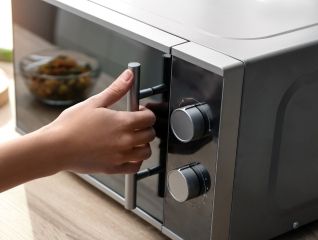
  • Microwave convection oven: This type of oven combines microwave cooking with convection baking technology. While the microwave mode is used for reheating and quick cooking, the convection mode can be used for baking cakes, cookies, muffins and pizzas. It is a practical option for users who want multiple cooking functions in a single appliance and have limited kitchen space.
  • Built-in oven: Built-in ovens are permanently installed into kitchen cabinets and are commonly found in modern modular kitchens. They offer larger cooking capacities, advanced baking functions, precise temperature control and premium design aesthetics. These ovens are ideal for frequent bakers who require consistent performance and the ability to prepare large quantities of food.
  • Electric oven: Electric ovens rely on electric heating elements to generate and maintain cooking temperatures. They are known for accurate temperature regulation and reliable baking performance, making them suitable for cakes, pastries, bread and other baked goods that require precise heat control.
  • Wall oven: A wall oven is installed at a comfortable height within a kitchen wall or cabinet unit, making it easier to access without bending. It offers similar baking capabilities to built-in ovens while improving kitchen ergonomics and saving floor space. Wall ovens are often chosen for convenience and modern kitchen layouts.
  • Double oven: Double ovens feature two separate cooking compartments that can operate independently at different temperatures. This allows users to bake multiple dishes simultaneously without flavor transfer. They are especially useful for large families, frequent entertainers and users who prepare multiple recipes at the same time.
  • Commercial baking oven: Commercial ovens are designed for bakeries, restaurants and large-scale food production. They provide higher capacity, stronger heating systems and consistent performance for continuous operation. These ovens can handle large batches of cakes, bread, pastries and other baked products efficiently, making them suitable for professional environments.

How to choose oven capacity for home and professional baking

Selecting the right oven capacity is important for achieving efficient baking performance and ensuring the oven can handle your typical cooking volume. The ideal capacity depends on how frequently you bake, the quantity of food you prepare and whether the oven is intended for home or commercial use.

  • Up to 20 liters: Small-capacity ovens are suitable for individuals, students and small households. They can handle basic baking tasks such as cookies, cupcakes, small cakes, toast and simple snacks while occupying minimal kitchen space.
  • 20 to 30 liters: This capacity range is ideal for small families and occasional bakers. It provides enough space for baking cakes, pizzas, bread, muffins and multiple servings of baked dishes without taking up excessive counter space.
  • 30 to 40 liters: Medium-sized ovens are suitable for families that bake regularly. They can accommodate larger baking trays, multiple racks and a wider variety of recipes, making them a popular choice for everyday home baking.
  • 40 to 60 liters: Large-capacity ovens are designed for serious home bakers and users who frequently prepare large meals. They provide additional space for large cakes, multiple trays of cookies, roasted dishes and batch baking.
  • 60 liters and above: These ovens are often preferred by professional bakers, commercial kitchens and small bakeries. The larger cooking chamber supports high-volume baking and allows multiple items to be prepared simultaneously.
  • Consider household size: Smaller households generally require compact ovens, while larger families may benefit from higher-capacity models that can prepare more food in a single cycle.
  • Evaluate baking frequency: Frequent bakers should choose larger capacities to improve efficiency and reduce the need for multiple baking batches.
  • Check tray and rack compatibility: The internal dimensions of the oven should be suitable for the baking trays, cake tins and cookware you plan to use regularly.
  • Assess available kitchen space: Ensure the oven fits comfortably within your kitchen layout while providing sufficient ventilation and accessibility.
  • Match capacity to future needs: If you expect your baking requirements to increase over time, selecting a slightly larger oven can provide greater flexibility and long-term value.

How oven energy consumption affects baking performance

An oven's energy consumption plays an important role in baking efficiency, cooking consistency and long-term operating costs. Ovens that use energy effectively can maintain stable temperatures, improve baking results and reduce electricity usage without compromising performance.

  • Consistent temperature maintenance: Energy-efficient ovens are better at maintaining stable temperatures throughout the baking process, helping cakes, bread and pastries cook evenly.
  • Faster preheating times: Modern ovens with improved heating technology often reach the desired temperature more quickly, reducing waiting time and overall energy consumption.
  • Better heat retention: Well-insulated ovens retain heat more effectively, minimizing temperature fluctuations and improving baking consistency while using less electricity.
  • Even heat distribution: Ovens with convection technology use fans to circulate hot air evenly, allowing food to bake more uniformly and often reducing cooking times.
  • Reduced electricity costs: Energy-efficient ovens consume less power during operation, helping lower household electricity bills over time.
  • Improved baking results: Stable heating and controlled energy usage contribute to better texture, color and overall quality of baked products.
  • Suitable for frequent baking: Users who bake regularly can benefit from energy-efficient models because lower power consumption can significantly reduce long-term operating expenses.
  • Advanced heating technology: Modern ovens often include optimized heating elements and smart temperature controls that improve performance while reducing unnecessary energy usage.
  • Capacity and efficiency balance: Choosing an oven with the right capacity prevents wasting energy on heating unused space during baking.
  • Long-term value: Although some energy-efficient ovens may have a higher purchase price, they can provide better performance and lower operating costs throughout their lifespan.

How to choose the best oven for baking based on your needs and budget

Choosing the right oven depends on your baking habits, kitchen space, preferred features and budget. Evaluating these factors carefully can help you find an oven that delivers consistent baking performance and long-term value.

  • Identify your baking requirements: Consider the types of food you bake most often, such as cakes, cookies, bread, pizzas or pastries, as different ovens may be better suited for specific baking tasks.
  • Choose the appropriate oven type: Decide between OTG ovens, convection ovens, microwave convection ovens or built-in ovens based on your cooking needs and available kitchen space.
  • Select the right capacity: Smaller capacities are suitable for individuals and small families, while larger ovens are better for frequent baking, batch cooking and large households.
  • Evaluate temperature control features: Accurate temperature settings help ensure consistent baking results and are particularly important for recipes that require precise heat management.
  • Look for convection technology: Ovens with convection fans distribute heat more evenly and can improve baking consistency while reducing cooking time.
  • Check available cooking functions: Features such as baking, grilling, roasting, toasting and preset cooking programs can increase versatility and convenience.
  • Consider energy efficiency: Energy-efficient ovens can reduce electricity consumption and operating costs, especially for users who bake regularly.
  • Review build quality and durability: A well-constructed oven with quality materials and reliable heating elements typically provides better long-term performance.
  • Assess ease of cleaning: Removable trays, non-stick interiors and accessible designs make maintenance simpler and more convenient.
  • Set a realistic budget: Compare features, capacity and performance within your price range to find the best balance between functionality and cost.
  • Check warranty and after-sales support: Reliable customer support and warranty coverage can provide peace of mind and help protect your investment.
  • Plan for future usage: If you expect your baking needs to grow over time, choosing a slightly larger or more feature-rich oven may offer better long-term value.

Get electronics and appliances on Easy EMIs with Bajaj Finance

Bringing home your preferred product is now hassle-free with Bajaj Finance's flexible financing options. Follow these steps to get started:

  • Explore products on Bajaj Mall: Browse through a wide selection of products on Bajaj Mall. Compare features to find a model that meets your needs.
  • Visit a partner store: Once you shortlist a model, step into any of Bajaj Finance’s 1.5 lakh partner stores across 4,000 cities in India. See the product in person, talk to experts, and make a confident decision.
  • Choose the Easy EMI Loan option: At checkout, select the Bajaj Finance Easy EMI Loan. Avail financing of up to Rs. 5 lakh and split the cost into convenient monthly instalments. Some products also come with a zero down payment option.
  • Check your loan eligibility online: Plan better by checking your loan eligibility in minutes. Simply enter your mobile number and OTP to know your pre-approved limit.
  • Use the Insta EMI Card for purchases up to Rs. 3 lakh: Already own the Bajaj Finance Insta EMI Card? Use it for instant, paperless checkout and convert your purchases of up to Rs. 3 lakh into Easy EMIs.

Why use the Smart Savings Calculator

Bajaj Finance’s Smart Savings Calculator helps you unlock maximum savings every time you shop at partner stores. It brings together all available brand, dealer, and scheme offers—so you can see your total savings instantly and shop smarter with Easy EMIs.

1. Dealer offers - Grab exclusive in-store deals at over 1.5 lakh partner stores across India. Enjoy local discounts and special prices you will not find online.

2. Brand offers - Access limited-time discounts from top brands across electronics, appliances, and more. Discover brand-specific savings selected just for you.

3. Bajaj offers - Unlock exclusive Bajaj Finance deals on popular products—available only to our customers. More rewards, more value.

4. Scheme offers - Take advantage of time-sensitive offers on select EMI schemes. Get extra benefits after paying just 3 EMIs—visible during EMI selection at checkout.

Calculate your extra savings today!

Frequently asked questions

Can I get an oven on EMI?

Yes, you can easily bring home your preferred oven using Bajaj Finance’s Easy EMI options. Whether you already have the Insta EMI card or are new to it, here is how to begin:


If you have the Bajaj Finance Insta EMI card:

  • Explore products on Bajaj Mall: Choose from a wide range of the latest and most popular models.
  • Visit a partner store: Check out the product in person at any of Bajaj Finance’s 1.5 lakh partner stores across 4,000 cities in India.
  • Use your Insta EMI card at checkout: Convert the cost into Easy EMIs that fit your monthly budget.
  • Zero down payment on select models: Take your chosen product home without paying anything upfront.

If you do not have an Insta EMI card:

Check your Insta EMI Card eligibility online using your mobile number and OTP. If you are eligible, apply instantly and enjoy a smarter, more affordable way to buy your favourite product on Easy EMIs.

Which oven is best for baking cakes?

OTG ovens and convection ovens are generally considered the best options for baking cakes because they provide even heat distribution, accurate temperature control and consistent baking results.


Is OTG better than microwave for baking?

For dedicated baking, an OTG is often preferred because it offers better browning, more precise temperature control and improved baking performance. However, a convection microwave can also bake cakes, cookies and pastries while providing additional cooking functions.


What oven size is suitable for home baking?

For most home users, an oven with a capacity between 20 and 40 liters is suitable. Smaller ovens work well for occasional baking, while larger capacities are better for families and frequent bakers.


Which oven mode is best for baking?

The baking or convection mode is generally the best choice for baking because it helps distribute heat evenly throughout the oven, resulting in consistent cooking and better texture.


Can convection microwave be used for baking?

Yes, a convection microwave can be used for baking cakes, cookies, muffins, pizzas and other baked dishes. It combines convection heating technology with microwave functionality, making it a versatile option for home cooking and baking.

Show More Show Less

Bajaj Finance app for all your financial needs and goals

Trusted by 50 million+ customers in India, Bajaj Finance App is a one-stop solution for all your financial needs and goals.

You can use the Bajaj Finance App to:

  • Apply for loans online, such as Instant Personal Loan, Home Loan, Business Loan, Gold Loan, and more.
  • Invest in fixed deposits and mutual funds on the app.
  • Choose from multiple insurance for your health, motor and even pocket insurance, from various insurance providers.
  • Pay and manage your bills and recharges using the BBPS platform. Use Bajaj Pay and Bajaj Wallet for quick and simple money transfers and transactions.
  • Apply for Insta EMI Card and get a pre-qualified limit on the app. Explore over 1 million products on the app that can be purchased from a partner store on Easy EMIs.
  • Shop from over 100+ brand partners that offer a diverse range of products and services.
  • Use specialised tools like EMI calculators, SIP Calculators
  • Check your credit score, download loan statements and even get quick customer support—all on the app.

Download the Bajaj Finance App today and experience the convenience of managing your finances on one app.

Disclaimer

1. Bajaj Finance Limited (“BFL”) is a Non-Banking Finance Company (BAJAJ FINANCE) and Prepaid Payment Instrument Issuer offering financial services viz., loans, deposits, Bajaj Pay Wallet, Bajaj Pay UPI, bill payments and third-party wealth management products. The details mentioned in the respective product/ service document shall prevail in case of any inconsistency with respect to the information referring to BFL products and services on this page.

2. All other information, such as, the images, facts, statistics etc. (“information”) that are in addition to the details mentioned in the BFL’s product/ service document and which are being displayed on this page only depicts the summary of the information sourced from the public domain. The said information is neither owned by BFL nor it is to the exclusive knowledge of BFL. There may be inadvertent inaccuracies or typographical errors or delays in updating the said information. Hence, users are advised to independently exercise diligence by verifying complete information, including by consulting experts, if any. Users shall be the sole owner of the decision taken, if any, about suitability of the same. 

Do more with the Bajaj Finserv App!

UPI, Wallet, Loans, Investments, Cards, Shopping and more