Published May 22, 2026 · 3 Min Read

What is a CRT television

A CRT television, or Cathode Ray Tube television, is an older display technology that was widely used before flat-screen LED and smart TVs became popular. CRT TVs use electron beams and phosphor-coated screens to create images and display video content. These televisions were commonly found in homes during the 1980s, 1990s, and early 2000s because of their reliable picture quality and affordability. Although modern televisions have largely replaced CRT models, they are still remembered for their durability, deep contrast levels, and retro gaming compatibility.


If you are looking for a new TV, head to any of Bajaj Finance’s 1.5 lakh partner stores in 4,000 cities in India. Choose your ideal model, pay with Easy EMIs, and enjoy zero down payment on select deals. Simply check your loan eligibility now and bring home your desired television without worrying about overspending.

How does a CRT television work to display pictures

CRT televisions use electron beam technology and phosphor-coated screens to generate moving images and display video signals on the screen.


Electron beam generation: CRT televisions use electron guns inside the tube to produce beams of electrons that help create images on the display.

Phosphor-coated screen technology: The inside surface of the CRT screen is coated with phosphor materials that glow when struck by electron beams.

Scanning process for image display: Electron beams rapidly scan the screen line by line to create moving images and video content.

Magnetic deflection system: Magnetic coils guide the electron beams accurately across the screen for proper picture formation and colour display.

Colour image production: Colour CRT televisions use separate red, green, and blue phosphors to produce full-colour images on the display.

Key features that defined CRT televisions

CRT televisions were known for their sturdy design, natural motion handling, and reliable picture quality during the early television era.


Deep contrast and black levels: CRT TVs offered strong contrast performance and deeper black levels compared to many early flat-screen displays.

Smooth motion clarity: CRT displays handled fast-moving scenes naturally without noticeable motion blur or refresh lag.

Curved display design: Most CRT televisions featured curved glass screens because of the cathode ray tube construction.

Multiple analogue input support: CRT TVs commonly supported antenna, AV, RCA, and component video connections for older media devices.

Durable long-lasting construction: Many CRT televisions remained functional for years with relatively simple repair and maintenance requirements.

Advantages of using CRT televisions for viewing and gaming

CRT televisions offered several viewing and performance advantages that made them popular for decades across households worldwide.


Excellent motion performance: CRT displays handled sports, action scenes, and gaming visuals smoothly without significant motion blur.

Better retro gaming compatibility: Older gaming consoles were originally designed for CRT televisions, making them popular among retro gaming enthusiasts.

Natural colour reproduction: CRT televisions produced balanced colours and deep contrast without requiring advanced image processing technologies.

Lower input lag: Many CRT TVs offered extremely low input lag, improving responsiveness during gaming and fast-paced video playback.

Long operational lifespan: Well-maintained CRT televisions could remain functional for many years with basic servicing and repairs.

What are the biggest disadvantages and limitations of CRT TVs

Despite their advantages, CRT televisions also had several limitations that eventually caused consumers to shift towards modern LED, LCD, and smart TVs.


Bulky and heavy construction: CRT televisions required large cathode ray tubes, making them significantly heavier and bulkier than modern flat-screen TVs.

Higher electricity consumption: CRT displays generally consumed more power because electron beam generation required higher energy usage during operation.

Limited screen size practicality: Manufacturing larger CRT televisions became increasingly difficult because of excessive weight and space requirements.

Lower resolution capabilities: Most CRT TVs supported only standard-definition video formats rather than modern Full HD, 4K, or 8K resolutions.

Visible screen flickering: Some CRT televisions produced noticeable flickering at lower refresh rates, which could cause eye strain during long viewing sessions.

Heat generation during prolonged use: CRT televisions often generated more heat compared to energy-efficient LED televisions available today.

Space-consuming design: The deep rear structure of CRT TVs occupied significantly more room in entertainment units and living spaces.

How do CRT televisions compare with modern LED and smart TVs

CRT televisions and modern LED or smart TVs differ significantly in design, display technology, energy efficiency, resolution quality, and smart functionality.


FeatureCRT televisionModern LED and smart TV
Display technologyCathode ray tubeLED, QLED, or OLED panel
Screen structureBulky and curvedSlim and flat
Power consumptionHigher electricity usageMore energy-efficient
Resolution supportStandard definitionFull HD, 4K, and 8K
Smart connectivityNot availableWi-Fi, apps, and streaming
Weight and portabilityHeavyLightweight
Motion handlingNaturally smoothImproved through refresh technology
Gaming compatibilityBest for retro consolesBetter for modern gaming systems

Are CRT televisions still used today for gaming and retro setups

Although CRT televisions are no longer mainstream consumer products, they are still used in several niche applications because of their unique display characteristics and retro compatibility.


Retro gaming communities still prefer CRTs: Many retro gamers continue using CRT televisions for classic consoles because older games were originally optimised for CRT displays.

Vintage electronics collectors use CRT TVs: CRT televisions remain valuable among collectors interested in preserving retro technology and classic consumer electronics.

Repair hobbyists continue restoration work: Some electronics enthusiasts repair and restore old CRT televisions as part of vintage hardware projects.

Older surveillance systems still use CRT monitors: Certain legacy CCTV systems and industrial monitoring setups still operate with CRT display technology.

Limited usage in rural or secondary markets: Some older CRT televisions may still be found in homes or small businesses where modern flat-screen upgrades are less common.

Arcade gaming machines still use CRT displays: Many original arcade cabinets continue to use CRT technology because of authentic display performance and low input lag.


Get electronics and appliances on Easy EMIs with Bajaj Finance


Upgrading your home with the latest electronics and appliances is now hassle-free with Bajaj Finance's flexible financing options. Follow these steps to get started:


  • Explore products on Bajaj Mall: Browse a wide range of electronics and appliances from trusted brands on Bajaj Mall. Compare features to find a model that meets your needs.
  • Visit a partner store: Once you shortlist a model, step into any of Bajaj Finance’s 1.5 lakh partner stores across 4,000 cities in India. See the product in person, talk to experts, and make a confident decision.
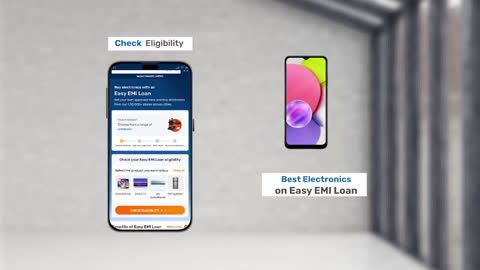
  • Choose the Easy EMI Loan option: At checkout, select the Bajaj Finance Easy EMI Loan. Avail financing of up to Rs. 5 lakh and split the cost into convenient monthly instalments. Some products also come with a zero down payment option.
  • Check your loan eligibility online: Plan better by checking your loan eligibility in minutes. Simply enter your mobile number and OTP to know your pre-approved limit.
  • Use the EMI Network Card for purchases up to Rs. 3 lakh: Already own the Bajaj Finance EMI Network Card? Use it for instant, paperless checkout and convert your purchases of up to Rs. 3 lakh into Easy EMIs.


Why use the Smart Savings Calculator


Bajaj Finance’s Smart Savings Calculator helps you unlock maximum savings every time you shop at partner stores. It brings together all available brand, dealer, and scheme offers—so you can see your total savings instantly and shop smarter with Easy EMIs.


1. Dealer offers - Grab exclusive in-store deals at over 1.5 lakh partner stores across India. Enjoy local discounts and special prices you will not find online.

2. Brand offers - Access limited-time discounts from top brands across electronics, appliances, and more. Discover brand-specific savings selected just for you.

3. Bajaj offers - Unlock exclusive Bajaj Finance deals on popular products—available only to our customers. More rewards, more value.

4. Scheme offers - Take advantage of time-sensitive offers on select EMI schemes. Get extra benefits after paying just 3 EMIs—visible during EMI selection at checkout.


Calculate your extra savings today!

FAQ

Can I get a TV on EMI?

Yes, you can easily bring home your preferred TV using Bajaj Finance’s Easy EMI options. Whether you already have the Insta EMI Card or are new to it, here is how to begin:


If you have the Bajaj Finance Insta EMI Card:

  • Explore TV on Bajaj Mall: Choose from a wide range of popular TV brands.
  • Visit a partner store: Check out the product in person at any of Bajaj Finance’s 1.5 lakh partner stores across 4,000 cities in India.
  • Use your Insta EMI Card at checkout: Convert the cost into Easy EMIs that fit your monthly budget.
  • Zero down payment on select models: Take your chosen television home without paying anything upfront.


If you do not have an Insta EMI Card:

Check your Insta EMI Card eligibility online using your mobile number and OTP. If you are eligible, apply instantly and enjoy a smarter, more affordable way to buy your favourite TV on Easy EMIs.

What does CRT stand for in televisions?

CRT stands for Cathode Ray Tube. It refers to the display technology used in older televisions and computer monitors where electron beams are projected onto a phosphor-coated screen to create moving images and video content. CRT televisions were widely used before flat-screen LED, LCD, and smart TVs became common in households worldwide.

Are CRT TVs better than modern TVs?

CRT TVs offered advantages such as excellent motion handling, deep contrast levels, low input lag, and superior retro gaming compatibility. However, modern LED and smart TVs provide significantly higher resolutions, slimmer designs, lower electricity consumption, internet connectivity, and advanced smart features. The better option depends on viewing preferences, gaming requirements, and intended usage.

Why were CRT televisions discontinued?

CRT televisions were discontinued mainly because of their bulky design, heavier construction, higher electricity consumption, and lower resolution capabilities compared to modern flat-screen TVs. As LED, LCD, and plasma televisions became more affordable and technologically advanced, consumers increasingly preferred slimmer TVs with better picture quality, larger displays, and smart features.

Do CRT TVs consume more electricity?

Yes, CRT televisions generally consume more electricity compared to modern LED televisions. CRT technology requires higher power for electron beam generation and phosphor screen illumination. Modern LED TVs are designed to be far more energy-efficient while delivering better brightness, higher resolution, and improved overall picture quality.

Can CRT TVs still be repaired?

Yes, CRT televisions can still be repaired in certain cases, especially for issues related to power supply circuits, internal wiring, capacitors, and display components. However, finding replacement parts and experienced CRT technicians has become more difficult because CRT televisions are no longer widely manufactured. Many vintage electronics enthusiasts still restore and maintain CRT TVs for retro gaming and collection purposes.

Show More Show Less

Bajaj Finserv app for all your financial needs and goals

Trusted by 50 million+ customers in India, Bajaj Finserv App is a one-stop solution for all your financial needs and goals.

You can use the Bajaj Finserv App to:

  • Apply for loans online, such as Instant Personal Loan, Home Loan, Business Loan, Gold Loan, and more.
  • Invest in fixed deposits and mutual funds on the app.
  • Choose from multiple insurance for your health, motor and even pocket insurance, from various insurance providers.
  • Pay and manage your bills and recharges using the BBPS platform. Use Bajaj Pay and Bajaj Wallet for quick and simple money transfers and transactions.
  • Apply for Insta EMI Card and get a pre-qualified limit on the app. Explore over 1 million products on the app that can be purchased from a partner store on Easy EMIs.
  • Shop from over 100+ brand partners that offer a diverse range of products and services.
  • Use specialised tools like EMI calculators, SIP Calculators
  • Check your credit score, download loan statements and even get quick customer support—all on the app.

Download the Bajaj Finserv App today and experience the convenience of managing your finances on one app.

Disclaimer

1. Bajaj Finance Limited (“BFL”) is a Non-Banking Finance Company (BAJAJ FINANCE) and Prepaid Payment Instrument Issuer offering financial services viz., loans, deposits, Bajaj Pay Wallet, Bajaj Pay UPI, bill payments and third-party wealth management products. The details mentioned in the respective product/ service document shall prevail in case of any inconsistency with respect to the information referring to BFL products and services on this page.

2. All other information, such as, the images, facts, statistics etc. (“information”) that are in addition to the details mentioned in the BFL’s product/ service document and which are being displayed on this page only depicts the summary of the information sourced from the public domain. The said information is neither owned by BFL nor it is to the exclusive knowledge of BFL. There may be inadvertent inaccuracies or typographical errors or delays in updating the said information. Hence, users are advised to independently exercise diligence by verifying complete information, including by consulting experts, if any. Users shall be the sole owner of the decision taken, if any, about suitability of the same.