





Vespa Scooter Top Speed and Daily Riding Performance
Vespa scooters reach around 86–93 kmph, depending on the 125 cc or 150 cc model you choose.


Key Specifications
-
Analogue, Analogue and Digital, Semi-Digital Instrument Console
-
Halogen, LED Headlight
-
Tubed, Tubeless Tyre Type
-
Bulb Tail Light
-
Glossy Red, Maze Grey, Red, Verde Amabile, Rosso Red, Verde Ambizioso, Matt Red Dragon, MATT BLACK, Azzuro Provenza Color


You may be eligible for a pre-approved offer
Quick approval | Flexible tenure options | Minimal paperwork
In summary
-
- Vespa 125 cc models reach around 86 kmph
- Vespa 150 cc models reach around 90–93 kmph
- 125 cc engine capacity is 124.45 cc
- 150 cc engine capacity is 149.5 cc
- 125 cc models produce 7.0 kW and 10.1 Nm
- 150 cc models produce 8.4 kW and 11.66 Nm
- Current models use automatic CVT transmissions
- Fuel tank capacity is 7.4 litres across the current core range
If a Vespa scooter fits your riding needs, a Bajaj Finance Two-wheeler Loan can finance up to %tw-max-ltv-perc% of its on-road price, subject to eligibility and approval. You can also check your pre-approved loan offer before planning your purchase.
Last updated: September 2026
What is the top speed of Vespa scooters?
How do Vespa 125 and 150 top speeds compare?
-
Vespa model Engine capacity Maximum power Maximum torque Reported top speed Vespa 125 124.45 cc 7.0 kW 10.1 Nm Around 86 kmph Vespa S 125 124.45 cc 7.0 kW 10.1 Nm Around 86 kmph Vespa 150 149.5 cc 8.4 kW 11.66 Nm Around 90–93 kmph Vespa S 150 149.5 cc 8.4 kW 11.66 Nm Around 93 kmph
The difference matters most when your route includes open roads, flyovers, or suburban stretches. In dense city traffic, acceleration, balance, braking, and low-speed control may affect your daily experience more often than maximum speed.
What are Vespa scooters like to ride?
Which Vespa engine suits your daily routine?
-
Your riding pattern Suitable Vespa option Short city commute 125 cc models can cover routine urban travel Office or college use 125 cc or 150 cc depending on route Heavy traffic CVT transmission supports stop-go riding Local errands Both engine options suit short trips Regular pillion use 150 cc output may suit added load requirements Suburban commute 150 cc models provide higher engine output Occasional faster roads 150 cc models offer higher top-speed capability Mostly dense city use 125 cc models may meet routine speed requirements
Consider a rider travelling around 30 km each day, with 24 km in city traffic and 6 km on open roads. For this pattern, either engine can handle the daily distance, so parking, traffic conditions, pillion use, fuel consumption, and purchase preference may carry more weight. If the same rider regularly used longer suburban stretches or faster roads, the 149.5 cc engine's 8.4 kW output and 11.66 Nm torque would become a more relevant consideration.
What should you consider beyond top speed?
-
- Engine choice: 125 cc models produce 7.0 kW and 10.1 Nm, while 150 cc models produce 8.4 kW and 11.66 Nm
- Mileage: Reported fuel efficiency varies by model, route, traffic, load, tyre pressure, and riding style
- Seat height: Current Vespa and Vespa S models list a 770 mm seat height
- Fuel capacity: The current core range uses a 7.4-litre fuel tank
- Braking: 125 cc versions use CBS, while 150 cc versions use ABS with a front disc brake
- Suspension: Current models use a hydraulic single-side-arm front setup and adjustable hydraulic rear suspension
- Body construction: The steel monocoque structure is a key part of Vespa's chassis design
These factors help you assess how the scooter fits your routine rather than judging it only by maximum speed.
Are Vespa scooters suitable for highway riding?
How practical are Vespa scooters in city traffic?
What are the Vespa scooter specifications?
Who should consider a Vespa scooter?
-
A Vespa scooter is relevant if:
- Most of your riding happens in city or suburban traffic
- You prefer an automatic CVT scooter
- You want a 125 cc or 150 cc petrol option
- You carry a pillion occasionally or regularly
- Your route includes short to moderate open-road stretches
- You can accommodate its steel monocoque body and dimensions
If frequent high-speed highway travel is a major requirement, assess whether a scooter with greater engine output and higher sustained-speed capability fits your route.
How can you finance a Vespa scooter?
-
A Bajaj Finance two-wheeler loan can finance up to %tw-max-ltv-perc% of the scooter's on-road price, subject to eligibility and approval.
Loan detail Bajaj Finance Two-wheeler Loan Loan amount From %tw-min-loan-amount% to %tw-loan-amount% Maximum financing Up to %tw-max-ltv-perc% of the on-road price Repayment tenure %tw-minimum-tenure% to %tw-maximum-tenure% Use the two-wheeler loan EMI calculator to compare monthly instalments across different loan amounts and repayment tenures.
A longer repayment tenure can reduce the monthly instalment but increase the total interest paid over the loan period. Also include petrol, insurance, servicing, and other ownership expenses when deciding the monthly instalment that fits your budget. Check your two-wheeler loan pre-approved offer.
Compare with similar products
Vespa VXL 125 (Maze Grey)

Honda Activa 125 H Smart (2025) (Pearl Igneous Black)

Suzuki Access 125 Disc Alloy Bluetooth (Pearl Mirage White)
EMI
₹2,436/ mo
₹1,596/ mo
₹1,715/ mo
Brand Name
Vespa
Honda
Suzuki
Color
Maze Grey
Pearl Igneous Black
Pearl Mirage White
Rear Wheel Brake
Drum
Drum
Drum
Front Wheel Brake
Disc
Disc
Disc
Speedometer
Analogue
Semi-Digital
Digital
Wheel Type
Tubed
Tubeless
Tubeless
Compare other products with Vespa Scooters
Find Your Nearest Dealer

Popular two-wheelers
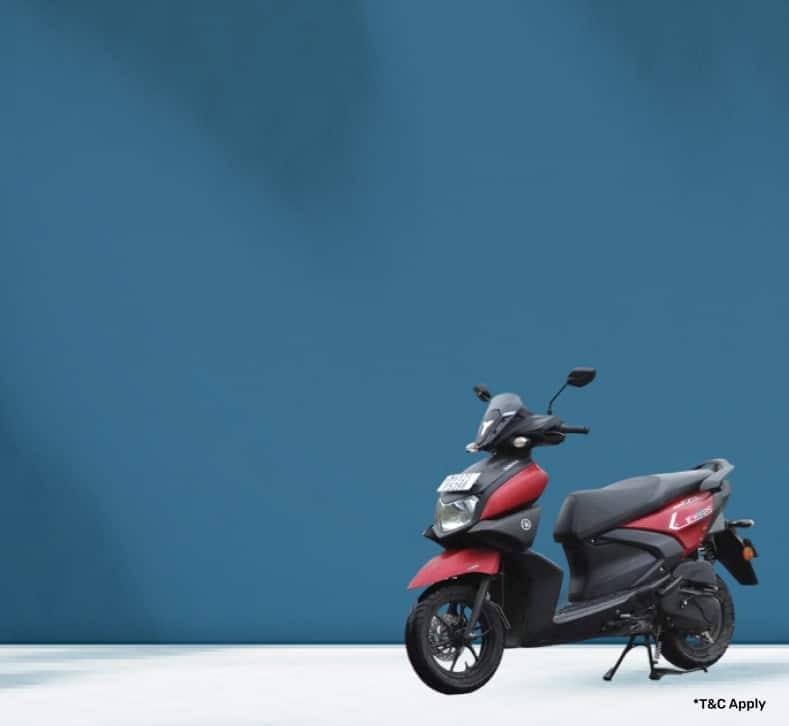
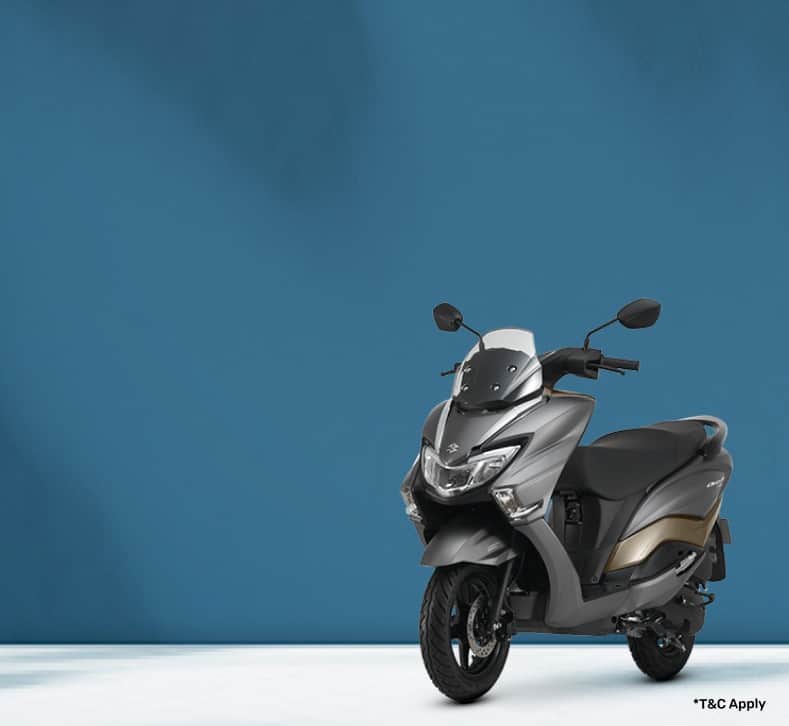
What our customers say about us
Kushal K
Reviewed on 04 Mar 2026
I applied for a Bajaj Finance two-wheeler loan last month and was surprised at how fast the approval came through. The process was simple, and I was riding my new bike within a week. Very happy with the service.
Vikram
Reviewed on 10 Jan 2026
This was my first loan, so I was nervous, but Bajaj Finance made it easy. The staff guided me step by step, and now I own my bike without any hassle. Highly recommend them.
Mamtha
Reviewed on 25 Dec 2025
The EMI options were flexible enough to fit my monthly budget. I didn’t feel pressured, and the repayment plan was explained clearly. It made buying my scooter stress-free.
Vishal
Reviewed on 05 Jan 2026
I liked that there were no hidden charges. Everything was transparent from the start, and the loan disbursal was quick. Bajaj Finance made the whole experience smooth.
Explore other brands












Related articles

Frequently asked questions about Vespa scooter performance
Engine choice and city use
Pillion use and faster roads
Mileage and maintenance
Is a Vespa 125 fast enough for daily city riding?
A Vespa 125 reaches around 86 kmph, which is sufficient for typical city and suburban speeds. Its 124.45 cc engine produces 7.0 kW and 10.1 Nm. Your daily experience will depend more on traffic, acceleration, braking, pillion load, and route conditions than on maximum speed alone. Test the scooter on roads similar to your commute before deciding.
Should you choose a Vespa 125 or Vespa 150?
Choose based on your regular route rather than engine size alone. The 125 cc models suit mainly urban journeys, while the 149.5 cc models provide higher power and torque for longer suburban and open-road stretches. Also compare fuel use, braking setup, price, pillion requirements, and the roads you normally travel before making your decision.
Does carrying a pillion affect Vespa scooter performance?
Yes. A pillion increases the total load the engine must move and can affect acceleration, braking distance, suspension response, and fuel consumption. The impact can become more noticeable on gradients and faster roads. If you regularly ride with a pillion, include two-up riding during your test ride and assess acceleration, braking, seating space, and comfort.
Can a Vespa 150 handle occasional highway riding?
A Vespa 150 can handle occasional faster-road stretches with its 149.5 cc engine and reported top speed of around 90–93 kmph. However, maximum speed does not represent a recommended continuous cruising speed. If highways form a regular part of your routine, assess overtaking response, braking, wind exposure, traffic speed, and comfort during a representative test ride.
Does riding at higher speeds affect Vespa scooter mileage?
Yes. Sustained higher speeds, repeated acceleration, traffic, pillion load, tyre pressure, and road conditions can change fuel consumption. Mileage also varies between the 125 cc and 150 cc engines. Track fuel used across several normal journeys to understand the mileage you achieve instead of relying only on a single published figure.
Can maintenance affect Vespa scooter top speed?
Yes. Tyre pressure, tyre condition, engine oil, air-filter condition, CVT maintenance, spark plug performance, and servicing can affect acceleration and overall performance. Follow Vespa's recommended maintenance schedule. If the scooter develops a persistent performance change, have it inspected rather than judging it only against the published or reported top-speed figure.
Disclaimer
1. Bajaj Finance Limited (“BFL”) is a Non-Banking Finance Company (NBFC) and Prepaid Payment Instrument Issuer offering financial services viz., loans, deposits, Bajaj Pay Wallet, Bajaj Pay UPI, bill payments and third-party wealth management products. The details mentioned in the respective product/ service document shall prevail in case of any inconsistency with respect to the information referring to BFL products and services on this page.
2. All other information, such as, the images, facts, statistics etc. (“information”) that are in addition to the details mentioned in the BFL’s product/ service document and which are being displayed on this page only depicts the summary of the information sourced from the public domain. The said information is neither owned by BFL nor it is to the exclusive knowledge of BFL. There may be inadvertent inaccuracies or typographical errors or delays in updating the said information. Hence, users are advised to independently exercise diligence by verifying complete information, including by consulting experts, if any. Users shall be the sole owner of the decision taken, if any, about suitability of the same.