












Invest in equities, F&O and upcoming IPOs effortlessly by opening a demat account online. Enjoy a free subscription for the first year with Bajaj Broking

Know the benefits of a demat account
Check now
Free Demat account in minutes | Low brokerage | Online account opening
In summary
The negative volume index (NVI) is a volume-based technical indicator that changes only on days when market volume falls compared to the previous session. Analysts often combine NVI with a 255-day exponential moving average (EMA) to identify long-term market trends.
Key points:
- NVI updates only when trading volume decreases.
- The indicator starts from a base value, often 1,000.
- A rising NVI can indicate accumulation during lower-volume sessions.
- Many traders compare NVI with a 255-day EMA for trend confirmation.
- NVI and Positive Volume Index (PVI) analyse different volume conditions.
- NVI works best alongside price action and other technical indicators.
Show More
Show Less
What is negative volume index (NVI)?
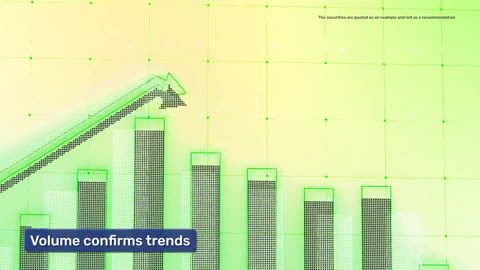
Volume analysis
The negative volume index (NVI) is a cumulative technical indicator that measures price changes on days when trading volume declines from the previous trading session.
Paul Dysart originally developed the concept, and later analyst Norman Fosback popularised its use in market analysis. The indicator assumes that informed investors may act more actively during quieter trading sessions, while less informed traders may contribute more heavily during high-volume periods.
The NVI focuses exclusively on days when volume falls. When volume rises, the indicator remains unchanged.
Key characteristics:
- Volume-based trend indicator.
- Updates only on lower-volume days.
- Tracks cumulative percentage price changes.
Often paired with long-term moving averages.
NVI measures market behaviour during declining-volume sessions.
Show More
Show Less
Current IPO
Mainboard
SME
How is the negative volume index calculated? NVI formula and example
The NVI calculation adjusts the previous NVI value only when current trading volume is lower than the previous day's volume.
NVI formula
If today's volume is lower than yesterday's volume:
NVI = Previous NVI + [(Today's Close − Previous Close) ÷ Previous Close] × Previous NVI
If today's volume is equal to or higher than yesterday's volume:
NVI = Previous NVI
Example
Assume:
| Parameter | Value |
|---|---|
| Previous NVI | 1,000 |
| Previous close | ₹ 100 |
| Current close | ₹ 105 |
| Previous volume | 10,00,000 shares |
| Current volume | 8,00,000 shares |
Calculation:
- Price change = (105 − 100) ÷ 100 = 0.05
- NVI adjustment = 0.05 × 1,000 = 50
New NVI = 1,000 + 50 = 1,050
Since volume declined and price increased, the NVI moved higher.
Show More
Show Less
How do you use the NVI indicator? Interpretation and step-by-step trading process
Traders use NVI to evaluate trend direction and identify potential market strength during lower-volume periods.
Interpretation guidelines
- Rising NVI suggests positive price action on declining volume days.
- Falling NVI suggests weakness during lower-volume sessions.
- NVI above the 255-day EMA may indicate a stronger long-term trend.
NVI below the 255-day EMA may indicate a weaker long-term trend.
Step-by-step process
- Plot the NVI indicator using charting software.
- Add a 255-day EMA to the NVI chart.
- Compare the NVI position relative to the EMA.
- Confirm signals using price trends and support-resistance levels.
Review volume patterns before making trading decisions.
A single indicator should not drive trading decisions in isolation.
Show More
Show Less
Start investing today

Open Demat Account
Open Trading Account

Margin Trading Facility
NVI vs PVI: key differences between negative and positive volume index
The Negative Volume Index and Positive Volume Index examine different market conditions.
| Feature | NVI | PVI |
| Volume condition | Lower than previous day | Higher than previous day |
| Focus | Quiet market sessions | Active market sessions |
| Assumption | Informed investor activity | Crowd participation |
| Update frequency | Only on lower-volume days | Only on higher-volume days |
| Usage | Trend confirmation | Participation analysis |
Many analysts use both indicators together to obtain a broader view of market behaviour.
Show More
Show Less
Why is NVI called the "smart money indicator" and what does it reveal?
NVI is often called the smart money indicator because of the assumption that experienced or informed investors may act during periods of lower market activity.
The theory suggests that institutional participants and professional investors do not always require unusually high trading volume to build or reduce positions. As a result, meaningful price changes during lower-volume sessions may reveal underlying market sentiment.
The indicator attempts to identify:
- Potential accumulation phases.
- Emerging long-term trends.
- Divergences between price and volume behaviour.
- Shifts in market confidence.
The smart money concept remains a market theory rather than a guaranteed forecasting method.
Show More
Show Less
Upcoming IPO
Mainboard
SME
Aarvee Engineering Consultants Limited
Bidding
To
be announced
Price
To be announced
Absolute Project India Limited
Bidding
To
be announced
Price
To be announced
AceVector Limited
Bidding
To
be announced
Price
To be announced
Adroit Industries India Limited
Bidding
To
be announced
Price
To be announced
Advanced SysTek Limited
Bidding
To
be announced
Price
To be announced
NVI trading strategy for Indian markets: signals, limitations and best practices
Indian traders often use NVI alongside trend-following tools rather than as a standalone signal generator.
Common signals
- NVI crossing above the 255-day EMA.
- NVI making higher highs alongside rising prices.
- Bullish divergence between NVI and price.
Limitations
- NVI can generate delayed signals.
- Sideways markets may produce false interpretations.
- Volume patterns vary across stocks and sectors.
The indicator does not predict future prices.
Best practices
- Combine NVI with moving averages.
- Analyse support and resistance levels.
- Apply risk management rules.
Use multiple indicators for confirmation.
NVI supports analysis but does not eliminate market risk.
Conclusion
The negative volume index helps traders study price movements during periods of declining trading volume. By focusing on lower-volume sessions, the indicator attempts to identify trends that may reflect informed market participation.
Many analysts combine NVI with a 255-day EMA to assess long-term market direction. While NVI can provide useful context, traders should use it alongside price action, trend indicators, and risk management techniques rather than relying on it as a standalone trading system.
Show More
Show Less
Features and Benefits of LAS

Tenure 36 months
Flexible repayment from 7 days to 36 months

1000+ shares
Get 50% value on 1000+ shares

All DP shares available
All companies’ and DPs’ Demat accounts accepted for loans

Customer portal
Handle loans, shares, and statements — all in one place
Pro Tip
Top Investment Options for You




Related Articles

Frequently Asked Questions
Negative Volume Index
What is the negative volume index (NVI)?
The negative volume index (NVI) is a cumulative technical indicator that tracks price changes only when trading volume declines compared with the previous trading session. The indicator helps you analyse market behaviour during lower-volume periods and may assist in identifying underlying trends. Traders commonly use NVI alongside moving averages and other technical indicators to improve trend analysis.
How is the NVI calculated? What is the NVI formula?
The NVI calculation updates only when current trading volume is lower than the previous day's volume. You calculate the percentage change in price, multiply it by the previous NVI value, and add the result to the previous NVI. If volume increases or remains unchanged, the NVI retains its previous value and does not update.
What is the difference between NVI and PVI?
The difference between NVI and PVI lies in the volume condition used for calculation. NVI changes only when trading volume decreases, while PVI changes only when trading volume increases. Analysts often use NVI to study quieter market sessions and PVI to evaluate activity during higher-volume trading periods.
How do you interpret the NVI indicator with the 255-day EMA?
Many analysts interpret NVI above the 255-day exponential moving average (EMA) as a sign of stronger long-term market conditions. When NVI remains below the 255-day EMA, analysts may view market conditions as weaker. You should confirm these observations with price trends and other technical indicators before making trading decisions.
Why is NVI called the smart money indicator?
NVI is called the smart money indicator because it is based on the theory that informed investors may trade more actively during lower-volume market sessions. The indicator focuses on price movements occurring when volume declines, which some analysts believe can reveal underlying institutional or professional market activity.
Is the negative volume index reliable for Indian stock trading?
The negative volume index can be useful for Indian stock trading when you use it alongside other analytical tools. NVI may help identify long-term trends and volume-based signals, but it can also generate false or delayed indications. Combining NVI with moving averages, price analysis, and risk management can improve decision-making.
Disclaimer
Standard Disclaimer
Investments in the securities market are subject to market risk, read all related documents carefully before investing.
Broking services offered by Bajaj Financial Securities Limited (Bajaj Broking). Reg Office: Bajaj Auto Limited Complex, Mumbai –Pune Road Akurdi Pune 411035. Corporate Office: Bajaj Financial Securities Limited, 1st Floor, Mantri IT Park, Tower B, Unit No 9 & 10, Viman Nagar, Pune, Maharashtra 411014. SEBI Registration No.: INZ000218931 | BSE Cash/F&O/CDS (Member ID:6706) | NSE Cash/F&O/CDS (Member ID: 90177) | DP registration No: IN-DP-418-2019 | CDSL DP No.: 12088600 | NSDL DP No. IN304300 | AMFI Registration No.: ARN –163403.
Details of Compliance Officer: Mr. Boudhayan Ghosh (For Broking/DP/Research) | Email: compliance_sec@bajajbroking.in | Contact No.: 020-4857 4486. For any investor grievances write to compliance_sec@bajajbroking.in/ compliance_dp@bajajbroking.in (DP related)
This content is for educational purpose only. Securities quoted are exemplary and not recommendatory.
Research Services are offered by Bajaj Broking as Research Analyst under SEBI Regn: INH000010043.
For more disclaimer, check here: https://www.bajajbroking.in/disclaimer