







Health insurance goes beyond hospitalization—it covers OPD visits, medicines, ambulance charges, preventive checkups, and even alternative treatments, giving you all-around financial security.

Check health insurance plans with comprehensive coverage
Get Quote
Health plans from leading insurers | Comprehensive coverage | Offers multiple optional add-ons to enhance coverage
Section 80D Tax Deductions on Health Insurance
In summary:
Understanding GST regulations on health insurance protects your household budget and ensures uninterrupted policy renewals:
- Retail health insurance premiums in India currently attract a standard 18 percent GST rate across all commercial retail policies.
- Proposals before the GST Council advocate reducing or completely zero-rating GST for senior citizens and micro-insurance covers.
- Central and state government welfare schemes (such as Ayushman Bharat PMJAY) are already 100 percent exempt from GST.
- Policyholders can offset premium GST by claiming substantial income tax deductions of up to Rs. 50,000 under Section 80D.
- Comparing modular deductibles and floater policies on digital portals helps policyholders lower base premiums to absorb tax costs.
- You can check premium on Bajaj Finance to explore tax-optimised health covers.
How does GST currently apply to health insurance policies in India?
Under the prevailing Indian indirect tax framework governed by the GST Council, all commercial retail health insurance, family floaters, and top-up policies are classified under Service Accounting Code (SAC) 9971. They attract an 18 percent Goods and Services Tax:
- For intra-state policy purchases: 9 percent Central GST (CGST) plus 9 percent State GST (SGST).
- For inter-state policy purchases: 18 percent Integrated GST (IGST).
This tax is added directly to the net actuarial premium calculated by the insurance underwriter. For instance, if an insurer determines that insuring a 40-year-old family floater costs an annual base premium of Rs. 25,000, the policyholder must pay an additional Rs. 4,500 in GST, bringing the final payable amount to Rs. 29,500.
For senior citizens aged 65 and older, where base premiums can easily exceed Rs. 50,000 to Rs. 80,000 due to age-related actuarial risk, an 18 percent tax represents a massive annual hurdle of Rs. 9,000 to Rs. 14,400 just in indirect taxes.
Bajaj Finance offers a platform to compare health insurance plans of different insurance partners and choose the most suitable policy. Bajaj Finance lets you compare plans from leading insurers in one place, viewing transparent breakdowns of policy structures, deductible tiers, and applicable statutory taxes.
Did you know?
According to fiscal data submitted to the Parliamentary Standing Committee on Finance Source: Ministry of Finance, the government collected over Rs. 8,200 crore in GST from health insurance premiums in a single financial year, prompting widespread parliamentary debate regarding tax rationalisation for retail policyholders.
Pro tip
What is the zero GST health insurance proposal and who benefits?
The demand for "Zero GST Health Insurance" or a significant rate reduction has gained powerful momentum across India. Healthcare advocates, medical associations, the Parliamentary Standing Committee on Finance, and state ministers have formally urged the GST Council to reconsider taxing essential healthcare protection:
The primary proposals under review include:
- Complete zero-rating for senior citizen policies: Removing GST entirely (0 percent tax) on retail health insurance policies purchased by or for individuals aged 60 years and above.
- Exemption for basic coverage up to Rs. 5 lakh: Establishing a tax-free threshold where standard base health policies with a sum insured up to Rs. 5 lakh attract 0 percent GST, while premium covers attract a reduced 5 percent slab.
- Reduction from 18 percent to 5 percent across the board: Lowering the standard GST rate for all retail individual and family floater health policies to 5 percent without input tax credit, mirroring the residential real estate and restaurant sectors.
- Complete exemption for term life and group micro-insurance: Eliminating taxation on life-saving term insurance and low-cost micro-health policies designed for low-income workers.
If a zero GST exemption is enacted for senior citizens, a retiree paying Rs. 50,000 in base premium would immediately save Rs. 9,000 annually, dramatically reducing the risk of policy lapses.
You can also read our related analysis on GST return on health insurance for NRI to understand indirect tax implications for non-resident policyholders.
Quick fact:
Publicly funded social welfare healthcare schemes, including Ayushman Bharat PMJAY, the Central Government Health Scheme (CGHS), and state employee medical trusts, are completely exempt from GST under national tax notifications Source: National Health Authority.
How much do policyholders save if GST is reduced or eliminated?
To understand the tangible financial impact of potential GST revisions, examine the table below contrasting current 18 percent GST payments against a proposed 5 percent reduced rate and a 0 percent complete exemption.
| Illustrative actuarial baseline | Standard GST payable (at 18%) | Projected GST (at 5% reduced slab) | Projected GST (at 0% exemption) | Total tax difference saved |
|---|---|---|---|---|
| Theoretical baseline of Rs. 10,000 | Rs. 1,800 | Rs. 500 | Rs. 0 | Rs. 1,800 |
| Theoretical baseline of Rs. 20,000 | Rs. 3,600 | Rs. 1,000 | Rs. 0 | Rs. 3,600 |
| Theoretical baseline of Rs. 40,000 | Rs. 7,200 | Rs. 2,000 | Rs. 0 | Rs. 7,200 |
| Theoretical baseline of Rs. 60,000 | Rs. 10,800 | Rs. 3,000 | Rs. 0 | Rs. 10,800 |
| Theoretical baseline of Rs. 80,000 | Rs. 14,400 | Rs. 4,000 | Rs. 0 | Rs. 14,400 |
These projections demonstrate that eliminating or reducing GST provides the greatest financial relief to senior citizens, who currently face the heaviest tax burden in absolute rupee terms.
Did you know?
Consumer surveys conducted by health advocacy groups indicate that over 82 percent of senior citizens in India support replacing the 18 percent GST on health insurance with a zero-rated tax slab Source: Parliamentary Standing Committee on Finance.
Consumers can easily explore plans on Bajaj Finance to evaluate plans with low base costs.
Quick fact:
Senior citizens aged 60 and above can claim tax deductions of up to Rs. 50,000 per financial year under Section 80D of the Income Tax Act, which helps cushion the impact of the current 18 percent GST Source: Income Tax Department.
Popular plans for you



How can you offset GST through Section 80D income tax deductions?
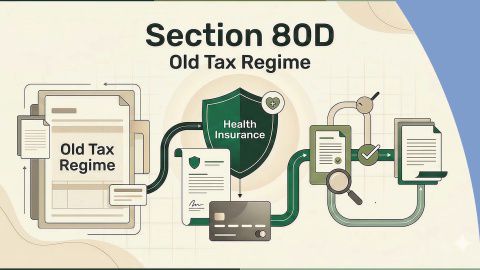
While awaiting formal statutory notification of GST rate revisions from the GST Council, policyholders can systematically recover a significant portion of their premium and tax outlays through Section 80D deductions under the old income tax regime:
- Self, spouse, and dependent children: Annual premium deduction of up to Rs. 25,000 (inclusive of GST).
- Senior citizen parents (aged 60 and above): Additional annual deduction of up to Rs. 50,000.
- Combined family threshold: An individual paying health insurance premiums for their own family and senior citizen parents can claim a cumulative tax deduction of up to Rs. 75,000 (or up to Rs. 1,00,000 if both policyholders are senior citizens).
- Preventive health check-ups: Up to Rs. 5,000 per year can be claimed for preventive health screenings within the overall Section 80D limit.
For a taxpayer in the 30 percent income tax bracket, claiming a Rs. 50,000 deduction for parents' health insurance yields direct income tax savings of Rs. 15,600 (including 4 percent health and education cess), easily compensating for the 18 percent GST paid on the premium.
It is important to remember that Bajaj Finance operates strictly as an IRDAI-registered IRDAI-registered corporate agent. Bajaj Finance does not set tax rates, underwrite risks, or settle claims. All insurance products, rider benefits, terms, and claim adjudications remain subject to the sole discretion and underwriting policies of the respective insurance partners.
Review our detailed guide on health insurance for 45 and above to understand strategic ways to balance premiums and waiting periods.
Worked practical scenario: How Mohanlal optimised his senior health insurance costs
To understand how premium structuring and tax deductions alleviate indirect tax burdens, examine the experience of a retiree in Rajasthan.
Mohanlal Soni, aged 67, held a senior citizen health insurance policy of Rs. 10 lakh in Jaipur. When planning for his annual renewal under prevailing 18 percent GST regulations, he wanted to ensure indirect taxes did not strain his fixed retirement pension.
To optimise his overall healthcare outlays, Mohanlal opted to attach a voluntary deductible of Rs. 25,000 during his annual renewal. This strategic adjustment lowered his actuarial risk tier by nearly 30 percent, directly reducing his statutory 18 percent GST liability.
Furthermore, his son claimed the admissible premium deduction under Section 80D on his income tax return, generating direct income tax savings up to the statutory Rs. 50,000 senior parent ceiling in the 30 percent tax bracket. By combining modular deductibles with tax planning, Mohanlal preserved his Rs. 10 lakh hospitalisation shield while insulating his household from unnecessary indirect tax burdens.
Benchmarking matrix: premium optimisation strategies to combat GST
When comparing health insurance policies on digital platforms, evaluate these practical methods to mitigate the impact of the 18 percent GST.
| Optimisation strategy | Operational mechanism | Direct impact on GST outlay | Trade-off to consider |
|---|---|---|---|
| Voluntary deductible plan | Insured agrees to pay first Rs. 25,000 or Rs. 50,000 of annual claims | Lowers base premium by 25% to 40%, directly reducing GST | Out-of-pocket expense required for minor hospital admissions |
| Super top-up integration | Modest base policy (Rs. 5 lakh) + high super top-up (Rs. 20 lakh) | Total premium is 40% cheaper than a single Rs. 25 lakh base policy | Must manage two separate policy schedules |
| Multi-year premium tenure | Paying premiums for 2 or 3 years upfront | Insurers offer 7.5% to 15% discounts on base rates, reducing tax | Requires higher initial lump-sum cash outlay |
| Section 80D maximisation | Claiming full deductions for self and senior parents | Offsets GST by 20% to 30% through direct income tax savings | Applicable only under the old income tax regime |
You can check now on Bajaj Finance to contrast voluntary deductible options across partner insurers.
Decision framework: Do's and don'ts for managing health insurance GST and taxes
Follow these practical guidelines when reviewing premium invoices and filing annual income tax returns.
| Do | Why it matters | Don't | Risk to avoid |
| Download your Section 80D tax certificate from your insurer's portal | Serves as official legal proof of premium and GST paid when filing income tax returns | Pay health insurance premiums in cash if you plan to claim Section 80D deductions | Cash payments are completely disqualified from Section 80D tax benefits by law |
| Evaluate voluntary deductibles to lower base premiums and GST | Directly lowers net premium outlays while preserving large catastrophic sum insured | Allow your senior citizen policy to lapse over tax frustrations | Lapsing forfeits valuable pre-existing disease waiting period credits permanently |
| Track GST Council announcements regarding rate revisions | Ensures you benefit immediately once statutory tax exemptions are officially notified | Assume corporate employer group insurance covers you after formal retirement | Corporate group covers terminate automatically on your final working day |
| Retain premium receipts showing the itemised break-up of CGST and SGST | Required for precise tax filing and verification during corporate income tax audits | Overlook the Rs. 5,000 tax deduction for annual preventive medical check-ups | Missing out on valid tax deductions available within the overall Section 80D cap |
Action roadmap: Simple steps to reduce your effective health insurance tax burden
Mitigating the financial impact of health insurance GST involves five actionable steps:
- Step 1: Check your itemised premium receipt: Review your annual policy renewal invoice to identify the exact base premium and 18 percent GST breakdown.
- Step 2: Assess voluntary deductible options: Model how adding a Rs. 25,000 deductible lowers both your base premium and associated GST.
- Step 3: Compare modular plans on digital portals: Evaluate affordable policies facilitated via Bajaj Finance to identify plans with competitive base rates.
- Step 4: Download your official Section 80D certificate: Access your insurer's digital portal to retrieve your annual tax exemption certificate.
- Step 5: File Section 80D deductions on your income tax return: Submit your premium and preventive check-up receipts to claim deductions up to Rs. 50,000.
Sources and references
| Source / reference authority | Document / research topic | Relevant insights and context | Publication date and access details |
|---|---|---|---|
| GST Council Secretariat / Ministry of Finance | Official agenda and recommendations of the GST Council meetings | Deliberations regarding GST rate rationalisation on health and life insurance | Data accessed: October 2026 |
| Parliamentary Standing Committee on Finance | Report on rationalisation of taxation on retail and senior citizen insurance | Revenue collections from insurance GST and recommendations for senior exemptions | Data accessed: October 2026 |
| Income Tax Department of India | Income-tax Act provisions (Section 80D under old tax regime) | Statutory guidelines on retail tax deductions, senior citizen limits, and non-cash rules under the old tax regime | Statutory provisions; data accessed: October 2026 |
| Insurance Regulatory and Development Authority of India (IRDAI) | Master circular on protection of policyholders' interests, 2024 | Regulations governing transparent premium breakdown, tax disclosures, and renewals | Data accessed: October 2026 |
Glossary of health insurance terms
| Technical term | Definition and regulatory context |
|---|---|
| Goods and Services Tax (GST) | A comprehensive indirect tax levied on the sale of goods and services in India, currently 18% on health insurance. |
| Section 80D | A section of the Income Tax Act allowing tax deductions on health insurance premiums paid for self and family. |
| Voluntary deductible | A pre-agreed amount paid by the insured toward medical expenses before insurance coverage begins. |
| Super top-up plan | A supplemental policy covering aggregate hospital expenses exceeding a chosen deductible threshold. |
| Base premium | The actuarial risk cost of an insurance policy before the addition of statutory indirect taxes. |
| Preventive health check-up | Routine medical screenings deductible up to Rs. 5,000 per year within the Section 80D cap. |
| Cashless hospitalisation | Settlement of medical bills directly between the insurance company and hospital without patient cash outlays. |
| Corporate agent | An entity licensed by IRDAI to market and distribute policies on behalf of multiple partner insurance companies. |
Health Insurance in different cities

Health Insurance in Bangalore

Health Insurance in Jaipur

Health Insurance in Pune

Health Insurance in Mumbai

Health Insurance in Kerala
Compare types of Health Insurance Plans
Tax-savings plans for you
What our customer say about us
+ Customers
Play Store Rating
Reviews
Arjun Mehta
13 Jul 2025
I opted for the Health Infinity plan for my parents. The digital onboarding was incredibly fast with no medical tests required since they are under 50. We had a minor daycare procedure last month, and the cashless approval came through in less than 2 hours. Very impressed with the efficiency.
Priya Sharma
28 Feb 2025
The Bajaj Finance Health app is a lifesaver. I use it for my regular OPD consultations and medicine orders. The 10% discount on pharmacy bills and the easy reimbursement for doctor visits make it much more than just a 'hospitalization' policy. It’s daily health support.
Sneha Kapoor
15 Mar 2025
Switched my family floater to Bajaj General this year. The network of hospitals in my city (Pune) is excellent. The only downside was a slight delay in getting my physical card, but the digital copy on the app works everywhere. The 'Wellness Rewards' for hitting step goals is a cool touch!
Conclusion
The 18 percent GST on health insurance represents a substantial financial burden, particularly for senior citizens living on fixed pensions. While nationwide proposals for zero GST health insurance and reduced tax slabs remain actively deliberated by the GST Council, proactive policyholders can take immediate steps to protect their finances.
By pairing base policies with super top-up plans, selecting modular deductibles, and fully leveraging Section 80D income tax deductions, you can effectively counteract indirect taxes while securing world-class healthcare protection. You can get quotes on Bajaj Finance to tailor an affordable, tax-efficient health plan today.
Explore and stay informed
Can you buy health insurance on EMI
Why buy health insurance
Health Insurance for family
Health Insurance Claim settlement ratio
Health Insurance waiting period
Importance of health insurance
Health Insurance for Senior Citizens
Health Insurance tax benefits
Health Insurance for parents
Health Insurance premium calculator
Health Insurance for Other Diseases

Antral Gastritis

Hepatomegaly Symptoms Causes & Treatment

Blood Pressure Range

PCOS Causes and Symptoms

Health insurance for Obesity
Frequently Asked Questions
GST rates and council updates
Tax deductions and financial planning
Policy structuring and affordability
What is the current GST rate on health insurance in India?
All retail individual, family floater, and senior citizen health insurance policies currently attract an 18 percent Goods and Services Tax (GST).
Has zero GST on senior citizen health insurance been approved yet?
Proposals to eliminate or reduce GST on senior citizen health policies and micro-insurance are actively under review by the GST Council and its Group of Ministers (GoM), but formal statutory notification is pending.
Are government health schemes like Ayushman Bharat subject to GST?
No. Centrally sponsored and state-funded welfare schemes such as Ayushman Bharat PMJAY and CGHS are 100 percent exempt from GST.
Does the 18 percent GST apply to critical illness and top-up riders?
Yes. All add-on riders, critical illness policies, hospital daily cash benefits, and super top-up plans attract the standard 18 percent GST.
Can I claim tax deductions on the GST portion of my health insurance premium?
Yes. Section 80D tax deductions are calculated on the total premium paid, which includes the 18 percent GST, up to statutory limits of Rs. 25,000 for adults and Rs. 50,000 for senior citizens.
Does Bajaj Finance decide or alter the GST charged on insurance policies?
No. Bajaj Finance is an IRDAI-registered corporate agent. GST rates are determined strictly by the GST Council under the Ministry of Finance, and taxes are collected directly by underwriting insurance companies.
Can cash payments for health insurance qualify for Section 80D deductions?
No. Under Section 80D of the Income Tax Act, premiums must be paid via non-cash banking channels (such as UPI, net banking, or debit/credit cards) to qualify for tax deductions. Only preventive check-ups up to Rs. 5,000 may be paid in cash.
How much can I save on taxes if I pay health insurance for my senior parents?
You can claim an additional tax deduction of up to Rs. 50,000 per financial year under Section 80D for senior citizen parents, saving up to Rs. 15,600 in taxes in the 30 percent tax bracket.
How does a voluntary deductible reduce the GST I pay?
A voluntary deductible lowers your net base premium by 25 percent to 40 percent. Because GST is calculated as 18 percent of the base premium, your total tax outlay drops proportionally.
Are multi-year health insurance policies cheaper in terms of GST?
Yes. Insurers often provide discounts of 7.5 percent to 15 percent when you pay for two or three years upfront. This lowers the aggregate base premium, resulting in overall tax savings.
Do NRIs have to pay 18 percent GST on health insurance bought in India?
Yes. Health insurance policies purchased in India for parents or dependents living in India attract standard 18 percent GST regardless of the policyholder's NRI status.
Where can I download my annual Section 80D tax certificate?
You can instantly download your Section 80D certificate from your insurance provider's online customer portal or mobile application immediately after policy issuance or renewal.





Articles and Insights


Disclaimer
*T&C Apply - Bajaj Finance Limited (‘BFL’) is a registered corporate agent of third party insurance products of Bajaj Allianz Life Insurance Company Limited, HDFC Life Insurance Company Limited, Life Insurance Corporation of India (LIC), Bajaj Allianz General Insurance Company Limited, SBI General Insurance Company Limited, ACKO General Insurance Company Limited, HDFC ERGO General Insurance Company, TATA AIG General Insurance Company Limited, ICICI Lombard General Insurance Company Limited, New India Assurance Limited, Chola MS General Insurance Company Limited, Zurich Kotak General Insurance Co. Limited , Star Health & Allied Insurance Co. Limited, Care Health Insurance Company Limited, Niva Bupa Health Insurance Company Limited , Aditya Birla Health Insurance Company Limited and Manipal Cigna Health Insurance Company Limited under the IRDAI composite CA registration number CA0101. Please note that, BFL does not underwrite the risk or act as an insurer. Your purchase of an insurance product is purely on a voluntary basis after your exercise of an independent due diligence on the suitability, viability of any insurance product. Any decision to purchase insurance product is solely at your own risk and responsibility and BFL shall not be liable for any loss or damage that any person may suffer, whether directly or indirectly. Please refer insurer's website for Policy Wordings. For more details on risk factors, terms and conditions and exclusions please read the product sales brochure carefully before concluding a sale. Tax benefits applicable if any, will be as per the prevailing tax laws. Tax laws are subject to change. Tax laws are subject to change. BFL does NOT provide Tax/Investment advisory services. Please consult your advisors before proceeding to purchase an insurance product. Visitors are hereby informed that their information submitted on the website may also be shared with insurers. BFL is also a distributor of other third-party products from Assistance Services providers such as CPP Assistance Services Pvt. Ltd., Bajaj Finance Health Ltd. etc. All product information such as premium, benefits, exclusions, sum insured, value added services, etc. are authentic and solely based on the information received from the respective insurance company or the respective Assistance service provider company.
Note – While we have made all efforts and taken utmost care in gathering precise information about the products, features, benefits, etc. However, BFL cannot be held liable for any direct or indirect damage/loss. We request our customers to conduct their research about these products and refer to the respective product’s sales brochures before concluding their sale.