- High coverage at a low premium
- Financial protection for your family’s future
- Tax benefits up to Rs. 46,000`` under Section 80C and 10(10D)
- Dedicated claim assistance
- Customisable plans to suit your needs

-
People’s trust in Bajaj
-
10 million+
Customers
-
3
Insurance partners
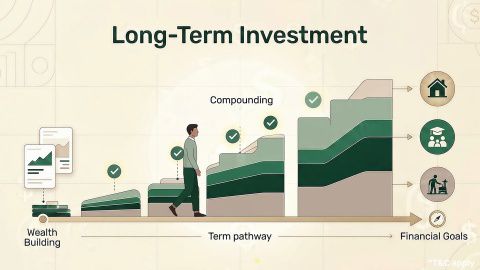
Why Long-Term Investments Matter
In summary
Long-term investments help you work towards goals such as retirement, education or buying a home by giving your money more time to grow.
- Long-term investments can help you build wealth over an extended period and manage short-term market fluctuations.
- Common options include equity mutual funds, fixed deposits, PPF, life insurance investment plans and retirement plans.
- Each option differs in terms of risk, potential returns, liquidity and tax treatment.
- Define your financial goals and investment horizon before choosing an option.
- Assess your risk tolerance and review your investments regularly to keep them aligned with your goals.
Starting early and investing regularly can help you stay on track towards your long-term financial goals. Explore plans and get quote!
What are long-term investments?
For example, you may invest for several years to build a retirement corpus, fund a child’s education or plan for a future home.
The longer investment period can give certain assets more time to grow. However, a longer holding period does not guarantee returns or eliminate investment risk.
When choosing a long-term investment, consider:
- Your financial goal
- Investment period
- Risk tolerance
- Expected returns
- Liquidity needs
- Applicable tax treatment
What are the key benefits of long-term investments?
Wealth accumulation:
Staying invested for a longer period gives your money more time to grow. Investments that generate returns can also benefit from compounding, where returns may generate further returns over time.
The actual growth depends on the investment and its performance.
Time to manage market fluctuations:
Market-linked investments can experience short-term price movements. A longer investment horizon may give you more time to stay invested through these fluctuations, although it does not remove market risk.
Goal-based financial planning:
Long-term investments can help you plan for specific financial goals. You can estimate the amount you may need, determine your investment period and select options that match your risk tolerance.
Potential tax benefits:
Some investment and insurance products may offer tax benefits subject to applicable tax laws and conditions. The tax treatment varies by product and should be considered separately from the investment’s potential returns.
Protection against inflation:
Inflation reduces the purchasing power of money over time. Investments that generate returns may help you build a larger corpus to meet future expenses, but no investment can be assumed to automatically outpace inflation.
What are the popular options for long-term investments?
| Investment option | Key feature | Risk consideration |
| Equity mutual funds | Invest in equity markets and offer growth potential | Returns are market-linked and can fluctuate |
| Fixed deposits | Offer interest for a specified tenure | Returns are generally more predictable but may be affected by inflation |
| PPF | Long-term government-backed savings option with a 15-year initial tenure | Has a long investment horizon and withdrawal restrictions |
| Life insurance with investment options | Combines life cover with an investment or savings component, such as a ULIP, depending on the plan's underlying market exposure | Benefits and returns depend on the selected policy |
| Retirement plans | Designed to help build funds for retirement and may provide benefits according to the policy | Terms, benefits and returns vary by plan |
No single option is suitable for every investor. Your choice should reflect your financial goal, investment horizon and ability to take risks.
How to plan for a long-term investment?
- Set a financial goal: Decide whether you are investing for retirement, a child’s education, a home or another major goal.
- Set the investment horizon: Estimate how many years you have to reach the goal. Your timeline can influence the investment options you consider.
- Assess your risk tolerance: Understand how much market fluctuation you can comfortably handle.
- Choose suitable options: Compare investments based on risk, potential returns, liquidity and tax treatment.
- Invest regularly: Consistent investing can help you build a corpus over time.
- Review your strategy: Check your investments periodically and make changes when your goals or financial situation change.
How can you create a long-term investment strategy?
1. Define your financial goal:
Identify what you are investing for and when you will need the money. Retirement, education and buying a home may require different investment approaches.
2. Determine your investment horizon:
Estimate how long you can keep the money invested. A longer horizon may allow you to consider investments with greater short-term fluctuations, depending on your risk tolerance.
3. Assess your risk tolerance:
Consider how much fluctuation you can accept without abandoning your investment plan. Market-linked investments may suit investors who can accept greater fluctuations, while more predictable options may suit those with lower risk tolerance.
4. Choose suitable investments:
Compare investment options based on risk, potential returns, liquidity, costs, tax treatment and your financial objective.
5. Start as early as possible:
Starting early can give your investments more time to compound. It may also allow you to spread your investment contributions over a longer period.
6. Review your strategy regularly:
Your income, financial responsibilities and goals may change over time. Review your investments periodically to check whether they continue to match your objectives.
What risks should you consider before making a long-term investment?
Market risk:
Equity and other market-linked investments can rise or fall based on market conditions. Your investment value may therefore fluctuate.
Inflation risk:
If your investment grows slower than inflation, its future purchasing power may decline.
Liquidity risk:
Some long-term investments may restrict withdrawals or apply conditions when you access your money before the intended investment period. Check the withdrawal and surrender rules before investing.
Interest rate risk:
Changes in interest rates can affect certain fixed-income investments and their returns or market values.
Product-specific risk:
Every investment product has its own risks, charges, conditions and potential returns. Read the relevant product documents before investing.
What role does life insurance play in long-term financial planning?
Life insurance can form part of a long-term financial plan when the policy combines life cover with savings, investment or retirement-related benefits.
However, life insurance and investment products should not be treated as interchangeable. A term insurance plan is primarily designed to provide life cover, while savings-oriented or investment-linked insurance products may have additional financial features.
If you are considering an insurance product for long-term planning, compare its life cover, policy term, premium payment term, benefits, charges, liquidity and applicable conditions before purchasing. Explore plans and get quote!
Conclusion
Start by defining your goal and investment horizon. Then assess your risk tolerance, compare suitable options and review your strategy as your financial circumstances change. A long-term approach can support financial planning, but it does not guarantee returns or remove investment risk.
Explore more and stay informed
Frequently asked questions
Importance of long-term investment
What constitutes a long-term investment, and how can it benefit your financial goals?
A long-term investment is an asset held for five years or more to build wealth over time. These investments offer the benefit of compounding returns, risk reduction, and financial security, helping you achieve long-term financial goals like retirement or education.
What are the key advantages of committing to long-term investments?
Long-term investments can give your money more time to grow and may allow compounding to work over a longer period. They can also support goal-based planning and give certain market-linked investments more time to recover from short-term fluctuations.
What are some reliable long-term investment options available today?
Reliable options include equity mutual funds, fixed deposits, PPF, life insurance with investment options and retirement plans. Each has different risks, returns, liquidity and tax treatment, so the suitable option depends on your financial goal and risk tolerance.
How do you design a personalised long-term investment strategy?
Define your financial goal, determine your investment horizon, assess your risk tolerance and compare suitable investment options. Start early where possible and review your investments periodically to ensure they remain aligned with your financial goals.
What potential risks should you be aware of when choosing long-term investments?
You should consider market risk, inflation risk, liquidity risk, interest rate risk and product-specific risks. Market-linked investments can fluctuate, while some long-term products may restrict access to funds. Review the product documents before investing.
What are the top 5 long-term investments?
Five commonly considered long-term investment options are equity mutual funds, Public Provident Fund (PPF), fixed deposits, National Pension System (NPS) and life insurance investment plans. The right choice depends on your financial goals, investment horizon, risk tolerance, liquidity needs and tax treatment.
What is the safest long-term investment?
There is no single safest investment for everyone. If capital stability is your priority, options such as PPF and eligible fixed deposits may suit you. PPF has a 15-year tenure and government-set interest rate, while fixed deposits offer predetermined interest for the chosen tenure. Consider liquidity, returns and your financial goals before choosing.