How Many Watts Does a Fan Use

How Many Watts Does a Fan Use

Know more about how many watts do fans use and how to choose an energy-efficient model for your home.

Get a pre-approved loan offer of up to Rs. 5 lakh.

Quick approval | Flexible tenure options | Zero approval fees

Knowing how many watts a fan uses can help you manage your electricity consumption and reduce your bills. Fans come in different types and sizes, each with varying power consumption. This guide provides an overview of the wattage used by different types of fans, helping you choose an energy-efficient model. From ceiling fans to pedestal fans, we cover all aspects to ensure you make an informed decision. Discover the power usage of various fan types. Make informed decisions for your home.
 

Getting your new fan is now budget friendly. Simply browse the selection of fans on Bajaj Mall. Alternatively, visit any of Bajaj Finance’s 1.5 lakh partner stores in 4,000 cities in India. Choose the product that you like and get Easy EMI and zero down payment offers exclusively with Bajaj Finance’s financing options. Check your loan eligibility and convert the cost of your new fan into Easy EMIs.


Factors affecting fan power usage

Several variables influence how much power a fan consumes during operation. Understanding these factors helps you make smarter choices when buying or using a fan in your home.

  • Fan type: Different fan types draw different amounts of power. Ceiling fans generally consume more wattage than table fans, while tower fans and pedestal fans fall somewhere in between depending on their motor size and build.
  • Motor efficiency: Fans with BLDC (Brushless Direct Current) motors consume significantly less electricity than those with conventional induction motors, making motor type one of the biggest contributors to power usage differences.
  • Fan speed setting: Running a fan at higher speed settings draws more power. Keeping the fan at a moderate speed when full cooling is not necessary can make a noticeable difference to your electricity consumption over time.
  • Blade size and design: Larger blades require more motor effort to rotate, which increases power draw. Aerodynamically designed blades, however, can move more air with less energy, improving overall efficiency.
  • Age and condition of the fan: Older fans with worn bearings or dusty blades tend to work harder to maintain airflow, consuming more electricity than a well-maintained or newer model would under the same conditions.
  • Star rating: Fans with higher Bureau of Energy Efficiency star ratings, particularly 4 Star and 5 Star models, are designed to deliver the same airflow while using fewer watts, directly reducing your electricity bill.

Average wattage of different types of fans

Fan wattage varies considerably across different types, and knowing the typical range for each helps you estimate electricity usage and compare running costs before making a purchase decision.

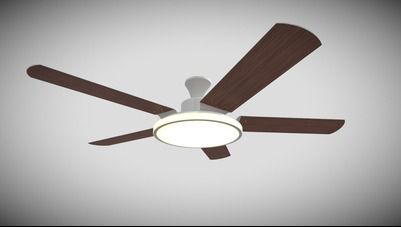
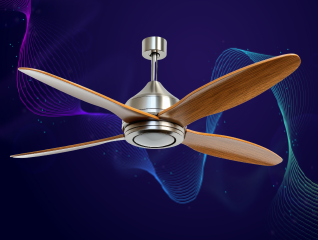
  • Ceiling fans: Standard ceiling fans in India typically consume between 50 W and 75 W. BLDC ceiling fans, however, use as little as 28 W to 35 W, making them a far more energy-efficient alternative for continuous daily use.
  • Table fans: Table fans generally draw between 25 W and 55 W depending on their size and motor type. Smaller desk fans sit at the lower end, while larger table fans with bigger blades consume closer to 50 W.
  • Pedestal fans: Pedestal fans usually consume between 45 W and 60 W. Their larger frames and broader blades require a moderately powerful motor, placing them slightly above table fans in terms of average power consumption.
  • Tower fans: Tower fans typically use between 40 W and 55 W. Their slim, vertical design makes them space-efficient, and many models include built-in speed settings that help manage power usage throughout the day.
  • Exhaust fans: Exhaust fans used in kitchens and bathrooms generally consume between 30 W and 40 W. Since they run for shorter durations, their contribution to overall electricity bills tends to be relatively modest.
  • Wall-mounted fans: Wall fans fall in the range of 45 W to 60 W, similar to pedestal fans. They work well in spaces where floor area is limited and are commonly used in commercial settings across India.

How much electricity does a fan use

The amount of electricity a fan uses depends on its wattage and how long you run it each day. A standard ceiling fan rated at 75 W running for eight hours a day consumes 0.6 units of electricity daily, which adds up to roughly 18 units per month. A BLDC fan rated at 30 W under the same conditions uses just 0.24 units daily. Over a year, the difference in consumption between conventional and energy-efficient fans can translate into meaningful savings on your electricity bill.

How to calculate the power consumption of a fan

Calculating your fan's power consumption is simple and takes only a few basic values. Following these steps gives you a clear picture of how much electricity your fan actually uses.

  • Step 1 — Note the wattage: Check the wattage of your fan from its label, manual, or product specifications. This figure, measured in watts (W), tells you how much power the fan draws during operation at its standard speed setting.
  • Step 2 — Estimate daily usage hours: Think about how many hours per day you run the fan on average. Be realistic — if you run it through the night and part of the day, factor in the total combined hours across all settings.
  • Step 3 — Calculate daily units consumed: Multiply the fan's wattage by the number of hours used per day, then divide by 1,000. The formula is: Units per day = (Watts × Hours) ÷ 1,000. This gives you the daily kilowatt-hour (kWh) figure.
  • Step 4 — Calculate monthly consumption: Multiply the daily units figure by 30 to get your monthly electricity consumption for that fan. For example, a 60 W fan used for 10 hours a day consumes 0.6 units daily and 18 units per month.
  • Step 5 — Estimate the monthly cost: Multiply the monthly units by your electricity tariff rate. In India, residential tariffs typically range from Rs. 3 to Rs. 8 per unit depending on your state and consumption slab.

How much does it cost to run a fan

The cost of running a fan in India depends on its wattage, daily usage, and your local electricity tariff. Here is a breakdown to give you a practical sense of what different fan types cost to operate monthly.

  • Standard ceiling fan (75 W): Running a conventional ceiling fan for eight hours a day at an average tariff of Rs. 6 per unit costs approximately Rs. 108 per month. Over a year, this amounts to around Rs. 1,296 for a single fan.
  • BLDC ceiling fan (30 W): A BLDC fan running for the same eight hours daily at Rs. 6 per unit costs roughly Rs. 43 per month. The annual saving compared to a standard fan can reach up to Rs. 780 per fan.
  • Table fan (45 W): A table fan used for six hours a day at Rs. 6 per unit costs around Rs. 49 per month, making it one of the more economical cooling options for personal use in smaller rooms.
  • Pedestal fan (55 W): Running a pedestal fan for eight hours daily at Rs. 6 per unit results in a monthly cost of approximately Rs. 79, which is reasonable given the wider airflow coverage these fans typically provide.
  • Tower fan (50 W): A tower fan used for eight hours a day at Rs. 6 per unit costs around Rs. 72 per month. Their built-in speed controls can help bring this figure down with mindful daily usage.

How to reduce the cost of running your fan

Small adjustments to how you use and maintain your fan can lead to meaningful reductions in your monthly electricity bill over time. Here are some practical ways to cut down on fan running costs in India.

  • Switch to a BLDC fan: Replacing a conventional induction motor fan with a BLDC model is one of the most effective steps you can take. BLDC fans consume up to 50% less electricity while delivering comparable or better airflow, significantly lowering your monthly running costs.
  • Choose a higher star-rated fan: Opting for a 4 Star or 5 Star rated fan ensures you get a model that meets stricter energy efficiency standards, consuming fewer units of electricity for the same level of cooling performance throughout the day.
  • Use the right speed setting: Avoid running your fan at full speed when the room does not require it. Lowering the speed by just one or two settings reduces power draw noticeably and adds up to meaningful savings over weeks of regular use.
  • Clean the fan blades regularly: Dust accumulation on fan blades forces the motor to work harder, increasing power consumption. Wiping the blades clean every few weeks helps the fan run smoothly and efficiently without unnecessary energy wastage.
  • Use a timer or smart plug: Setting a timer to switch the fan off automatically after a fixed duration prevents it from running unnecessarily through the night or when the room is unoccupied, directly reducing wasted electricity consumption.
  • Pair the fan with a ceiling or room layout in mind: Placing fans in the right position relative to windows and room size improves air circulation, reducing the need to run multiple fans simultaneously and keeping your overall household electricity usage in check.

Maximise your savings with Maha Bachat

Combine the best summer offers, EMI plans, and exclusive vouchers with Maha Bachat to save big.

20k+ people used their offers at the store

Get electronics and appliances on Easy EMIs with Bajaj Finance

Upgrading your home with the latest electronics and appliances is now easier and more affordable with Bajaj Finance’s flexible financing options. You can also maximise your savings by using the Smart Savings Calculator—a smart tool that combines brand offers, dealer offers, and EMI offers, all in one place, helping you lower the overall cost while still paying in small, bite-sized instalments. Follow these steps to get started:

  • Explore products on Bajaj Mall: Browse a wide range of electronics and appliances from trusted brands on Bajaj Mall. Compare features like energy ratings, storage capacity, performance settings, and design to choose the right product for your home.
  • Visit a partner store: Once you shortlist a model, step into any of Bajaj Finance’s 1.5 lakh partner stores across 4,000 cities in India. See the product in person, talk to experts, and make a confident decision.
  • Choose the Easy EMI Loan option: At checkout, select the Bajaj Finance Easy EMI Loan. Avail financing of up to Rs. 5 lakh and split the cost into convenient monthly instalments. Some products also come with a zero down payment option.
  • Check your loan eligibility online: Plan better by checking your loan eligibility in minutes. Simply enter your mobile number and OTP to know your pre-approved limit.
  • Use the Insta EMI Card for purchases up to Rs. 3 lakh: Already own the Bajaj Finance Insta EMI Card? Use it for instant, paperless checkout and convert your purchases of up to Rs. 3 lakh into Easy EMIs.

Why use the Smart Savings Calculator

Bajaj Finance’s Smart Savings Calculator helps you unlock maximum savings every time you shop at partner stores. It brings together all available brand, dealer, and scheme offers—so you can see your total savings instantly and shop smarter with Easy EMIs.
 

1. Dealer offers - Grab exclusive in-store deals at over 1.5 lakh partner stores across India. Enjoy local discounts and special prices you will not find online.

2. Brand offers - Access limited-time discounts from top brands across electronics, appliances, and more. Discover brand-specific savings selected just for you.

3. Bajaj offers - Unlock exclusive Bajaj Finance deals on popular products—available only to our customers. More rewards, more value.

4. Scheme offers - Take advantage of time-sensitive offers on select EMI schemes. Get extra benefits after paying just 3 EMIs—visible during EMI selection at checkout.
 

Calculate your extra savings today!

Disclaimer

While care is taken to update the information, products, and services included in or available on our website and related platforms/websites, there may be inadvertent inaccuracies or typographical errors or delays in updating the information. The material contained in this site, and on associated web pages, is for reference and general information purpose and the details mentioned in the respective product/service document shall prevail in case of any inconsistency. Subscribers and users should seek professional advice before acting on the basis of the information contained herein. Please take an informed decision with respect to any product or service after going through the relevant product/service document and applicable terms and conditions. In case any inconsistencies observed, please click on reach us.

*Terms and conditions apply