Published May 4, 2026 · 4 Min Read

Borewell water is one of the most challenging water sources for Indian households — typically carrying high TDS, dissolved minerals, heavy metals, and microbial contamination that standard UV-only purifiers cannot address. Choosing a water purifier specifically suited to borewell water quality ensures safe, palatable drinking water for the whole family. RO-based purification is the most effective technology for borewell sources across India.
 

Getting a new water purifier is now budget-friendly. Simply browse the selection of water purifiers on Bajaj Mall. Alternatively, visit any of Bajaj Finserv’s 1.5 lakh partner stores in 4,000 cities in India. Choose the product that you like and get Easy EMI and zero down payment offers exclusively with Bajaj Finserv’s financing options. Check your loan eligibility and convert the cost of your new water purifier into Easy EMIs.
Water purifiers for borewell water: Challenges and water quality issues

Borewell water presents multiple water quality challenges simultaneously — understanding them helps you choose the right purification technology. Here are the most common issues.

  • High TDS levels: Borewell water across most Indian states carries TDS levels between 300 and 2,000 ppm — well above the BIS drinking water standard of 500 ppm and requiring RO membrane filtration for effective reduction.
  • Dissolved heavy metals: Arsenic, fluoride, nitrates, and iron commonly appear in Indian borewell water depending on the local geology — none of which UV or UF filtration alone removes from drinking water.
  • Hardness from calcium and magnesium: High mineral content causes scale buildup, affects taste, and contributes to long-term kidney stone risk — RO filtration reduces hardness alongside TDS.
  • Microbial contamination: Borewell water frequently carries bacteria, cysts, and viruses from surrounding soil and drainage — requiring UV purification in addition to RO for complete biological safety.
  • Seasonal TDS variation: Borewell TDS fluctuates significantly during monsoon as surface water infiltrates the groundwater table — a purifier with automatic TDS control handles this variation without manual adjustment.

Water purifiers for borewell water: Suitable technologies and filters

Borewell water requires a multi-stage purification approach. Here are the technologies that address each specific borewell contamination challenge effectively.

  • RO (Reverse Osmosis) membrane: The essential technology for borewell water — forces water through a semi-permeable membrane that removes dissolved salts, heavy metals, fluoride, arsenic, and nitrates down to sub-ppm levels, reducing TDS to safe drinking levels.
  • UV (Ultraviolet) lamp: Kills bacteria, viruses, and cysts that pass through the RO membrane — essential for complete biological safety in borewell water that carries both dissolved and microbial contamination.
  • UF (Ultrafiltration) membrane: Acts as a fine physical barrier removing cysts and suspended particles — continues functioning during power cuts, providing a safety layer when the UV lamp is inactive.
  • Sediment pre-filter: Removes coarse sand, silt, and turbidity from borewell water before it reaches the RO membrane — protecting the membrane from premature clogging and extending its service life.
  • TDS controller or mineraliser cartridge: Re-introduces essential minerals — calcium and magnesium — into RO-purified water to improve taste and restore the mineral content removed during RO treatment.

Water purifiers for borewell water: TDS level management and safety

Managing output TDS correctly is critical for safe, palatable borewell water — too high risks contamination, too low removes beneficial minerals and affects taste. Here is how to manage TDS effectively.

  • Test input TDS before purchasing a purifier: A basic TDS meter (under Rs. 200 at hardware stores) measures your borewell water's TDS in seconds — input TDS determines whether you need RO, the membrane pore size, and the TDS controller setting appropriate for your specific source.
  • Target output TDS between 50 and 150 ppm for daily drinking: The BIS safe drinking standard allows up to 500 ppm, but the optimal taste and mineral balance occurs between 50 and 150 ppm output TDS — use the TDS controller to set this range precisely.
  • Do not set output TDS below 50 ppm: RO water purified below 50 ppm tastes flat and lacks beneficial minerals — always retain some dissolved solids using the TDS controller or mineraliser to maintain healthy, palatable output water.
  • Test output TDS quarterly: Borewell TDS changes seasonally — check output TDS every three months using a meter and adjust the TDS controller if the reading falls outside the 50 to 150 ppm target range.
  • Replace the RO membrane on schedule: RO membranes for high TDS borewell water typically require replacement every 12 to 18 months — a deteriorating membrane allows dissolved contaminants through before any visible change in water appearance, making scheduled replacement essential.

Water purifiers for borewell water: Performance and long-term usage

Borewell water is harder on purifier components than municipal water — understanding long-term performance requirements helps you choose a model built for sustained high TDS use. Here is what to consider.

  • Choose a purifier rated for input TDS above your borewell reading: Most consumer RO purifiers handle input TDS up to 2,000 ppm — always confirm the rated input TDS limit matches your borewell measurement with appropriate headroom for seasonal TDS spikes.
  • Check purification flow rate for your family size: A flow rate of 15 to 20 litres per hour suits families of 3 to 5 members — higher TDS borewell water slows RO filtration; a higher flow rate model compensates for this reduction.
  • Expect higher filter replacement frequency with borewell water: Sediment pre-filters clog faster in borewell water than in municipal supply — plan for sediment filter replacement every 3 to 6 months rather than the annual schedule that applies to lower-TDS municipal supply sources.
  • Factor in annual maintenance cost (AMC) before purchasing: AMC for RO purifiers used on borewell water typically costs Rs. 2,000 to Rs. 5,000 per year covering filter, membrane, and UV lamp replacement — calculate three-year total ownership cost rather than comparing only the purchase price between models.
  • Prioritise brands with service presence in your specific area: A technically superior purifier with no local authorised service is impractical for borewell use — membrane and filter replacement requires a trained technician, making brand service availability near your location a critical selection criterion.

Price list of the best water purifiers for borewell water in India (2026)

The purifiers below use RO+UV+UF multi-stage filtration — the minimum technology requirement for safe borewell water purification across Indian households.
 

Model nameKey featuresWhy should you get thisPrice
Aquaguard Sure Delight NXT RO+UV+UF7-stage RO+UV+UF, NanoPore 2X membrane, 6 L tank, 24 LPH flow, handles hardness up to 600 mg/LBest for hard borewell water — NanoPore 2X membrane handles high hardness levels most standard RO membranes cannot processRs. 10,499
KENT Grand RO Water PurifierRO+UV+UF+TDS control, UV LED tank, 8 L storage, 20 LPH flow, mineral retention, handles borewell, tanker, and municipal waterIndia's most trusted RO purifier — multi-stage filtration with UV LED tank sterilisation and mineral retention for borewell useRs. 12,000
Pureit Vital Pro Mineral RO+UVRO+UV+MF, mineral booster, 7 L storage, handles TDS up to 2,000 ppm, FiltraPower technologyBest for very high TDS borewell water — rated up to 2,000 ppm input TDS with mineral booster for balanced output waterRs. 14,000
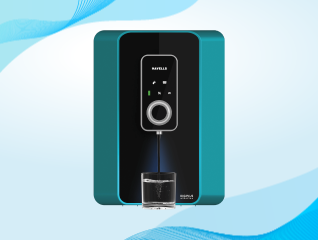
Havells Aquas Neo RO+UV+UFRO+UV+UF, copper and zinc enrichment, 7 L tank, mineral retention, handles borewell and municipal sourcesBest for mineral-enriched borewell water — copper and zinc cartridge adds health benefits beyond standard RO filtrationRs. 16,000
AO Smith Z9 Pro Instant RO8-stage RO+SCMT, tankless instant purification, 10 LPH, handles high TDS, side stream technologyBest tankless option for borewell — instant purification without storage tank reduces microbial growth risk in stored waterRs. 20,000

Disclaimer: Product features, availability, and prices may differ based on location and time. For the latest and most accurate details, visit a partner store.

Water purifiers for borewell water: Buying guide and selection tips

Choosing the right purifier for borewell water requires more due diligence than for municipal supply. Here are the key selection criteria to apply before purchasing.

  • Test your borewell water TDS, hardness, and iron content before selecting a model: A basic TDS test costs nothing with a pocket meter; a professional water quality test costs Rs. 500 to Rs. 1,500 and reveals specific contaminants — iron and arsenic levels determine whether you need a pre-filter stage the basic RO+UV+UF configuration alone does not address.
  • Choose RO+UV+UF as the minimum technology for borewell water: UV alone and UF alone are insufficient for borewell water with TDS above 300 ppm — always confirm the model includes all three core technologies before purchasing, regardless of marketing claims about purification stages.
  • Confirm the model's rated input TDS accommodates your borewell reading: Standard consumer RO purifiers handle up to 2,000 ppm input TDS — if your borewell TDS exceeds 1,500 ppm, confirm the specific model's rated limit before purchasing to avoid premature membrane failure.
  • Check brand service centre availability near your address before finalising: Call the brand's customer care with your pincode before purchase — confirm the nearest authorised service centre location and typical wait time for technician visits in your area.
  • Calculate three-year total ownership cost before comparing models: Add the purchase price, annual AMC, and expected sediment filter replacement costs — a purifier that costs Rs. 3,000 less upfront can cost Rs. 8,000 more over three years if AMC and membrane replacement is more expensive.
     

Thinking of buying a new water purifier?

Before you do that, explore the latest offers from Bajaj Finserv. You may find a great deal on a model that matches your needs.

Get electronics and appliances on Easy EMIs with Bajaj Finserv

Upgrading your home with the latest electronics and appliances is now easier and more affordable with Bajaj Finserv’s flexible financing options. You can also maximise your savings by using the Maha Bachat Savings Calculator—a smart tool that combines brand offers, dealer offers, and EMI offers, all in one place, helping you lower the overall cost while still paying in small, bite-sized instalments. Follow these steps to get started:

  • Explore products on Bajaj Mall: Browse a wide range of electronics and appliances from trusted brands on Bajaj Mall. Compare features like energy ratings, storage capacity, performance settings, and design to choose the right product for your home.
  • Visit a partner store: Once you shortlist a model, step into any of Bajaj Finserv’s 1.5 lakh partner stores across 4,000 cities in India. See the product in person, talk to experts, and make a confident decision.
  • Choose the Easy EMI Loan option: At checkout, select the Bajaj Finserv Easy EMI Loan. Avail financing of up to Rs. 5 lakh and split the cost into convenient monthly instalments. Some products also come with a zero down payment option.
  • Check your loan eligibility online: Plan better by checking your loan eligibility in minutes. Simply enter your mobile number and OTP to know your pre-approved limit.
  • Use the Insta EMI Card for purchases up to Rs. 3 lakh: Already own the Bajaj Finserv Insta EMI Card? Use it for instant, paperless checkout and convert your purchases of up to Rs. 3 lakh into Easy EMIs.

Why use the Maha Bachat Savings Calculator

Bajaj Finserv’s Maha Bachat Savings Calculator helps you unlock maximum savings every time you shop at partner stores. It brings together all available brand, dealer, and scheme offers—so you can see your total savings instantly and shop smarter with Easy EMIs.
 

1. Dealer offers - Grab exclusive in-store deals at over 1.5 lakh partner stores across India. Enjoy local discounts and special prices you will not find online.

2. Brand offers - Access limited-time discounts from top brands across electronics, appliances, and more. Discover brand-specific savings selected just for you.

3. Bajaj offers - Unlock exclusive Bajaj Finserv deals on popular products—available only to our customers. More rewards, more value.

4. Scheme offers - Take advantage of time-sensitive offers on select EMI schemes. Get extra benefits after paying just 3 EMIs—visible during EMI selection at checkout.
 

Calculate your extra savings today!

Frequently asked questions

Can I buy a new water purifier on EMIs?

Yes, you can easily purchase a new water purifier with Bajaj Finserv's Easy EMI options. Whether you already have the Insta EMI Card or are new to it, here is how you can get started:
 

If you have the Bajaj Finserv Insta EMI Card:

  • Explore water purifiers on Bajaj Mall: Choose from leading brands offering advanced filtration technologies and purification performance, and safer, healthier drinking water for your home.
  • Visit a partner store: Check out the latest water purifiers in person at any of 1.5 lakh partner stores across 4,000 cities.
  • Use your Insta EMI Card at checkout: Convert the total cost into Easy EMIs that fit your monthly budget.
  • Zero down payment on select models: Bring home your water purifier without paying anything upfront.
     

If you do not have an Insta EMI Card:

Check your Insta EMI Card eligibility online using your mobile number and OTP. If eligible, you can apply instantly and start shopping for your preferred water purifier easily and affordably.

Which purifier is best for borewell water?

An RO+UV+UF purifier with TDS control or a mineraliser is best for borewell water. The KENT Grand RO, Aquaguard Sure Delight NXT, and Pureit Vital Pro are strong options for borewell use — all rated for high TDS input and equipped with multi-stage filtration covering dissolved contaminants, heavy metals, bacteria, and viruses. Always test your specific borewell TDS before finalising the model to confirm compatibility.

Is RO necessary for borewell water?

Yes — RO is essential for most borewell water in India. Borewell sources typically carry TDS above 300 ppm, dissolved heavy metals, hardness, and fluoride that UV and UF filtration alone cannot remove. UV kills bacteria and viruses; UF removes suspended particles — but neither technology reduces dissolved salts, heavy metals, or TDS. For borewell water above 300 ppm TDS, RO is the only technology that makes drinking water safe and palatable.

What is the ideal TDS level for drinking water?

The BIS standard permits drinking water TDS up to 500 ppm. However, the optimal range for taste, mineral balance, and safe drinking is 50 to 150 ppm output TDS after purification. Below 50 ppm the water tastes flat and lacks essential minerals. Above 300 ppm the water is not recommended for regular drinking. Use the TDS controller on your RO purifier to maintain output between 50 and 150 ppm for the best daily drinking experience.

Can borewell water be purified easily?

Borewell water can be purified effectively with the correct technology — RO+UV+UF with a TDS controller handles all common borewell contaminants including dissolved salts, heavy metals, bacteria, and viruses. The purification process itself requires no effort from the user beyond regular maintenance. Borewell water does require more frequent filter and sediment pre-filter replacement than municipal supply — plan for quarterly sediment filter checks and annual RO membrane and UV lamp replacement to maintain consistently safe output water.

Show more Show less

Bajaj Finserv app for all your financial needs and goals

Trusted by 50 million+ customers in India, Bajaj Finserv App is a one-stop solution for all your financial needs and goals.

You can use the Bajaj Finserv App to:

  • Apply for loans online, such as Instant Personal Loan, Home Loan, Business Loan, Gold Loan, and more.
  • Invest in fixed deposits and mutual funds on the app.
  • Choose from multiple insurance for your health, motor and even pocket insurance, from various insurance providers.
  • Pay and manage your bills and recharges using the BBPS platform. Use Bajaj Pay and Bajaj Wallet for quick and simple money transfers and transactions.
  • Apply for Insta EMI Card and get a pre-qualified limit on the app. Explore over 1 million products on the app that can be purchased from a partner store on Easy EMIs.
  • Shop from over 100+ brand partners that offer a diverse range of products and services.
  • Use specialised tools like EMI calculators, SIP Calculators
  • Check your credit score, download loan statements and even get quick customer support—all on the app.

Download the Bajaj Finserv App today and experience the convenience of managing your finances on one app.

Disclaimer

1. Bajaj Finance Limited (“BFL”) is a Non-Banking Finance Company (BAJAJ FINANCE) and Prepaid Payment Instrument Issuer offering financial services viz., loans, deposits, Bajaj Pay Wallet, Bajaj Pay UPI, bill payments and third-party wealth management products. The details mentioned in the respective product/ service document shall prevail in case of any inconsistency with respect to the information referring to BFL products and services on this page.

2. All other information, such as, the images, facts, statistics etc. (“information”) that are in addition to the details mentioned in the BFL’s product/ service document and which are being displayed on this page only depicts the summary of the information sourced from the public domain. The said information is neither owned by BFL nor it is to the exclusive knowledge of BFL. There may be inadvertent inaccuracies or typographical errors or delays in updating the said information. Hence, users are advised to independently exercise diligence by verifying complete information, including by consulting experts, if any. Users shall be the sole owner of the decision taken, if any, about suitability of the same.