











Invest in equities, F&O and upcoming IPOs effortlessly by opening a demat account online. Enjoy a free subscription for the first year with Bajaj Broking

Know the benefits of a demat account
Check now
Free Demat account in minutes | Low brokerage | Online account opening
In Summary
The zebra option strategy is an advanced options strategy designed to replicate the price movement of an underlying stock while limiting risk to the net premium paid. The term ZEBRA stands for Zero Extrinsic Back Ratio. Traders typically construct the strategy by buying two in-the-money call options and selling one at-the-money call option with the same expiry date.
Key points:
- ZEBRA stands for Zero Extrinsic Back Ratio.
- The strategy aims to mimic stock ownership.
- It generally uses a 2:1 ratio of long and short call options.
- Most extrinsic value is offset through the short call.
- Risk is limited to the net premium paid.
- The strategy can require less capital than purchasing shares outright.
- Profit and loss depend on the movement of the underlying security.
Show More
Show Less
What is the zebra option strategy?
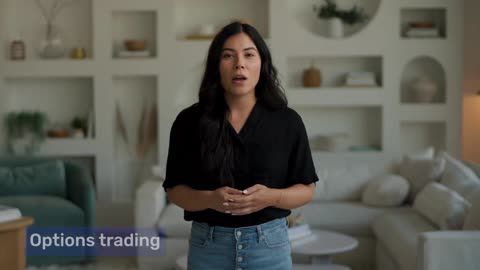
How does option trading work?
ZEBRA stands for Zero Extrinsic Back Ratio. The strategy is designed to provide exposure similar to owning a stock while reducing the impact of time value, also known as extrinsic value. Instead of purchasing shares directly, traders use options contracts to create a position that behaves similarly to stock ownership.
Key characteristics include:
- ZEBRA stands for Zero Extrinsic Back Ratio.
- Designed to replicate stock-like exposure.
- Uses options instead of directly purchasing shares.
- Attempts to minimise the effect of extrinsic value.
- Has defined risk based on the premium paid.
Can be structured using call options or put options.
A properly structured zebra position seeks to provide directional exposure while reducing the amount of time premium embedded in the trade.
Show More
Show Less
How does the zebra option strategy work?
The zebra option strategy generally combines two long in-the-money call options with one short at-the-money call option. All contracts typically use the same underlying asset and expiry date.
The purpose of selling the at-the-money call is to offset a significant portion of the extrinsic value paid for the two long calls. As a result, the position behaves more like stock ownership than a traditional long call option.
Key features of the setup include:
- Buy two in-the-money call options.
- Sell one at-the-money call option.
- Use the same expiry date for all contracts.
- Create stock-like directional exposure.
- Reduce the impact of time decay compared with a single long call.
Maintain defined downside risk.
The position generally benefits when the underlying asset moves in the anticipated direction.
Show More
Show Less
How do you set up a zebra spread?
Setting up a zebra spread requires selecting an underlying asset, choosing an expiry date, and identifying appropriate strike prices. The objective is to create a position where the short call offsets much of the extrinsic value contained in the two long calls.
Example setup
Assume an underlying stock is trading at ₹ 1,000.
| Position | Strike Price | Contracts |
|---|---|---|
| Long Call | ₹ 900 | 2 |
| Short Call | ₹ 1,000 | 1 |
In this example:
- Buy two in-the-money calls with a ₹ 900 strike price.
- Sell one at-the-money call with a ₹ 1,000 strike price.
- Use the same expiry date for all three contracts.
- Maintain the two-to-one contract ratio.
Calculate the net premium before entering the trade.
The exact strikes may vary depending on the underlying asset, market conditions, and trading objective. Traders typically evaluate option pricing and liquidity before constructing the spread.
Show More
Show Less
What are the benefits of the zebra option strategy?
The zebra option strategy offers several characteristics that attract traders seeking directional exposure with defined risk. The structure attempts to combine stock-like behaviour with lower capital requirements than direct share ownership.
Key benefits include:
- Defined maximum loss equal to the net premium paid.
- Reduced exposure to extrinsic value.
- Stock-like profit and loss characteristics.
- Potentially lower capital requirement than purchasing shares.
- Ability to participate in directional market moves.
- Greater leverage than direct stock ownership.
Show More
Show Less
Start investing today

Open Demat Account
Open Trading Account

Margin Trading Facility
Risks and limitations
Although the zebra option strategy offers defined risk, it is not without limitations. Traders should understand these factors before establishing a position.
Important risks include:
- The strategy requires an upfront premium payment.
- The underlying asset must move favourably to generate meaningful profits.
- Liquidity may vary across option contracts.
- Bid-ask spreads can affect execution costs.
- Option pricing can change due to volatility shifts.
Time decay can still influence performance.
A zebra spread may not suit traders who are unfamiliar with option pricing, contract selection, or risk management.
Show More
Show Less
How do popular traders pick short-term stocks?
Many active traders evaluate short-term opportunities using a combination of technical analysis, liquidity measures, trading volume, volatility, and market sentiment. They typically focus on stocks that exhibit clear price trends and sufficient options liquidity.
Common factors considered include:
- Average daily trading volume.
- Price momentum and trend strength.
- Volatility levels.
- Earnings announcements and corporate events.
- Sector performance.
Support and resistance levels.
No single method guarantees successful stock selection. Market conditions, risk tolerance, and trading objectives all influence decision-making.
Upcoming IPO
Mainboard
SME
Aarvee Engineering Consultants Limited
Bidding
To
be announced
Price
To be announced
Absolute Project India Limited
Bidding
To
be announced
Price
To be announced
AceVector Limited
Bidding
To
be announced
Price
To be announced
Adroit Industries India Limited
Bidding
To
be announced
Price
To be announced
Advanced SysTek Limited
Bidding
To
be announced
Price
To be announced
Conclusion
The zebra option strategy is an options structure designed to replicate stock ownership while reducing the effect of extrinsic value. By buying two in-the-money calls and selling one at-the-money call, traders attempt to create stock-like exposure with defined risk.
The strategy can require less capital than purchasing shares directly and provides a known maximum loss equal to the net premium paid. However, traders must still consider liquidity, option pricing, volatility, and market direction before using a zebra spread.
Show More
Show Less
Features and Benefits of LAS

Tenure 36 months
Flexible repayment from 7 days to 36 months

1000+ shares
Get 50% value on 1000+ shares

All DP shares available
All companies’ and DPs’ Demat accounts accepted for loans

Customer portal
Handle loans, shares, and statements — all in one place
Pro Tip
Top Investment Options for You




Related Articles


Frequently Asked Questions
Zebra Option Strategy
What is the zebra option strategy?
The zebra option strategy is an options strategy designed to replicate stock ownership while maintaining defined risk. It typically combines two long in-the-money call options with one short at-the-money call option. The structure aims to reduce extrinsic value and create profit-and-loss behaviour that resembles owning the underlying stock.
What does ZEBRA stand for in options?
ZEBRA stands for Zero Extrinsic Back Ratio. The name reflects the objective of reducing or offsetting most of the extrinsic value within the options position. Traders use the strategy to gain stock-like exposure while limiting risk to the net premium paid for the spread.
How does the zebra option strategy work?
The zebra option strategy generally works by buying two in-the-money call options and selling one at-the-money call option with the same expiry date. The short call offsets much of the extrinsic value paid for the long calls. This creates a position that often behaves similarly to owning shares while maintaining defined downside risk.
How do you set up a zebra spread?
You can set up a zebra spread by selecting an underlying asset, choosing an expiry date, buying two in-the-money call options, and selling one at-the-money call option. All contracts typically use the same expiry date and maintain a two-to-one ratio. Traders usually review liquidity, pricing, and risk before entering the position.
What are the benefits of the zebra option strategy?
The zebra option strategy offers stock-like exposure, defined risk, and reduced extrinsic value compared with many traditional options positions. The maximum loss is generally limited to the net premium paid. The strategy can also require less capital than purchasing shares directly while still providing directional market exposure.
Disclaimer
Standard Disclaimer
Investments in the securities market are subject to market risk, read all related documents carefully before investing.
Broking services offered by Bajaj Financial Securities Limited (Bajaj Broking). Reg Office: Bajaj Auto Limited Complex, Mumbai –Pune Road Akurdi Pune 411035. Corporate Office: Bajaj Financial Securities Limited, 1st Floor, Mantri IT Park, Tower B, Unit No 9 & 10, Viman Nagar, Pune, Maharashtra 411014. SEBI Registration No.: INZ000218931 | BSE Cash/F&O/CDS (Member ID:6706) | NSE Cash/F&O/CDS (Member ID: 90177) | DP registration No: IN-DP-418-2019 | CDSL DP No.: 12088600 | NSDL DP No. IN304300 | AMFI Registration No.: ARN –163403.
Details of Compliance Officer: Mr. Boudhayan Ghosh (For Broking/DP/Research) | Email: compliance_sec@bajajbroking.in | Contact No.: 020-4857 4486. For any investor grievances write to compliance_sec@bajajbroking.in/ compliance_dp@bajajbroking.in (DP related)
This content is for educational purpose only. Securities quoted are exemplary and not recommendatory.
Research Services are offered by Bajaj Broking as Research Analyst under SEBI Regn: INH000010043.
For more disclaimer, check here: https://www.bajajbroking.in/disclaimer