














An OTP will be sent to this number for verification
You may have a pre-approved offer
Enter required loan against property amount
In summary
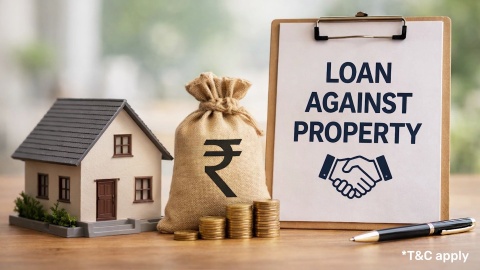
Fair Value of Land- Meaning and How to Calculate
The fair value of land helps you understand the estimated worth of a property at a particular point in time. The value can vary depending on the property's characteristics, location, purpose of valuation and market conditions.
- Fair value reflects an estimate of what land could reasonably fetch under the applicable valuation basis
- Location, size, land use, accessibility and surrounding development can affect land value
- Recent transactions involving comparable land can help in assessing its value
- Government-notified values may be used for specific purposes such as registration or stamp duty, depending on the applicable state rules
- Fair value, market value, sale price and government-notified value are not necessarily the same
- A formal valuation may be required when an independent or lender-specific assessment is needed
Understanding how fair value is determined can help you assess a property's worth, compare transaction prices and understand the role of valuation.
Last updated: September 2026
What is fair value of land?
The Fair Value of Land refers to the estimated value of a property or land that is based on the current market trends and conditions. In other words, it is the worth of the land that could be achieved if it was sold in an open market transaction.
The value of a particular piece of land can depend on several factors, including:
- Location
- Land area
- Shape and dimensions
- Permitted land use
- Road access
- Infrastructure and connectivity
- Surrounding development
- Demand for similar properties
- Comparable transactions
- Applicable restrictions or conditions affecting the property
The valuation approach can also differ depending on why the fair value is being determined.
How is the fair value of land calculated?
There is no single calculation that applies to every parcel of land. One common approach is to compare the property with similar land that has been sold recently and make adjustments for differences in location, size, access and other relevant characteristics.
Valuation process includes:
- Identify the property – Review the location, survey details, land area and other identifying information.
- Assess the property's characteristics – Consider its size, shape, frontage, access and permitted use.
- Find comparable transactions – Review recent transactions involving similar land in the same or nearby areas.
- Compare the properties – Identify differences between the subject property and comparable properties.
- Apply relevant adjustments – Consider factors such as location, accessibility, size and development.
- Arrive at an estimated value – Determine the value based on the applicable valuation method and available evidence.
For a formal valuation, the methodology and professional requirements may depend on the purpose for which the valuation is being carried out.
Show More
Show Less
What factors affect the fair value of land?
Several factors can influence the estimated value of land.
| Factor | How it can affect land value |
|---|---|
| Location | Land in areas with stronger demand may command higher prices |
| Size | The total area can affect the property's overall value |
| Land use | Permitted residential, commercial, industrial or other uses can influence value |
| Road access | Better access and connectivity can affect demand |
| Infrastructure | Roads, transport and other infrastructure can influence the property's attractiveness |
| Surrounding development | Existing and planned development can affect demand |
| Comparable sales | Recent transactions provide a reference for market-based valuation |
| Shape and frontage | Physical characteristics can affect the property's usability and value |
| Market conditions | Changes in demand and supply can influence prevailing prices |
The importance of each factor can vary depending on the property and its location.
How can you check the fair value of land?
The process for checking land value depends on what you mean by “fair value” and why you need the information.
If you want to estimate the market value of your land, you can start by checking:
- Recent sale prices of similar land in the same locality
- Government-notified values applicable to the area
- Location and accessibility
- Permitted land use
- Size and dimensions
- Nearby infrastructure and development
- Current demand for similar properties
If you need a formal valuation, you may need to obtain a valuation report from an appropriately qualified professional, depending on the purpose of the valuation.
The applicable government portal for checking notified property values can also differ by state. Use the official property-registration or revenue portal relevant to the location of your land.
Is fair value the same as guidance value?
No. Fair value and guidance value are not the same.
Guidance value, circle rate, guideline value or similar terms may refer to government-notified property values used for specific purposes.
For example, a government-notified value may be relevant when determining the value adopted for stamp duty or registration. Under Section 50C of the Income-tax Act, the value adopted, assessed or assessable by the relevant stamp valuation authority can have specific tax implications when land or a building is transferred.
Therefore, you should not assume that the government-notified value of your land is the same as its prevailing market value.
| Value | What it generally represents |
|---|---|
| Fair market value | Estimated value based on what the property could ordinarily fetch in the open market under the relevant valuation basis |
| Guidance or circle value | Government-notified value used for specific purposes, depending on the applicable state rules |
| Sale price | Amount agreed between the buyer and seller |
| Lending valuation | Value determined for the lender's property assessment and financing process |
Show More
Show Less
Does fair value determine the price of land?
No. Fair value is an estimate and does not automatically determine the final price at which a property must be bought or sold.
The final transaction price can depend on factors such as:
- Negotiation between buyer and seller
- Demand for the property
- Seller's circumstances
- Buyer's requirements
- Property characteristics
- Market conditions
Government-notified values may also apply for specific statutory purposes and should not automatically be treated as the negotiated sale price.
Can fair value of land change over time?
Yes. The estimated value of land can change as market and property conditions change.
Factors that can influence land value over time include:
- New roads or transport infrastructure
- Residential or commercial development
- Changes in land-use permissions
- Changes in local demand
- Availability of similar properties
- Changes in surrounding property prices
- Broader economic conditions
Fair value of land provides a practical estimate of what a parcel may reasonably be worth based on its location, size, permitted use, accessibility, comparable transactions and prevailing market conditions. It can help you understand the potential value of your property, but it may differ from the actual sale price or a government-notified value used for specific purposes. If you need a formal valuation, consider getting the property assessed by a qualified professional. For property-backed borrowing, fair value may form part of the overall property assessment, but it does not by itself establish ownership or guarantee loan approval.
Show More
Show Less
Frequently Asked Questions
Overview
Government-Notified Values
How is fair value of land calculated?
It can be estimated by analysing comparable land transactions and adjusting for differences in location, size, access, land use and other relevant property characteristics. The applicable method can vary depending on the purpose of valuation.
What factors affect the value of land?
Location, size, road access, permitted land use, infrastructure, surrounding development, property characteristics, comparable transactions and prevailing market conditions can all influence land value.
Can fair value be used as proof of land ownership?
No. A valuation establishes or estimates the property's value; it does not independently establish legal ownership. Ownership depends on the applicable title and registration documents.
Is fair value the same as guidance value?
No. Guidance value or similar government-notified values may be used for specific official purposes, while fair market value refers to an estimate based on the property's open-market value under the relevant valuation basis.
Is fair value the same as circle rate?
Not necessarily. “Circle rate” is a term used in some jurisdictions for a government-notified property value. The terminology and purpose can vary by state, so you should check the applicable state authority.
Does guidance value determine the selling price?
Not necessarily. The government-notified value used for a particular official purpose and the actual price agreed between a buyer and seller can be different.
Loan Against Property for different budget
Check your pre-approved offer now
Loan Against Property for Professionals




Find your nearest branch

What do our customers say about us
customers
Play Store rating
reviews
Anita Das
04 March 2026
The loan against property process was smooth and transparent. Interest rates were competitive, and the documentation requirements were minimal. The team provided clear guidance at every step, making the entire experience hassle-free. Highly recommended for quick approvals and reliable support.
Aashish
04 March 2026
The loan disbursal was quick, and the customer support team handled all my queries with patience and clarity. Flexible EMIs made it easy to manage monthly expenses. Overall, a great experience, especially for salaried individuals seeking a loan against property.
Prakash
04 March 2026
I had a great experience transferring my existing loan against property. The process was quick and hassle-free, and I saved significantly with the lower interest rate. The customer service team was supportive throughout. Highly recommended for anyone considering a balance transfer.
Yogesh Singh
04 March 2026
Clear guidance, quick approval, and flexible repayment options made purchasing my new house much easier than expected. The team managed the entire process professionally and ensured smooth coordination at every stage. Overall, a very satisfying experience, and I would recommend their home loan services to others.
Related articles

Watch our videos

Know the tax benefits on your loan against property
What are the documents required for a Loan Against Property?

What are the types of property eligible for Loan Against Property

What is the eligibility criteria for a Loan Against Property
Disclaimer
1. Bajaj Finance Limited (“BFL”) is a Non-Banking Finance Company (NBFC) and Prepaid Payment Instrument Issuer offering financial services viz., loans, deposits, Bajaj Pay Wallet, Bajaj Pay UPI, bill payments and third-party wealth management products. The details mentioned in the respective product/ service document shall prevail in case of any inconsistency with respect to the information referring to BFL products and services on this page.
2. All other information, such as, the images, facts, statistics etc. (“information”) that are in addition to the details mentioned in the BFL’s product/ service document and which are being displayed on this page only depicts the summary of the information sourced from the public domain. The said information is neither owned by BFL nor it is to the exclusive knowledge of BFL. There may be inadvertent inaccuracies or typographical errors or delays in updating the said information. Hence, users are advised to independently exercise diligence by verifying complete information, including by consulting experts, if any. Users shall be the sole owner of the decision taken, if any, about suitability of the same.