







Invest in equities, F&O and upcoming IPOs effortlessly by opening a demat account online. Enjoy a free subscription for the first year with Bajaj Broking

Know the benefits of a demat account
Check Now
Free Demat account in minutes | Low brokerage | Online account opening
The U.S. Dollar Index (DXY) tracks the US dollar's value against six major currencies. It helps measure the dollar's strength in global currency markets.
Key points include:
- Measures the US dollar against six major currencies.
- Uses a weighted geometric mean to calculate the index.
- Introduced in 1973 with a base value of 100.
- A value above 100 indicates a stronger dollar than the base period, while a value below 100 indicates relative weakness.
- The euro has the largest weight in the index at 57.6%.
- The index influences global trade, investment decisions, commodity prices, and exchange rates, including the Indian rupee.
Show More
Show Less
What is the U.S. Dollar Index (USDX)?
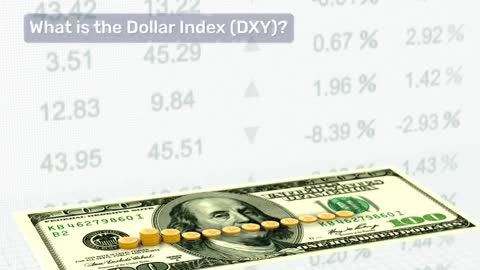
What is the Dollar Index and how does it work?
The U.S. Dollar Index (USDX), commonly known as the Dollar Index (DXY), measures the value of the US dollar against a basket of six major currencies: the euro (EUR), Japanese yen (JPY), British pound (GBP), Canadian dollar (CAD), Swedish krona (SEK), and Swiss franc (CHF). It serves as a benchmark for assessing whether the US dollar is strengthening or weakening relative to these currencies.
The index is calculated using a weighted geometric mean of the exchange rates between the US dollar and the six currencies in the basket. The euro has the largest weighting, making movements in the EUR/USD exchange rate particularly influential on the index.
Investors, traders, economists, and policymakers use the Dollar Index to monitor currency market trends and evaluate the relative strength of the US dollar. Changes in the index can influence investment decisions, international trade, monetary policy analysis, and the pricing of dollar-denominated assets.
Composition of the U.S. Dollar Index
| Currency | Currency Code |
| Euro | EUR |
| Japanese yen | JPY |
| British pound | GBP |
| Canadian dollar | CAD |
| Swedish krona | SEK |
| Swiss franc | CHF |
Show More
Show Less
How did the U.S. Dollar Index begin?
The U.S. Dollar Index (USDX) was introduced in 1973 after the collapse of the Bretton Woods system, which ended fixed exchange rates between major currencies. It was created to provide a standard benchmark for measuring the value of the US dollar against a basket of major global currencies.
Over the years, the Dollar Index has become one of the most widely used indicators of the US dollar's performance in global currency markets. Today, it is maintained by the Intercontinental Exchange (ICE) and helps investors, economists, and policymakers monitor currency trends and analyse global economic conditions.
Show More
Show Less
Current IPO
Mainboard
SME

AONE STEELS INDIA LIMITED
Bidding period
28 Sept 2026- 24 Sept 2026
Minimum investment
₹14,245 / 13 Lot

MONEYVIEW LIMITED
Bidding period
28 Sept 2026- 24 Sept 2026
Minimum investment
₹14,112 / 13 Lot

RUNWAL ENTERPRISES LIMITED
Bidding period
29 Sept 2026- 25 Sept 2026
Minimum investment
₹14,210 / 13 Lot

ACEVECTOR LIMITED
Bidding period
29 Sept 2026- 25 Sept 2026
Minimum investment
₹14,040 / 13 Lot

GERMAN GREEN STEEL AND POWER LIMITED
Bidding period
29 Sept 2026- 25 Sept 2026
Minimum investment
₹14,124 / 13 Lot

GREEN ASIA IMPEX LIMITED IPO
Bidding period
24 Sept 2026 -
28 Sept 2026
Minimum investment
₹1,36,000 / 1 Lot

PESHWA WHEAT LIMITED IPO
Bidding period
24 Sept 2026 -
28 Sept 2026
Minimum investment
₹1,14,000 / 1 Lot

ROOPA SCREEN LIMITED IPO
Bidding period
24 Sept 2026 -
28 Sept 2026
Minimum investment
₹1,20,000 / 1 Lot

SAI URJA INDO VENTURES LIMITED IPO
today
Bidding period
25 Sept 2026 -
29 Sept 2026
Minimum investment
₹1,28,400 / 1 Lot

HIMALAYAN SOLAR LIMITED IPO
today
Bidding period
25 Sept 2026 -
29 Sept 2026
Minimum investment
₹1,17,600 / 1 Lot
What makes the US dollar strong?
Several economic and global factors influence the strength of the US dollar.
These include:
- Strong economic growth
- Low unemployment
- Stable inflation
- Higher interest rates set by the US Federal Reserve
- Global demand for US dollar-denominated assets
The dollar's role as the world's primary reserve currency
Because international trade, commodities, and central bank reserves are largely denominated in US dollars, demand for the currency often remains high during periods of economic uncertainty.
Show More
Show Less
How do you interpret the Dollar Index?
The Dollar Index has a base value of 100.
Its movement can be interpreted as follows:
| Dollar Index Level | Meaning |
| Above 100 | US dollar is stronger than the base period |
| Below 100 | US dollar is weaker than the base period |
| Around 100 | Similar strength to the base year |
Investors often combine the index with economic data, interest rate expectations, and technical analysis to understand broader currency market trends.
Show More
Show Less
How is the Dollar Index calculated?
The U.S. Dollar Index (USDX) is calculated using a weighted geometric mean of the exchange rates between the US dollar and six major currencies. Each currency has a predefined weight based on its significance in international trade, allowing the index to reflect the dollar's overall performance against the basket.
Currency weights in the Dollar Index
| Currency | Code | Weight (%) |
| Euro | EUR | 57.6 |
| Japanese yen | JPY | 13.6 |
| British pound | GBP | 11.9 |
| Canadian dollar | CAD | 9.1 |
| Swedish krona | SEK | 4.2 |
| Swiss franc | CHF | 3.6 |
The USDX is calculated using the following formula:
USDX = 50.14348112 × EURUSD^-0.576 × USDJPY^0.136 × GBPUSD^-0.119 × USDCAD^0.091 × USDSEK^0.042 × USDCHF^0.036
Each exponent represents the weighting assigned to a currency. Negative exponents are used for currency pairs quoted against the US dollar, while positive exponents are used where the US dollar is the base currency.
The Dollar Index is updated continuously during foreign exchange market hours using real-time exchange rate data. These frequent updates enable investors, traders, and analysts to monitor changes in the US dollar's value as global currency markets fluctuate.
Show More
Show Less
Start investing today

Open Demat Account
Open Trading Account

Margin Trading Facility
How can you trade the U.S. Dollar Index?
Market participants can gain exposure to the Dollar Index through different financial instruments.
Common methods include:
- Futures contracts traded on recognised exchanges.
- Options based on Dollar Index futures.
- Exchange-Traded Funds (ETFs) that track the index.
- Mutual funds with exposure to the US dollar.
Before trading, investors generally monitor interest rates, inflation, employment data, and other macroeconomic indicators that influence currency movements.
Show More
Show Less
Upcoming IPO
Mainboard
SME
Aarvee Engineering Consultants Limited
Bidding
To
be announced
Price
To be announced
Abakkus Asset Manager Limited
Bidding
To
be announced
Price
To be announced
Absolute Project India Limited
Bidding
To
be announced
Price
To be announced
Advanced SysTek Limited
Bidding
To
be announced
Price
To be announced
Advanta Enterprises Limited
Bidding
To
be announced
Price
To be announced

Papadmalji Agro Foods Limited IPO
Bidding
29 Sept 2026 - 01 Oct 2026
Price
69 - 72

Vans Electroengineerings Limited IPO
Bidding
29 Sept 2026 - 01 Oct 2026
Price
112 - 118

Acme India Industries Limited IPO
Bidding
30 Sept 2026 - 06 Oct 2026
Price
186 - 196

Eventions Limited IPO
Bidding
30 Sept 2026 - 05 Oct 2026
Price
112 - 118

Paramount Syntex Limited IPO
Bidding
30 Sept 2026 - 06 Oct 2026
Price
119 - 127
What factors affect the Dollar Index?
The Dollar Index is influenced by multiple domestic and international factors, including:
- US Federal Reserve monetary policy
- Interest rate changes
- Inflation levels
- Employment and GDP data
- Global economic conditions
- Geopolitical developments
Market sentiment and demand for safe-haven assets
Changes in any of these factors can affect the value of the US dollar relative to the other currencies in the index.
Show More
Show Less
Features and Benefits of LAS

Tenure 36 months
Flexible repayment from 7 days to 36 months

1000+ shares
Get 50% value on 1000+ shares

All DP shares available
All companies’ and DPs’ Demat accounts accepted for loans

Customer portal
Handle loans, shares, and statements — all in one place
How does the Dollar Index affect the Indian Rupee?
Movements in the Dollar Index can influence the value of the Indian rupee (INR).
A stronger US dollar often puts pressure on the rupee, making imports such as crude oil more expensive. This may contribute to higher import costs and inflation.
Conversely, a weaker dollar may support the rupee by reducing the cost of imports and improving purchasing power. However, the USD/INR exchange rate is also affected by domestic economic conditions, capital flows, and interest rate differences between India and the United States.
Show More
Show Less
Conclusion
The U.S. Dollar Index is an important benchmark for measuring the relative strength of the US dollar in global currency markets. By tracking movements in the index, investors, businesses, and policymakers can better understand international currency trends and their potential impact on trade, investments, and economic activity. Although it measures only six currencies, the Dollar Index remains one of the most widely used indicators of the US dollar's performance worldwide.
Show More
Show Less
Pro Tip

Top Investment Options for You



Related Articles
Frequently Asked Questions
All article links updated
How does the dollar index impact global trade?
The Dollar Index influences the cost of international trade because many commodities and cross-border transactions are priced in US dollars. When the dollar strengthens, US exports generally become more expensive for overseas buyers, while imports into the United States become relatively cheaper. A weaker dollar can have the opposite effect by making US exports more competitive.
How do geopolitical events affect the Dollar Index?
Geopolitical events such as conflicts, trade disputes, or political uncertainty can influence the Dollar Index by changing investor confidence. During periods of global uncertainty, investors often move towards assets considered relatively safe, including the US dollar, which may cause the Dollar Index to rise.
Can fluctuations in the dollar index impact inflation?
Yes, changes in the dollar index can influence inflation. A stronger dollar lowers import prices, helping control inflation, while a weaker dollar makes imports costlier, potentially raising inflation and impacting borrowing costs and consumer spending.
Are there any other indices comparable to the dollar index?
Yes, there are other currency indices such as the Euro Index, Yen Index, and Pound Index that compare the strength of specific currencies to a basket of other currencies.
How does the dollar index influence central banks' policy making decisions?
The US Dollar Index (DXY) plays a pivotal role in shaping central bank policies worldwide, as the US dollar serves as the leading reserve currency, dominates global trade, and strongly affects commodity prices. When the dollar strengthens (a higher DXY), non-US central banks are often compelled to tighten monetary policy to manage imported inflation and stabilize their domestic currencies.
What happens when the dollar index falls?
A falling dollar index means the US dollar is weakening against other major currencies. This can make US exports cheaper and more competitive globally, but it also increases the cost of imports and may drive inflation.
What does the dollar index tell us?
The dollar index measures the value of the US dollar relative to a basket of foreign currencies. It reflects global confidence in the dollar and helps investors gauge its strength in international trade and financial markets.
What happens when the dollar index falls?
A drop in the dollar index signals reduced demand or confidence in the US dollar. It can benefit exporters but hurt importers and investors holding dollar-denominated assets due to declining purchasing power.
What happens when the dollar index rises?
When the dollar index rises, the US dollar strengthens against other major currencies. This boosts purchasing power for US consumers but can hurt export competitiveness and reduce the earnings of US companies operating overseas.
What currencies are in the USDX basket?
The US Dollar Index (USDX) measures the value of the US dollar against a basket of six major world currencies. These include the euro (EUR), Japanese yen (JPY), British pound sterling (GBP), Canadian dollar (CAD), Swedish krona (SEK), and Swiss franc (CHF). The euro holds the largest weight in the index.
How can you invest in the Dollar Index?
You can invest in the US Dollar Index through futures and options contracts traded on the Intercontinental Exchange (ICE). Alternatively, you may consider exchange-traded funds (ETFs) and mutual funds that track the index’s performance. These instruments allow investors to speculate on or hedge against changes in the US dollar’s global strength.
Why is the DXY base value 100?
The US Dollar Index (DXY) was assigned a base value of 100 when it was introduced in 1973. This benchmark makes it easier to measure how much the US dollar has strengthened or weakened over time.
Disclaimer
Investments in the securities market are subject to market risk, read all related documents carefully before investing.
Broking services offered by Bajaj Financial Securities Limited (Bajaj Broking). Reg Office: Bajaj Auto Limited Complex, Mumbai –Pune Road Akurdi Pune 411035. Corporate Office: Bajaj Financial Securities Limited, 1st Floor, Mantri IT Park, Tower B, Unit No 9 & 10, Viman Nagar, Pune, Maharashtra 411014. SEBI Registration No.: INZ000218931 | BSE Cash/F&O/CDS (Member ID:6706) | NSE Cash/F&O/CDS (Member ID: 90177) | MCX (Member ID: 57680) | DP registration No: IN-DP-418-2019 | CDSL DP No.: 12088600 | NSDL DP No. IN304300 | AMFI Registration No.: ARN –163403.
Details of Compliance Officer: Mr. Harinatha Reddy Muthumula (For Broking/DP/Research) | Email: compliance_sec@bajajbroking.in | Contact No.: 020-4857 4486. For any investor grievances write to compliance_sec@bajajbroking.in/ compliance_dp@bajajbroking.in (DP related)
This content is for educational purpose only. Securities quoted are exemplary and not recommendatory.
Research Services are offered by Bajaj Broking as Research Analyst under SEBI Regn: INH000010043.
For more disclaimer, check here: https://www.bajajbroking.in/disclaimer