








Know the benefits of demat account
Free Demat account in minutes | Low brokerage | Online account opening
The spot rate is the current price at which a currency, commodity, security, or interest rate can be traded. In forex markets, spot transactions generally settle within 2 business days.
- Spot rates mainly change according to market demand and supply.
- They apply to assets such as currencies, gold, silver, crude oil, copper, wheat, gasoline, and cotton.
- A forward rate is agreed today for a transaction that will take place later.
- For example, someone planning to purchase 500 kg of wheat later may use a forward contract to fix the purchase price in advance.
- Futures contracts also involve future transactions but are standardised and traded on exchanges.
- Futures prices above spot prices may indicate contango, while futures prices below spot prices may indicate backwardation.
What does spot rate mean?
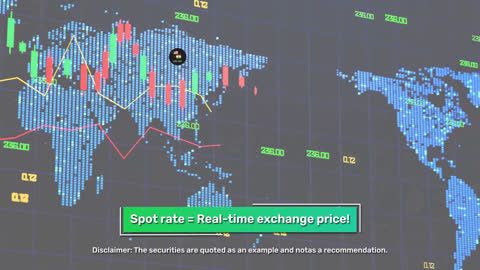
What is a spot rate in forex?
One of the share market basics, the spot rate can simply be understood as the price available “right now”. It represents the current market value at which an asset can be bought or sold.
For example, suppose you buy gold today. The prevailing market price at the time of the transaction is its spot price.
The amount actually paid for gold may vary between locations because of factors such as exchange rates and local market conditions. Therefore, the international spot price and the local purchase price may not always be exactly the same.
Spot rates are also commonly used in the currency market. Here, the spot rate represents the current exchange rate at which one currency can be exchanged for another.
Demand and supply influence this rate. If demand for a currency or commodity increases, its spot price may rise, while weaker demand may put downward pressure on the price.
Spot rates also apply to commodities such as crude oil, gold, silver, copper, wheat, gasoline, and cotton.
A spot transaction differs from a futures contract. A spot transaction uses the current market price, while a futures contract sets terms for a transaction associated with a future date.
How are spot rates and forward rates different?
A spot rate applies to a transaction at the current market rate, while a forward rate is agreed today for a transaction that will take place on a specified future date. The main difference is therefore whether the transaction is based on the current price or a price fixed in advance.
| Basis | Spot rate | Forward rate |
|---|---|---|
| Meaning | The current market rate at which an asset or currency can be traded | A rate agreed today for a transaction that will take place later |
| Settlement | In forex, generally within 2 business days, depending on the currency pair | Settlement takes place on the agreed future date |
| Relevant date | The trade date is when the transaction is agreed, while the spot date is when settlement is completed | The future settlement date is decided when the contract is created |
| Price used | Uses the prevailing market rate | Uses a rate fixed in advance |
| Purpose | Suitable when the transaction is intended at the current market rate | Useful when the buyer or seller wants to know the future transaction price in advance |
| Example | Buying an asset at its current market price | Agreeing today on the price of 500 kg of wheat to be purchased a few months later |
For example, suppose you expect to purchase 500 kg of wheat after a few months and believe prices may rise. Instead of buying and storing the wheat immediately, you can agree with a supplier on a forward rate today and complete the purchase later.
This can reduce uncertainty about the future purchase price. However, you remain bound by the agreed forward rate even if the market price later moves in your favour.
Current IPO










How do spot prices and futures prices differ?
To understand the difference, it helps to first know what futures are. A futures contract is an agreement to buy or sell an underlying asset at an agreed price for a specified future date.
| Basis | Spot price | Futures price |
|---|---|---|
| Meaning | The current market price of an asset | The price agreed for a futures contract linked to a future date |
| Transaction timing | Relates to the current market | Relates to a future transaction |
| Trading structure | Reflects the prevailing market price | Based on standardised contracts traded on exchanges |
| Contract terms | No standardised future contract terms are required | Contract size, expiry date, and other terms are predefined |
| Price relationship | Acts as the current reference price | May be above or below the spot price |
Futures contracts are standardised and traded on exchanges. They are also marked to market regularly, which means gains and losses are calculated and settled according to applicable exchange and clearing rules as market prices change.
The relationship between spot and futures prices can also indicate the structure of the market:
- Contango: The futures price is higher than the current spot price. Factors such as storage costs, financing costs, and expectations about future supply and demand may influence this difference.
- Backwardation: The futures price is lower than the current spot price. This may occur when current demand is relatively strong compared with expected future market conditions.
Contango and backwardation are not determined simply by whether a commodity is perishable or non-perishable. They depend on current market conditions and the factors affecting both present and future prices.
What is an example of a spot rate?
Suppose you want to buy gold today. You check its current market price and complete the purchase at that rate. The rate available for that immediate transaction is the spot price.
Now suppose you expect to buy a commodity several months later and believe its market price could increase before then.
Instead of purchasing and storing the commodity immediately, you could agree with a supplier on a forward contract. The price would be fixed today, while the transaction would take place later.
This highlights the basic difference between the two rates. A spot rate applies to a transaction based on the current market price, while a forward rate is agreed in advance for a future transaction.
A futures contract also relates to a future transaction. Unlike a private forward contract, however, a futures contract follows standardised exchange-defined terms.
Start investing today

Open Demat Account
Open Trading Account

Margin Trading Facility
Conclusion
The spot rate represents the current market price of a currency, commodity, security, or interest rate. It changes as market demand, supply, and other conditions change.
In foreign exchange markets, spot transactions generally settle within 2 business days, depending on the applicable currency convention.
Forward rates and futures prices differ because they relate to transactions taking place later. Understanding these three concepts can help you distinguish between the price available today and prices agreed for future transactions.
Upcoming IPO





Features and Benefits of LAS

Tenure 36 months
Flexible repayment from 7 days to 36 months

1000+ shares
Get 50% value on 1000+ shares

All DP shares available
All companies’ and DPs’ Demat accounts accepted for loans

Customer portal
Handle loans, shares, and statements — all in one place
Top Investment Options for You





Related Articles

Frequently Asked Questions
Spot Rate
What is spot rate, in simple words?
What is the difference between a spot rate and an exchange rate?
An exchange rate tells you the value of one currency compared with another. A spot rate is a type of exchange rate that applies to a transaction at the current market rate. For example, if you exchange one currency for another at today’s prevailing rate, that rate is the spot exchange rate. Exchange rates can also include forward rates agreed today for transactions taking place later.
Disclaimer
Investments in the securities market are subject to market risk, read all related documents carefully before investing.
Broking services offered by Bajaj Financial Securities Limited (Bajaj Broking). Reg Office: Bajaj Auto Limited Complex, Mumbai –Pune Road Akurdi Pune 411035. Corporate Office: Bajaj Financial Securities Limited, 1st Floor, Mantri IT Park, Tower B, Unit No 9 & 10, Viman Nagar, Pune, Maharashtra 411014. SEBI Registration No.: INZ000218931 | BSE Cash/F&O/CDS (Member ID:6706) | NSE Cash/F&O/CDS (Member ID: 90177) | MCX (Member ID: 57680) | DP registration No: IN-DP-418-2019 | CDSL DP No.: 12088600 | NSDL DP No. IN304300 | AMFI Registration No.: ARN –163403.
Details of Compliance Officer: Mr. Harinatha Reddy Muthumula (For Broking/DP/Research) | Email: compliance_sec@bajajbroking.in | Contact No.: 020-4857 4486. For any investor grievances write to compliance_sec@bajajbroking.in/ compliance_dp@bajajbroking.in (DP related)
This content is for educational purpose only. Securities quoted are exemplary and not recommendatory.
Research Services are offered by Bajaj Broking as Research Analyst under SEBI Regn: INH000010043.
For more disclaimer, check here: https://www.bajajbroking.in/disclaimer