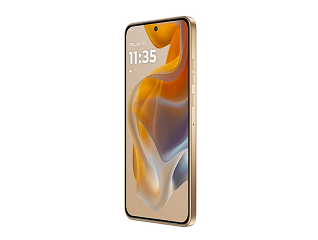
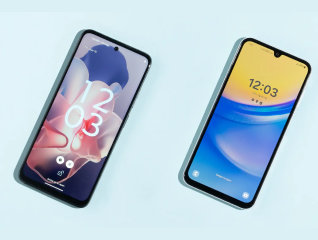
The Snapdragon 4 Gen 2 and Snapdragon 8 Gen 3 are Qualcomm 5G mobile processors designed for different smartphone segments. The Snapdragon 4 Gen 2 delivers reliable everyday performance for budget 5G smartphones, while the Snapdragon 8 Gen 3 powers flagship devices with advanced AI capabilities, desktop-grade gaming, premium camera features, and ultra-fast connectivity.
General
The Snapdragon 4 Gen 2 and Snapdragon 8 Gen 3 differ significantly in processing power, AI capabilities, graphics performance, and multimedia support. While both are built on a 4nm process and support 5G connectivity, the Snapdragon 8 Gen 3 is designed for flagship smartphones with faster CPU and GPU performance, enhanced AI processing, and premium connectivity features.
| Specification | Snapdragon 4 Gen 2 | Snapdragon 8 Gen 3 |
| Brand | Qualcomm | Qualcomm |
| Model number | SM4450 | SM8650-AB |
| Launch date | 26 June 2023 | 24 October 2023 |
| Target segment | Entry-level 5G smartphones | Flagship smartphones |
| Network support | 4G, 5G | 4G, 5G |
| Manufacturing process | 4nm | 4nm |
| Foundry | Samsung | TSMC |
CPU
The Snapdragon 4 Gen 2 is built for smooth everyday tasks such as browsing, messaging, and video streaming with an efficient octa-core CPU. In comparison, the Snapdragon 8 Gen 3 features a more advanced CPU architecture with a high-performance prime core, delivering exceptional speed for gaming, AI-powered applications, video editing, and intensive multitasking.
| Specification | Snapdragon 4 Gen 2 | Snapdragon 8 Gen 3 |
| CPU architecture | Kryo (ARMv9) | Kryo (ARMv9) |
| CPU configuration | Octa-core | Octa-core |
| Prime core | – | 1x Cortex-X4 @ 3.3GHz |
| Performance cores | 2x Cortex-A78 @ 2.2GHz | 3x Cortex-A720 @ 3.2GHz + 2x Cortex-A720 @ 3.0GHz |
| Efficiency cores | 6x Cortex-A55 @ 2.0GHz | 2x Cortex-A520 @ 2.3GHz |
| Maximum clock speed | 2.2GHz | 3.3GHz |
| Instruction set | ARMv9-A | ARMv9-A |
| 64-bit support | Yes | Yes |
| L3 cache | 4MB | 12MB |
Graphics
The Snapdragon 4 Gen 2 features the Adreno 613 GPU, which handles casual gaming and multimedia smoothly. The Snapdragon 8 Gen 3 integrates the powerful Adreno 750 GPU with hardware-accelerated ray tracing and AI-powered graphics enhancements, delivering console-like gaming performance and support for high-refresh-rate displays.
| Specification | Snapdragon 4 Gen 2 | Snapdragon 8 Gen 3 |
| GPU | Adreno 613 | Adreno 750 |
| GPU generation | Adreno 6 Series | Adreno 7 Series |
| Gaming capability | HD and FHD casual gaming | QHD+ high-refresh gaming |
| Maximum refresh support | Up to 120fps (supported displays) | Up to 240fps (supported displays) |
| Vulkan | 1.1 | 1.3 |
| OpenGL ES | 3.2 | 3.2 |
| OpenCL | 2.0 FP | 2.0 FP |
| Hardware ray tracing | No | Yes |
| AI graphics enhancement | No | Yes |
| Video acceleration | H.264, H.265, VP9 | H.264, H.265, VP9, AV1 |
Memory
Both processors support modern LPDDR memory technologies for responsive performance. However, the Snapdragon 8 Gen 3 supports faster LPDDR5X memory, higher memory bandwidth, and greater RAM capacity, making it better suited for demanding applications, AI workloads, and advanced mobile gaming.
| Specification | Snapdragon 4 Gen 2 | Snapdragon 8 Gen 3 |
| Memory type | LPDDR4X, LPDDR5 | LPDDR5X |
| Maximum memory frequency | 3,200MHz (LPDDR5 6,400Mbps) | 4,800MHz (LPDDR5X 9,600Mbps) |
| Memory speed | 6,400Mbps | 9,600Mbps |
| Memory bus width | 2 x 16-bit | 4 x 16-bit |
| Memory bandwidth | 25.6GB/s | 76.8GB/s |
| Maximum RAM supported | 16GB | 24GB |
| ECC memory support | No | No |
Multimedia (ISP)
The Snapdragon 4 Gen 2 includes the Qualcomm Spectra ISP for everyday photography and Full HD video recording. The Snapdragon 8 Gen 3 introduces the Triple 18-bit Cognitive ISP with AI-assisted image processing, enabling professional-grade photography, 8K video recording, higher camera resolutions, and support for advanced HDR formats.
| Specification | Snapdragon 4 Gen 2 | Snapdragon 8 Gen 3 |
| ISP | Qualcomm Spectra ISP | Qualcomm Triple 18-bit Cognitive ISP |
| ISP configuration | Dual ISP | Triple ISP |
| Storage support | UFS 3.1, UFS 2.2 | UFS 4.0 |
| Maximum display resolution | FHD+ | 4K UHD |
| Maximum display refresh rate | 120Hz | 144Hz |
| Maximum camera resolution | 108MP | 200MP |
| Dual camera support | 32MP + 16MP | 64MP + 36MP |
| Triple camera support | Supported | Supported |
| Video capture | 1080p @ 60fps | 8K @ 30fps, 4K @ 120fps |
| Video playback | 1080p | 8K HDR |
| HDR support | HDR10 | HDR10, HDR10+, Dolby Vision |
| AV1 decode | Yes | Yes |
| HEVC (H.265) | Yes | Yes |
| H.264 | Yes | Yes |
Connectivity and network
Both chipsets feature integrated 5G modems for reliable mobile connectivity. The Snapdragon 8 Gen 3 offers significantly faster download and upload speeds, Wi-Fi 7, Bluetooth 5.4, mmWave 5G support, and improved connectivity features, making it ideal for flagship smartphones and next-generation wireless experiences.
| Specification | Snapdragon 4 Gen 2 | Snapdragon 8 Gen 3 |
| 5G modem | Snapdragon X61 5G Modem-RF System | Snapdragon X75 5G Modem-RF System |
| 5G support | SA, NSA, Sub-6GHz | SA, NSA, Sub-6GHz, mmWave |
| Maximum download speed | 2.5Gbps | 10Gbps |
| Maximum upload speed | 900Mbps | 3.5Gbps |
| 4G LTE download | 1.0Gbps | 2.5Gbps |
| 4G LTE upload | 210Mbps | 316Mbps |
| Wi-Fi | Wi-Fi 5 (802.11ac) | Wi-Fi 7 (802.11be) |
| Bluetooth | 5.1 | 5.4 |
| NavIC | Yes | Yes |
| GPS | Yes | Yes |
| GLONASS | Yes | Yes |
| Galileo | Yes | Yes |
| BeiDou | Yes | Yes |
| QZSS | Yes | Yes |
| NFC support | Yes | Yes |