








Rs. 100- Rs. 10 crore
Start investing with Rs. 100 | Easy KYC | Expert-managed funds
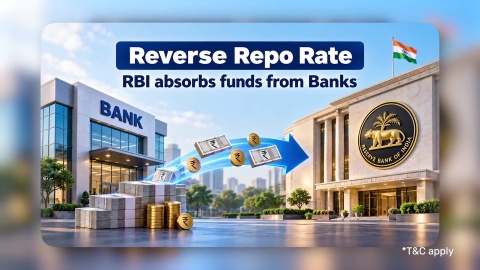
What is Payment, Lease & Reverse Repo Rate Everyday Finance Explained
In summary
Payments allow money or value to move between a payer and recipient to settle a financial obligation or transaction.
- Payments can be made through cash, cards, UPI, and bank transfers.
- Mutual fund investments can use SIP or lumpsum payment methods.
- SIP payments involve recurring contributions at selected intervals.
- UPI enables account-to-account digital payments through participating banks.
- Payment mandates can automate recurring investment contributions.
- KYC and authentication help support secure financial transactions.
For mutual fund investors, understanding payment methods helps you select an appropriate way to fund investments and manage recurring contributions.
What is a payment?
A payment is the transfer of money or another form of accepted value from a payer to a recipient. It settles an obligation arising from a purchase, service, investment, loan, bill, or other transaction.
For example, paying Rs. 2,000 for a service settles the amount owed to the service provider. Similarly, investing Rs. 5,000 in a mutual fund involves transferring money to subscribe to units of the selected scheme, subject to applicable processing and NAV rules.
Payments can be made physically or electronically. The method depends on what the recipient accepts and the requirements governing the transaction.
How do payments work?
A payment generally involves a payer, a recipient, a payment method, and a mechanism for authorising and processing the transaction.
A typical electronic payment works as follows:
- The payer initiates the transaction and enters the required payment details.
- The payment is authenticated using an applicable method.
- The financial institution or payment system processes the transaction.
- The recipient receives confirmation after successful processing.
- A transaction record is generated for future reference.
The actual processing time can vary depending on the payment method, financial institution, transaction type, and applicable settlement process.
What are the different types of payments?
Different payment methods are designed for different transaction requirements.
Cash payments
Cash involves the physical transfer of currency. Although cash remains a recognised payment method, financial transactions may have specific restrictions, documentation, or reporting requirements.
For mutual fund investments, SEBI permits cash investment up to Rs. 50,000 per investor, per mutual fund, per financial year, subject to applicable conditions. However, availability of this facility can depend on the relevant mutual fund and its systems. (SEBI)
Bank transfers
Bank transfers move money directly from one bank account to another. Depending on the transaction, methods can include NEFT, RTGS, IMPS, or other bank-enabled transfer facilities.
UPI payments
UPI enables electronic transfers through participating banks and UPI applications. It is commonly used for retail payments and can also be available for certain investment transactions, subject to platform and scheme support.
Card payments
Debit and credit cards allow payments through card networks. A debit card generally uses funds available in the linked bank account, while a credit card uses an approved credit facility.
Automated mandates
A mandate authorises recurring deductions from a bank account. In mutual fund investing, such mandates can be used to facilitate recurring SIP instalments.
How are payments used in mutual fund investing?
Payments are an essential part of subscribing to mutual fund units. You can generally invest through a one-time contribution or an SIP, subject to the scheme's terms.
An SIP involves investing a predetermined amount at regular intervals. A one-time investment, commonly called a lumpsum investment, involves investing an amount in a single transaction.
SEBI describes an SIP as a facility through which investors can invest periodically, subject to the terms and conditions of the relevant scheme.
The mutual funds available through the Bajaj Broking website can be explored based on factors such as category, objectives, and risk. KYC is mandatory before investing, subject to applicable requirements.
For an SIP, the payment is normally linked to a registered mandate or another supported payment mechanism. The amount is then processed according to the selected frequency and applicable transaction rules.
What is the payment process for an investment?
The exact process depends on the platform and investment product, but a typical digital mutual fund transaction involves the following stages:
- Complete the required account opening and KYC formalities.
- Select the mutual fund scheme and investment option.
- Choose between an SIP or lumpsum investment.
- Enter the investment amount and relevant transaction details.
- Select an available payment method.
- Authorise the transaction using the required authentication.
- Receive confirmation after the payment and transaction are successfully processed.
- Monitor the transaction and investment through the relevant account or dashboard.
The payment itself does not guarantee that units will be allotted immediately. Applicable cut-off timings, fund realisation, NAV rules, and scheme-specific conditions can affect transaction processing.
What are payment systems and infrastructure?
Payment infrastructure consists of the systems and institutions that enable money to move between a payer and recipient.
Depending on the transaction, this can involve banks, payment networks, payment gateways, UPI infrastructure, card networks, and other regulated entities.
For investment transactions, the infrastructure may also involve mutual fund AMCs, registrars and transfer agents, distributors, and investment platforms.
The purpose is to enable transactions to be initiated, authenticated, processed, recorded, and reconciled.
What payment terms should investors understand?
Several terms can appear when payments are linked to investments.
SIP
A Systematic Investment Plan is a method of investing a predetermined amount at regular intervals in a mutual fund scheme.
Lumpsum
A lumpsum investment involves investing a specified amount in a single transaction rather than through recurring instalments.
Direct plan
A direct plan is a mutual fund plan where the investor does not transact through a distributor. Its expense ratio can differ from the corresponding regular plan.
Regular plan
A regular plan involves distribution through an intermediary, and the scheme's expenses can include the applicable distribution-related costs.
IDCW
IDCW stands for Income Distribution cum Capital Withdrawal. Any distribution is subject to the scheme's distributable surplus and applicable rules; it should not be treated as guaranteed income.
How can you keep payment transactions secure?
Security depends on both the payment system and your own actions. You should take reasonable precautions when initiating financial transactions.
- Check the recipient and transaction details before authorising payment.
- Use only official websites or applications for financial transactions.
- Never disclose OTPs, PINs, passwords, or other authentication credentials.
- Avoid completing transactions through unknown links or unverified communications.
- Keep transaction confirmations and account records for reference.
- Report unauthorised transactions promptly to the relevant financial institution.
For investment transactions, use the authentication mechanism provided by the authorised platform or financial institution rather than sharing credentials with another person.
What records should you maintain for payments?
Keeping payment records can help you reconcile transactions, track investments, and support financial or tax-related documentation.
Useful records can include transaction confirmations, bank statements, payment references, investment statements, and relevant tax documents.
The importance of documentation can be particularly significant for business transactions. Businesses subject to tax audit requirements may need to maintain appropriate books and records under the applicable provisions, including Section 44AB of Income Tax Act, where relevant.
Payments can also have tax implications depending on their nature. For example, certain receipts or transactions may need to be examined under provisions such as Section 56 of Income Tax Act.
When an investment involves exchange-traded or fund-based products, the payment is only one part of the transaction. Understanding the underlying product is also important. For example, ETF vs FOF involves different structures, even though both can provide exposure to underlying investments.
What should you consider before choosing a payment method?
The appropriate payment method depends on the transaction and your circumstances.
Consider:
- Transaction type: Some payment methods may not be available for every transaction.
- Amount: Certain methods can have transaction or regulatory limits.
- Frequency: Recurring payments may be better suited to mandate-based arrangements.
- Processing time: Different payment systems can have different processing and settlement timelines.
- Record keeping: Electronic methods generally provide transaction records that can be easier to reconcile.
- Security: Use payment methods offered through authorised and trusted channels.
For mutual fund investments, the applicable scheme and platform terms should be checked before making a payment.
Conclusion
A payment is the transfer of money or value to settle an obligation. It can take different forms, including cash, bank transfers, cards, UPI, and recurring mandates.
For investments, understanding the payment method is only one part of the process. You should also consider the underlying product, applicable transaction rules, authentication requirements, costs, and documentation before completing a financial transaction.
Last reviewed: September 2026
Mutual funds are subject to market risk. Please read the scheme-related documents carefully before investing.
Explore Investment Tools
Articles and Insights

Frequently Asked Questions
Payment concepts and terminology
Payment records and disputes
Payments and financial transactions
What is a payment reference number?
A payment reference number is a unique identifier associated with a transaction. It can help the payer, recipient, bank, or payment service provider locate and reconcile a particular payment.
What is payment settlement?
Payment settlement is the stage at which the financial obligations arising from a transaction are completed between the relevant parties. The timing and process depend on the payment system and type of transaction.
What should you do if a payment is debited but the transaction fails?
First, check the transaction status with the bank or payment service provider and retain the transaction reference. If the amount is not automatically reversed within the applicable timeframe, contact the relevant institution or platform with the transaction details.
Can a completed payment be cancelled?
Cancellation depends on the payment method and transaction status. A payment that has already been processed may not always be reversible. Contact the relevant bank, payment provider, or recipient as soon as possible if cancellation is required.
Is a payment the same as a transaction?
No. A transaction is the broader financial activity, while payment refers specifically to the transfer of money or value used to settle an obligation. A single transaction can sometimes involve multiple payment stages.
Does making a payment mean the underlying financial product has been purchased?
Not necessarily. Payment initiation and completion of the underlying transaction can be separate stages. For investments, applicable processing rules, fund realisation, cut-off timings, and other conditions determine when the investment transaction is completed.
Disclaimer
Bajaj Finance Limited ("BFL") is registered with the Association of Mutual Funds in India ("AMFI") as a distributor of third party Mutual Funds (shortly referred as 'Mutual Funds) with ARN No. 90319
BFL does NOT:
(i) provide investment advisory services in any manner or form.
(ii) carry customized/personalized suitability assessment.
(iii) carry independent research or analysis, including on any Mutual Fund schemes or other investments; and provide any guarantee of return on investment.
In addition to displaying the Mutual fund products of Asset Management Companies, some general information is sourced from third parties, is also displayed on As-is basis, which should NOT be construed as any solicitation or attempt to effect transactions in securities or the rendering any investment advice. Mutual Funds are subject to market risks, including loss of principal amount and Investor should read all Scheme/Offer related documents carefully. The NAV of units issued under the Schemes of mutual funds can go up or down depending on the factors and forces affecting capital markets and may also be affected by changes in the general level of interest rates. The NAV of the units issued under the scheme may be affected, inter-alia by changes in the interest rates, trading volumes, settlement periods, transfer procedures and performance of individual securities forming part of the Mutual Fund. The NAV will inter-alia be exposed to Price/Interest Rate Risk and Credit Risk. Past performance of any scheme of the Mutual fund do not indicate the future performance of the Schemes of the Mutual Fund. BFL shall not be responsible or liable for any loss or shortfall incurred by the investors. There may be other/better alternatives to the investment avenues displayed by BFL. Hence, the final investment decision shall at all times exclusively remain with the investor alone and BFL shall not be liable or responsible for any consequences thereof.
Investment by a person residing outside the territorial jurisdiction of India is not acceptable nor permitted.
Disclaimer on Risk-O-Meter:
Investors are advised before investing to evaluate a scheme not only on the basis of the Product labeling (including the Riskometer) but also on other quantitative and qualitative factors such as performance, portfolio, fund managers, asset manager, etc, and shall also consult their Professional advisors, if they are unsure about the suitability of the scheme before investing.
Disclosure: Bajaj Finance Limited (BFL) is a distributor of Mutual Funds with ARN - 90319 and distributes mutual funds of Bajaj Finserv Asset Management Limited (BFSAMC). BFL receives commission towards distribution of mutual fund products. BFSAMC is a group company of BFL, carrying business on arm’s length basis without any conflict of interest and in accordance with the prevailing law / regulation.
Disclaimer
Bajaj Finance Limited ("BFL") is an NBFC offering loans, deposits and third-party wealth management products.
The information BFL contained in this article is for general informational purposes only and does not constitute any financial advice. The content herein has been prepared by BFL on the basis of publicly available information, internal sources and other third-party sources believed to be reliable. However, BFL cannot guarantee the accuracy of such information, assure its completeness, or warrant such information will not be changed.
This information should not be relied upon as the sole basis for any investment decisions. Hence, User is advised to independently exercise diligence by verifying complete information, including by consulting independent financial experts, if any, and the investor shall be the sole owner of the decision taken, if any, about suitability of the same.
Disclaimer
Mutual Fund SIP calculator may provide potential investors an approximate estimate on the maturity amount of the monthly SIP, purely based on mathematical calculation of the projected annual return rate selected by investor. However, such calculation does not factor the actual performance by the Asset Management Company (AMC) and should not be treated as any advice or assurance about the actual return of investment. Mutual Funds do not have a fixed rate of return and it is not possible to predict the rate of return. Please note that the SIP calculator are for illustrations only and do not represent actual returns which may vary depending on various factors including but not limited to actual performance, expense ratio, taxation, exit load (if any), etc.