







Health insurance goes beyond hospitalization—it covers OPD visits, medicines, ambulance charges, preventive checkups, and even alternative treatments, giving you all-around financial security.

Check health insurance plans with comprehensive coverage
Get Quote
Health plans from leading insurers | Comprehensive coverage | Offers multiple optional add-ons to enhance coverage
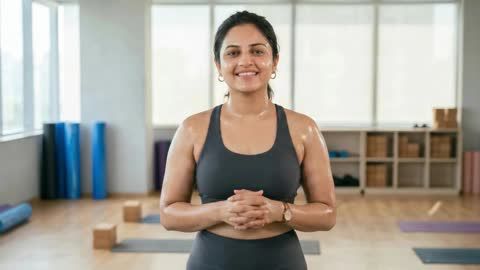
Yoga Practices for Better Health
In summary
Health benefits of compound exercises include improving muscular strength, coordination, balance, and overall physical fitness by engaging multiple muscle groups in a single movement. Exercises such as squats, lunges, push-ups, and rows can support functional movement and make workouts more time-efficient.
Key takeaways
- Compound exercises engage multiple muscle groups simultaneously.
- They can support strength, balance, coordination, and functional fitness.
- Common examples include squats, lunges, push-ups, and rows.
- Exercise intensity should match your fitness level and physical abilities.
- Consistent exercise can form part of a balanced fitness routine.
If you are considering health insurance for eligible healthcare expenses, apply now to explore available plans and learn more about their coverage, exclusions, and applicable policy terms through health insurance.
What are the ideal compound exercises for strength and muscle?
Compound exercises work multiple muscle groups and joints in one movement, making them useful for building strength, muscular endurance, coordination, and functional fitness. The suitable exercises depend on your goals, experience, mobility, and training routine.
| Exercise | Primary muscle groups |
|---|---|
| Back squat | Quads, glutes, hamstrings, core |
| Front squat | Quads, glutes, upper back, core |
| Deadlift | Glutes, hamstrings, back, core |
| Bench press | Chest, shoulders, triceps |
| Pull-ups | Upper back, biceps, core |
| Overhead press | Shoulders, triceps, upper chest |
| Bent-over rows | Upper back, biceps, core |
| Lunges | Quads, glutes, hamstrings |
| Dips | Chest, triceps, shoulders |
Back squat
The back squat primarily works the quadriceps, glutes, hamstrings, and core.
- Keep your chest lifted and spine neutral.
- Lower under control while keeping your knees aligned with your feet.
- Drive through your feet to return to the starting position.
Front squat
The front squat places greater emphasis on the quadriceps and upper back while also challenging the core.
- Keep the bar securely positioned across the front of your shoulders.
- Maintain an upright torso throughout the movement.
- Keep your knees aligned with your toes.
Deadlift
The deadlift engages the glutes, hamstrings, back, and core.
- Keep the weight close to your body.
- Maintain a neutral spine as you hinge at the hips.
- Drive through your feet while extending your hips.
Bench press
The bench press primarily works the chest, shoulders, and triceps.
- Keep your shoulder blades stable against the bench.
- Lower the bar with controlled movement.
- Keep your wrists aligned over your forearms.
Pull-ups
Pull-ups engage the upper back, biceps, and core.
- Start from a controlled hanging position.
- Pull your chest towards the bar without excessive swinging.
- Lower yourself slowly to the starting position.
Overhead press
The overhead press works the shoulders, triceps, upper chest, and core.
- Keep your core engaged and spine neutral.
- Press the weight overhead without excessive back arching.
- Lower the weight under control.
Bent-over rows
Bent-over rows target the upper and middle back, biceps, and core stabilisers.
- Hinge at the hips while keeping your back neutral.
- Pull the weight towards your torso.
- Avoid using momentum to complete repetitions.
Lunges
Lunges work the quadriceps, glutes, and hamstrings while challenging balance and coordination.
- Keep your torso upright.
- Lower your body with controlled movement.
- Keep the front knee aligned with the foot.
Dips
Dips primarily engage the chest, triceps, and shoulders.
- Keep your shoulders stable as you lower your body.
- Use a controlled range of motion.
- Avoid excessive shoulder strain or depth.
Show more
Show less
Pro tip

How do compound moves help with fat loss and metabolism?
Compound movements engage multiple muscle groups, which can increase energy expenditure during exercise and support muscle development. Their effect on calorie use varies with exercise type, intensity, duration, and individual factors.
- Increase energy expenditure: Larger movements involving multiple muscle groups can require more energy than isolated exercises.
- Support muscle development: Resistance-based compound exercises can help build and maintain muscle when combined with appropriate training and nutrition.
- Support metabolic health: Regular physical activity can improve insulin sensitivity and glucose regulation.
- Provide efficient workouts: Compound movements train several muscle groups within one exercise, which can make workouts more time-efficient.
- Create a post-exercise energy demand: Exercise can temporarily increase energy expenditure after a workout, although the effect varies.
| Factor | How compound movements contribute |
|---|---|
| Calorie expenditure | Depends on intensity, duration, body size, and exercise selection |
| Muscle development | Engages multiple muscle groups simultaneously |
| Metabolic response | Exercise increases energy use during and temporarily after activity |
| Weight management | Supports energy balance when combined with appropriate nutrition |
Show more
Show less
Compound vs. isolation exercises: which is better for you?
Compound and isolation exercises serve different purposes. Compound exercises involve multiple joints and muscle groups, while isolation exercises primarily target one muscle group. Your choice can depend on your training goals, experience, available time, and physical needs.
| Feature | Compound exercises | Isolation exercises | Best for |
|---|---|---|---|
| Muscles used | Multiple muscle groups | Primarily one muscle group | Overall or targeted training |
| Time efficiency | Trains several muscles in one movement | Focuses on a specific muscle | Compound: shorter full-body sessions |
| Strength training | Useful for multi-joint strength | Useful for targeted strength | Depends on training goal |
| Beginners | Can be included with appropriate instruction | Can supplement a beginner routine | Individual suitability |
| Muscle development | Engages several muscles together | Targets specific muscles | Compound: overall development; isolation: specific areas |
| Rehabilitation | May be suitable when professionally prescribed | Can allow targeted strengthening | Depends on the injury and professional guidance |
Combining both exercise types can help create a balanced resistance-training routine suited to individual goals and abilities.
Popular plans for you



How to get the most out of your compound workouts?
Use these eight steps to make compound workouts more structured and support safe, consistent progress:
- Focus on proper form: Learn the movement pattern and maintain controlled technique before increasing the load.
- Warm up first: Perform suitable warm-up movements to prepare your muscles and joints for exercise.
- Follow a structured plan: Gradually increase weight, repetitions, or training volume as your fitness improves.
- Engage your core: Maintain appropriate core control to support stability during compound movements.
- Allow recovery: Include rest days and adequate recovery between demanding training sessions.
- Use a suitable range of motion: Perform each exercise through a comfortable range that matches your mobility and technique.
- Maintain balanced nutrition: Include adequate protein, carbohydrates, fluids, and other nutrients to support training and recovery.
- Track your progress: Record exercises, weights, repetitions, and other relevant training details to monitor changes over time.
How to build a compound exercise workout plan
A compound exercise workout plan should cover major movement patterns while allowing enough recovery between sessions. Beginners can start with lower training volume and focus on technique, while intermediate exercisers can gradually increase sets, resistance, or repetitions.
| Day | Exercise | Beginner | Intermediate |
|---|---|---|---|
| Day 1 | Squat | 2 sets × 8–10 reps | 3 sets × 6–10 reps |
| Day 1 | Bench press | 2 × 8–10 | 3 × 6–10 |
| Day 1 | Bent-over row | 2 × 8–10 | 3 × 8–12 |
| Day 2 | Deadlift | 2 × 6–8 | 3 × 5–8 |
| Day 2 | Overhead press | 2 × 8–10 | 3 × 6–10 |
| Day 2 | Lunges | 2 × 8–10 each leg | 3 × 8–12 each leg |
Keep at least one rest day between these sessions. Start with a manageable resistance, prioritise controlled technique, and increase training demands gradually as your fitness improves. Stop if you experience pain or unusual symptoms.
Health Insurance in different cities

Health Insurance in Bangalore

Health Insurance in Jaipur

Health Insurance in Pune

Health Insurance in Mumbai

Health Insurance in Kerala
Compare types of Health Insurance Plans
Tax-savings plans for you
What our customer say about us
+ Customers
Play Store Rating
Reviews
Arjun Mehta
13 Jul 2025
I opted for the Health Infinity plan for my parents. The digital onboarding was incredibly fast with no medical tests required since they are under 50. We had a minor daycare procedure last month, and the cashless approval came through in less than 2 hours. Very impressed with the efficiency.
Priya Sharma
28 Feb 2025
The Bajaj Finance Health app is a lifesaver. I use it for my regular OPD consultations and medicine orders. The 10% discount on pharmacy bills and the easy reimbursement for doctor visits make it much more than just a 'hospitalization' policy. It’s daily health support.
Sneha Kapoor
15 Mar 2025
Switched my family floater to Bajaj General this year. The network of hospitals in my city (Pune) is excellent. The only downside was a slight delay in getting my physical card, but the digital copy on the app works everywhere. The 'Wellness Rewards' for hitting step goals is a cool touch!
Conclusion
Compound exercises can support strength, muscle development, coordination, and functional fitness by engaging multiple muscle groups in each movement. Start with exercises such as squats, push-ups, and rows, focus on proper form, and gradually adjust resistance or repetitions as your fitness improves.
A consistent exercise routine can support your broader health and fitness goals. If you are considering financial protection for eligible healthcare expenses, check premium to explore available health insurance plans and review their coverage, exclusions, and applicable policy terms
Explore and stay informed
Can you buy health insurance on EMI
Why buy health insurance
Health Insurance for family
Health Insurance Claim settlement ratio
Health Insurance waiting period
Importance of health insurance
Health Insurance for Senior Citizens
Health Insurance tax benefits
Health Insurance for parents
Health Insurance premium calculator
Health Insurance for Other Diseases

Antral Gastritis

Hepatomegaly Symptoms Causes & Treatment

Blood Pressure Range

PCOS Causes and Symptoms

Health insurance for Obesity
Frequently Asked Questions
Frequently Asked Questions
What are the main health benefits of compound exercises?
Compound exercises engage multiple muscle groups and joints, helping support muscular strength, coordination, balance, and functional fitness. Exercises such as squats, rows, lunges, and presses can make resistance-training sessions more efficient.
Can compound exercises help with weight loss?
Compound exercises can support weight management by increasing energy expenditure during physical activity and supporting muscle development. Results depend on exercise intensity, duration, diet, overall activity, and individual factors rather than compound exercises alone.
What are the big 5 compound exercises?
The Big 5 compound exercises are fundamental, multi-joint movements that build overall strength and muscle. They are:
- Squat – primarily targets legs and glutes
- Deadlift – works the entire posterior chain
- Bench Press – focuses on chest, shoulders, and triceps
- Pull-Up or Barbell Row – strengthens the back and arms
- Overhead Press – targets shoulders and upper chest
What is the ideal compound workout?
An effective compound workout could look like this full-body routine done 3 times a week:
Workout Example:
- Squats – 4 sets of 6–8 reps
- Deadlifts – 3 sets of 5 reps
- Bench Press – 3 sets of 8 reps
- Pull-Ups – 3 sets to failure
- Overhead Press – 3 sets of 8 reps
This program boosts strength, improves muscle tone, and supports functional fitness.








Articles and Insights



Disclaimer
*T&C Apply - Bajaj Finance Limited (‘BFL’) is a registered corporate agent of third party insurance products of Bajaj Allianz Life Insurance Company Limited, HDFC Life Insurance Company Limited, Life Insurance Corporation of India (LIC), Bajaj Allianz General Insurance Company Limited, SBI General Insurance Company Limited, ACKO General Insurance Company Limited, HDFC ERGO General Insurance Company, TATA AIG General Insurance Company Limited, ICICI Lombard General Insurance Company Limited, New India Assurance Limited, Chola MS General Insurance Company Limited, Zurich Kotak General Insurance Co. Limited , Star Health & Allied Insurance Co. Limited, Care Health Insurance Company Limited, Niva Bupa Health Insurance Company Limited , Aditya Birla Health Insurance Company Limited and Manipal Cigna Health Insurance Company Limited under the IRDAI composite CA registration number CA0101. Please note that, BFL does not underwrite the risk or act as an insurer. Your purchase of an insurance product is purely on a voluntary basis after your exercise of an independent due diligence on the suitability, viability of any insurance product. Any decision to purchase insurance product is solely at your own risk and responsibility and BFL shall not be liable for any loss or damage that any person may suffer, whether directly or indirectly. Please refer insurer's website for Policy Wordings. For more details on risk factors, terms and conditions and exclusions please read the product sales brochure carefully before concluding a sale. Tax benefits applicable if any, will be as per the prevailing tax laws. Tax laws are subject to change. Tax laws are subject to change. BFL does NOT provide Tax/Investment advisory services. Please consult your advisors before proceeding to purchase an insurance product. Visitors are hereby informed that their information submitted on the website may also be shared with insurers. BFL is also a distributor of other third-party products from Assistance Services providers such as CPP Assistance Services Pvt. Ltd., Bajaj Finance Health Ltd. etc. All product information such as premium, benefits, exclusions, sum insured, value added services, etc. are authentic and solely based on the information received from the respective insurance company or the respective Assistance service provider company.
Note – While we have made all efforts and taken utmost care in gathering precise information about the products, features, benefits, etc. However, BFL cannot be held liable for any direct or indirect damage/loss. We request our customers to conduct their research about these products and refer to the respective product’s sales brochures before concluding their sale.