Published Apr 13, 2026 · 3 min read

IN SUMMARY

Choosing between an induction stove and a gas stove comes down to your cooking habits, kitchen setup, and budget.


  • Best for safety: Induction stove — no open flame, no gas leak risk, and automatic shutoff for accident-free cooking.
  • Best for traditional Indian cooking: Gas stove — open flame suits tandoor-style cooking, rotis on direct flame, and clay vessel use.
  • Best for energy efficiency: Induction stove — heats cookware directly with minimal energy waste.
  • Best for power cut areas: Gas stove — works without electricity, making it reliable across all Indian regions.
  • Best for easy cleaning: Induction stove — flat toughened glass surface is far easier to clean than gas stove grates.
  • Best value for money: Gas stove — lower upfront cost and no cookware replacement needed.

You can make your purchase even more affordable with Bajaj Finserv's Easy EMI options, available across 1.5 lakh partner stores in 4,000 cities across India.


Induction stove vs gas stove - Overview


In 2026, the choice between induction stoves and gas stoves is one of the most common kitchen upgrade questions in India. Induction stoves are safer, more energy-efficient, and easier to clean, while gas stoves remain reliable for traditional cooking, power cuts, and all cookware types. The right option depends on your kitchen setup, cooking habits, and household needs. This guide gives you a complete, side-by-side breakdown, so you can make the right decision for your Indian kitchen with confidence.


And if you are planning to make the switch, they are highly affordable to own. With Bajaj Finserv's financing options available across 1.5 lakh partner stores like Croma, Vijay Sales, and Reliance Digital in 4,000 cities, you can convert the cost into Easy EMIs with flexible tenures up to 60 months, making a smarter kitchen upgrade easier on your budget than ever before.


Induction cooktop vs gas stove- How do they work?


Understanding how each cooking method works helps Indian buyers make a more informed decision. Here is a clear explanation of both and what the difference means for your everyday cooking experience.


How an induction cooktop works

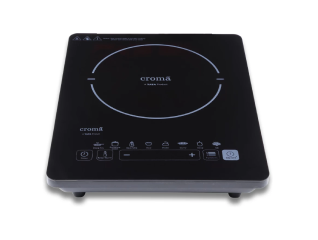
An induction cooktop uses electromagnetic energy to heat cookware directly. When you place a magnetic-base vessel on the glass surface, an electromagnetic field is created between the cooktop coil and the vessel base. This causes the metal in the vessel to heat up quickly and evenly. The glass surface itself stays relatively cool, and the cooktop automatically switches off when the vessel is removed.

For Indian households, 4 burner induction cooktops are a popular choice for families who cook multiple dishes at the same time. They offer the same multi-burner convenience as a gas stove with the added safety and efficiency of induction technology.


How a gas stove works

A gas stove uses LPG or PNG gas to produce an open flame that heats the cookware from below. You control the flame intensity manually using the knob. The heat transfers from the flame to the base and sides of the vessel. Gas stoves work with all types of cookware and do not need electricity, making them reliable even during power cuts, which are common in many parts of India.


Key difference in a nutshell

Induction heats the vessel directly and precisely, wasting very little energy. Gas heats the air around the vessel, losing a portion of energy as ambient heat. For Indian kitchens where cooking happens multiple times daily, this difference in efficiency can translate into meaningful savings over time.

Induction stove vs gas stove — Detailed comparison (2026)

Here is a detailed side-by-side comparison of induction stoves and gas stoves across the factors that matter most to Indian households. If you are considering a specific induction brand, the Impex induction cooktop range is worth exploring as a reliable and affordable option for Indian kitchens.


FeatureInduction stoveGas stove
Heating methodElectromagnetic — heats cookware directlyOpen flame — heats cookware from below
Energy efficiencyHigh — minimal heat lossModerate — significant ambient heat loss
SafetyVery high — no open flame, auto-shutoff, child lockModerate — open flame and gas leak risk
Cookware compatibilityMagnetic-base vessels onlyAll types including aluminium, clay, copper
Cooking speedFast — direct heating of vessel baseModerate — depends on flame intensity
Works during power cutsNo — requires electricityYes — works independently of electricity
Ease of cleaningVery easy — flat glass surfaceModerate — grates and burners require regular cleaning
Upfront costRs. 1,500 – Rs. 5,000Rs. 1,500 – Rs. 8,000
Running costLower — electricity is more efficient than LPGHigher — LPG prices have risen significantly in India
MaintenanceLow — minimal moving partsModerate — burners and pipes require periodic checking
Ideal forUrban apartments, small kitchens, safety-conscious householdsTraditional Indian cooking, rural areas, frequent power cut zones
Environmental impactLower — more efficient energy useHigher — LPG combustion releases CO2

Which is better — gas stove or induction for Indian kitchen needs?

The honest answer is that neither is universally better. It depends entirely on your specific Indian household needs. Here is a practical guide to help you decide, along with some portable induction options worth considering if you want to try induction cooking without committing to a full replacement.


Choose an induction stove if:

  • You live in a compact urban apartment where safety and easy cleaning are priorities
  • You have young children at home and want to eliminate open flame risk
  • You cook primarily with stainless steel or cast iron cookware
  • Your electricity supply is stable and reliable
  • You want to reduce your monthly fuel expenses — LPG prices in India have risen significantly in recent years
  • You prefer a modern, sleek kitchen aesthetic with minimal maintenance


Choose a gas stove if:

  • You regularly cook traditional Indian dishes that require direct flame — such as rotis on open fire, charred vegetables, or tadka
  • You use aluminium, clay, or copper cookware that is not induction-compatible
  • You live in an area with frequent power cuts where cooking reliability is essential
  • You have a larger family that cooks multiple dishes simultaneously and needs multi-burner flexibility at a lower upfront cost
  • You prefer the instant visual feedback of an open flame for precise manual heat control

The best of both worlds

Many Indian households in 2026 are choosing to use both. Keeping a gas stove as the primary cooking appliance for traditional dishes and heavy cooking, while adding a portable induction cooktop as a secondary option for quick everyday tasks like boiling water, making chai, or reheating food. This combination gives you the flexibility of gas with the safety and efficiency of induction — without the need to replace your existing kitchen setup entirely.


Get kitchen appliances on Easy EMIs with Bajaj Finserv


Upgrading your kitchen — whether with an induction stove, a new gas stove, or both — is simple and affordable with Bajaj Finserv's Easy EMI options. The entire process takes just a few minutes, and you can walk out with your new appliance the same day. Follow these steps.

  1. Find a partner store near you: Use the Bajaj Finserv store locator to find a nearby outlet such as Croma, Reliance Digital, or Vijay Sales — available across 4,000 cities in India.
  2. Choose your appliance: Pick the induction stove or gas stove that best suits your cooking needs and budget from the range available at the store or on Bajaj Mall.
  3. Select your EMI plan: At checkout, ask the store executive about the Bajaj Finserv Insta EMI Card or Easy EMI Loan. Choose a repayment tenure between 3 and 60 months, with zero down payment on select products.
  4. Complete payment and take it home: Once approved, your purchase is processed immediately and you can start cooking with your new appliance the same day.

You can also check your loan eligibility online in advance by entering your mobile number and OTP — making your in-store experience faster and smoother.

Frequently asked questions

Can I buy a cooktop on EMI?

Yes, you can easily bring home your preferred cooktop using Bajaj Finserv’s Easy EMI options. Whether you already have the EMI Network Card or are new to it, here’s how to begin:


If you have the Bajaj Finserv EMI Network Card:
 

  • Explore cooktops on Bajaj Mall: Choose from a wide range of the latest and most popular models.
  • Visit a partner store: Check out the product in person at any of Bajaj Finserv’s 1.5 lakh partner stores across 4,000 cities in India.
  • Use your EMI Network Card at checkout: Convert the cost into Easy EMIs that fit your monthly budget.
  • Zero down payment on select models: Take your chosen cooktop home without paying anything upfront.


If you do not have an EMI Network Card:

Check your Insta EMI Card eligibility online using your mobile number and OTP. If you are eligible, apply instantly and enjoy a smarter, more affordable way to buy your favourite product on Easy EMIs.

Is induction stove cheaper to run than gas stove?

In most cases, yes. Induction stoves heat cookware directly, wasting very little energy in the process. Gas stoves lose a significant portion of heat to the surrounding air. With LPG prices rising steadily in India over the past few years, the monthly running cost of a gas stove has increased considerably. For Indian households that cook multiple times daily, switching to an induction stove can result in meaningful savings on monthly fuel and electricity bills over time.

Can I use normal cookware on an induction stove?

Not all cookware works on an induction stove. Induction stoves require vessels with a flat magnetic base to function. Cast iron and stainless steel with a magnetic base work well. Aluminium, copper, clay, and regular non-stick pans without a magnetic base will not heat on an induction stove. The simplest way to check is to hold a magnet to the base of your vessel. If it sticks firmly, the vessel is induction-compatible. If not, you will need to replace it or switch to an infrared cooktop instead.

Which is more safer - Induction or gas stove?

Induction stoves are generally safer than gas stoves for Indian households. There is no open flame, no gas leak risk, and the glass surface stays relatively cool during cooking. Most induction stoves also include automatic shutoff and a child safety lock. Gas stoves carry a higher risk of accidental burns, gas leaks, and fire — particularly in compact Indian kitchens and households with young children. For safety-conscious Indian households, induction is the more reliable everyday choice.

Does induction stove work during power cuts?

No. Induction stoves require electricity to function and will not work during power cuts. This is one of the most important practical considerations for Indian households in areas with frequent or prolonged power outages. Gas stoves, on the other hand, work independently of electricity and remain fully functional during power cuts. Many Indian households address this by keeping a gas stove as a backup alongside their induction cooktop for uninterrupted cooking.

What is the lifespan of an induction stove and a gas stove?

A well-maintained induction stove typically lasts between 8 and 10 years. A good quality gas stove can last between 10 and 15 years with regular cleaning and burner maintenance. Gas stoves have fewer electronic components, making them less prone to electrical faults over time. Induction stoves have minimal moving parts but are more sensitive to voltage fluctuations, which are common in many parts of India. Using a voltage stabiliser with your induction stove can help extend its lifespan significantly.

Which stove is better for Indian cooking?

Both have their strengths for Indian cooking. Gas stoves are better suited for traditional Indian dishes that require direct flame, such as rotis on open fire, charred vegetables, and tadka. They also work with all cookware types including clay and aluminium. Induction stoves are better for everyday tasks like boiling, simmering dal, and making chai, offering faster heating and easier cleaning. For most modern Indian households, the best solution is to use both, keeping a gas stove for traditional cooking and an induction stove for quick everyday tasks.

Show More Show Less

Bajaj Finserv app for all your financial needs and goals

Trusted by 50 million+ customers in India, Bajaj Finserv App is a one-stop solution for all your financial needs and goals.

You can use the Bajaj Finserv App to:

  • Apply for loans online, such as Instant Personal Loan, Home Loan, Business Loan, Gold Loan, and more.
  • Invest in fixed deposits and mutual funds on the app.
  • Choose from multiple insurance for your health, motor and even pocket insurance, from various insurance providers.
  • Pay and manage your bills and recharges using the BBPS platform. Use Bajaj Pay and Bajaj Wallet for quick and simple money transfers and transactions.
  • Apply for Insta EMI Card and get a pre-qualified limit on the app. Explore over 1 million products on the app that can be purchased from a partner store on Easy EMIs.
  • Shop from over 100+ brand partners that offer a diverse range of products and services.
  • Use specialised tools like EMI calculators, SIP Calculators
  • Check your credit score, download loan statements and even get quick customer support—all on the app.

Download the Bajaj Finserv App today and experience the convenience of managing your finances on one app.

Disclaimer

1. Bajaj Finance Limited (“BFL”) is a Non-Banking Finance Company (BAJAJ FINANCE) and Prepaid Payment Instrument Issuer offering financial services viz., loans, deposits, Bajaj Pay Wallet, Bajaj Pay UPI, bill payments and third-party wealth management products. The details mentioned in the respective product/ service document shall prevail in case of any inconsistency with respect to the information referring to BFL products and services on this page.

2. All other information, such as, the images, facts, statistics etc. (“information”) that are in addition to the details mentioned in the BFL’s product/ service document and which are being displayed on this page only depicts the summary of the information sourced from the public domain. The said information is neither owned by BFL nor it is to the exclusive knowledge of BFL. There may be inadvertent inaccuracies or typographical errors or delays in updating the said information. Hence, users are advised to independently exercise diligence by verifying complete information, including by consulting experts, if any. Users shall be the sole owner of the decision taken, if any, about suitability of the same.