Here are a few questions that people ask about the inverters and power consumptions:
→ Does inverter capacity affect the electricity bill?
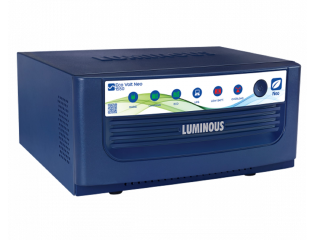
Capacity matters, but a high-capacity inverter does not automatically mean a high electricity bill. For example, Bajaj Mall currently has models ranging from the 1375VA EXIDE STAR12V1375 to higher-capacity options such as the Luminous Optimus 3500+. The right choice depends on the appliances you need to support. A higher-capacity model can make sense when you need to support a larger load. However, paying for extra capacity that you do not need increases the purchase cost without necessarily giving you a useful benefit.
→ Do frequent power cuts increase inverter power consumption?
Frequent power cuts can increase the amount of electricity needed for battery recharging. Every time your inverter supplies backup power, energy is removed from the battery. That energy has to be restored when mains electricity becomes available again. Longer outages can also discharge the battery more deeply. As a result, locations with regular and lengthy power cuts may see more electricity going towards inverter battery charging. However, much of the energy is still being used to run your normal appliances. The extra effect mainly comes from charging, standby, and conversion losses.
→ Pure sine wave or square wave: which is better?
The waveform is another factor to consider when choosing an inverter.
| Type | Suitable for | Buying consideration |
|---|
| Pure sine wave | Wider range of household appliances and sensitive electronics | Smooth and stable power output |
| Square wave | Basic electrical loads | Usually simpler but may not suit every appliance |
Several models in the price table use pure sine wave technology. These include the EXIDE STAR12V1375, EXIDE STAR12V1625, V-Guard Prime 2250, and Luminous Optimus 3500+.
The Microtek 899-991-T175 in the comparison uses a square wave system.
Your decision should therefore depend on the appliances you plan to connect, rather than price alone.
→ Can an efficient inverter lower energy losses?
A more efficient inverter loses less energy while converting DC battery power into AC power. This can reduce unnecessary conversion losses. However, it does not mean that the inverter itself will automatically lower your total household electricity consumption. Your bill still depends mainly on how many appliances you use, how long they run, the frequency of outages, battery condition, and charging efficiency.
→ Can solar inverters reduce grid electricity use?
Solar inverters work differently from standard home backup inverters. They convert DC electricity produced by solar panels into AC electricity for household use. A suitable solar system can reduce the amount of electricity drawn from the grid when solar generation is available. The actual reduction depends on factors such as solar-panel capacity, sunlight, battery storage, household consumption, and system design. A normal home inverter that charges its battery from grid electricity does not provide the same benefit.