






Published Mar 25, 2026 3 Min Read

Introduction: Understanding Beneficiary Led Construction in PMAY 2026

India faces a significant housing challenge, especially in urban and semi-urban areas, where a lack of affordable housing affects millions of families. For low-income households, the dream of owning a durable, weather-resistant home often remains out of reach. To address this issue, the Pradhan Mantri Awas Yojana Urban (PMAY-U) introduced the Beneficiary Led Construction (BLC) vertical.

BLC empowers Economically Weaker Section (EWS) families to construct or upgrade their homes on self-owned land with financial assistance from the central government. As PMAY continues its mission towards "Housing for All" by 2026, BLC plays a pivotal role in bridging the housing gap. This article will delve into the meaning, features, eligibility, and application process of BLC, helping you understand its benefits and how to apply for it.


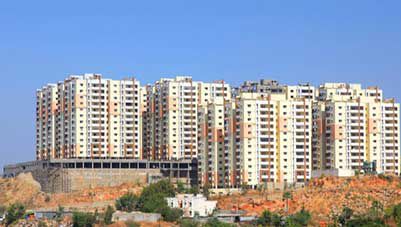
 

What is Beneficiary Led Construction (BLC)?

Beneficiary Led Construction Meaning

Beneficiary Led Construction (BLC) is a scheme under PMAY-U that allows families to construct or improve their homes on their own land. The beneficiaries, primarily from the EWS category, manage the construction process, ensuring their homes meet their specific needs and preferences.

BLC Full Form and Official Definition

The full form of BLC is Beneficiary Led Construction. According to the government, BLC is a vertical of PMAY-U that provides financial assistance to eligible families for constructing new houses or upgrading existing kutcha or semi-pucca houses into durable, all-weather pucca homes.

Why BLC Was Introduced Under PMAY

India faces a housing shortage, particularly in urban areas, where many families live in substandard conditions. BLC was introduced to address this issue by encouraging ownership-driven housing. It offers flexibility to beneficiaries to design homes that suit their needs while ensuring compliance with technical and safety standards.


Beneficiary Led Construction Under PMAY Urban Explained

Position of BLC Among PMAY Vertical Options

PMAY-U has four verticals:

  1. In-Situ Slum Redevelopment (ISSR)
  2. Credit Linked Subsidy Scheme (CLSS)
  3. Affordable Housing in Partnership (AHP)
  4. Beneficiary Led Construction (BLC)
VerticalTarget BeneficiariesKey Objective
In-Situ Slum RedevelopmentSlum DwellersRedevelopment of slums into pucca housing
Credit Linked Subsidy SchemeEWS, LIG, MIGSubsidised home loans for new or existing homes
Affordable Housing in PartnershipEWS FamiliesAffordable housing projects with private partners
Beneficiary Led ConstructionEWS Families with land ownershipConstruction or upgrading of homes on own land

Who Manages Construction in BLC Projects

In BLC, the construction process is primarily managed by the beneficiaries themselves. However, Urban Local Bodies (ULBs) and state governments provide technical support and ensure compliance with safety and quality standards.


Type of Houses Covered Under BLC

BLC covers two types of housing projects:

  1. Construction of new houses on self-owned land.
  2. Upgradation of existing kutcha or semi-pucca houses into all-weather pucca homes.


Key Features of Beneficiary Led Construction Scheme

Central Assistance Amount Under BLC

Beneficiaries under BLC are eligible for financial assistance ranging from Rs. 1.5 lakh to Rs. 2.5 lakh, depending on the state and specific project. The funds are disbursed directly to the beneficiary’s bank account through the Direct Benefit Transfer (DBT) system.


Construction Area and Technical Standards

The minimum carpet area for houses constructed under BLC is 30 square metres, which can extend up to 45 square metres. All homes must adhere to structural safety standards and be designed as all-weather pucca houses.


Instalment-Based Fund Release System

The financial assistance is released in instalments based on the progress of construction. Inspections and geo-tagging ensure transparency and compliance at each stage. Typically, funds are disbursed in three or four instalments.


Eligibility Criteria for Beneficiary Led Construction

Income Category Eligibility: EWS and LIG

The BLC scheme is primarily targeted at families belonging to the Economically Weaker Section (EWS), with an annual income of up to Rs. 3 lakh, and the Low-Income Group (LIG), with an annual income between Rs. 3 lakh and Rs. 6 lakh.


Land Ownership and Property Conditions

Applicants must own land or have registered property rights. In cases of joint ownership, all owners must provide consent. The land must be free from disputes and suitable for construction.


Who Is Not Eligible for BLC

  • Families owning a pucca house anywhere in India.
  • Previous beneficiaries of PMAY or other government housing schemes.


Documents Required for BLC Application

Personal and Identity Documents

  • Aadhaar card
  • Voter ID or PAN card
  • Passport-sized photographs

Land Ownership and Property Proof

  • Registered property documents
  • Land tax receipts

Bank Account and Aadhaar Linking

  • Bank account details
  • Aadhaar card linked to the bank account

Note: Additional documents may be required based on state-specific guidelines.


Step-by-Step Process to Apply for Beneficiary Led Construction

Online Application Process via PMAY Portal

  1. Visit the official PMAY-U portal.
  2. Navigate to the "Citizen Assessment" section.
  3. Select "BLC" and enter your Aadhaar details.
  4. Fill out the application form and upload the required documents.
  5. Submit the form and note the application reference number.


Offline Application Through ULB or Municipality

  1. Visit your local Urban Local Body (ULB) office.
  2. Collect the BLC application form.
  3. Submit the completed form along with the required documents.


Application Verification and Approval Stages

The application undergoes verification by ULB officials. Once approved, the beneficiary is notified, and the fund disbursement process begins.


Construction Timeline and Fund Disbursement Flow

Typical Construction Stages Under BLC

  1. Foundation laying
  2. Wall construction
  3. Roofing
  4. Final finishing


Inspection and Geo-Tagging Process

Each stage is inspected by ULB officials and geo-tagged for verification.


Time Taken to Receive Each Instalment

Funds are released within 30–60 days of inspection approval for each construction stage.


Real World Experience of Beneficiary Led Construction

Common Challenges Faced by Beneficiaries

  • Delays in fund disbursement
  • Rising construction costs
  • Difficulty in meeting technical compliance


Practical Tips to Avoid Rejection or Delays

  • Ensure all documents are accurate and complete.
  • Follow technical standards and seek ULB guidance.


Lessons from States Like Odisha, Tamil Nadu, Kerala

These states have successfully implemented BLC by streamlining application processes and providing robust technical support to beneficiaries.


Benefits of Beneficiary Led Construction for Indian Families

Financial and Ownership Benefits

BLC reduces the financial burden on low-income families and ensures homeownership.

Design Flexibility and Family Needs

Families can customise the design of their homes based on their specific requirements.

Long-Term Social and Economic Impact

BLC improves living standards, enhances social security, and contributes to economic growth.

Common Mistakes to Avoid While Applying for BLC

  • Submitting incomplete or incorrect documents.
  • Starting construction without prior approval.
  • Misunderstanding instalment release conditions.


Beneficiary Led Construction vs Other PMAY Options


FeatureBLCCLSSISSRAHP
Target GroupEWS familiesEWS, LIG, MIGSlum dwellersEWS families
Financial AssistanceRs. 1.5–2.5 lakhSubsidy on loansFull fundingSubsidised housing

Conclusion: Is Beneficiary Led Construction Right for You

BLC is an excellent choice for EWS families with self-owned land and a desire to construct or upgrade their homes. By ensuring proper documentation and compliance, beneficiaries can benefit from financial assistance and achieve their dream of owning a pucca house. Check with your local ULB for guidelines and start your journey towards homeownership today.

Frequently asked questions

What is Beneficiary Led Construction in PMAY?

Beneficiary Led Construction (BLC) is a key vertical under PMAY-Urban 2.0 that supports individuals from the Economically Weaker Section (EWS) who already own land but lack a pucca house. Instead of government-led construction, BLC allows beneficiaries to build or enhance their homes independently. This approach ensures flexibility in design and construction based on family needs, while still receiving financial assistance from the government to make housing more accessible and affordable.

How much subsidy is given under BLC?

Under PMAY-Urban 2.0, eligible beneficiaries can receive financial assistance of up to ₹2.5 lakh. This amount is typically shared between the Central and State governments. The central government contributes around ₹1.5 lakh, while the remaining amount is provided by the respective State or Union Territory. The subsidy is transferred directly to the beneficiary’s bank account through Direct Benefit Transfer (DBT), ensuring transparency and reducing delays in fund disbursement.

Can I apply for BLC if my land is jointly owned?

Yes, beneficiaries can apply for BLC even if the land is jointly owned. However, all co-owners must provide written consent for the construction. Additionally, PMAY guidelines encourage female ownership, so the property should ideally be registered in the name of a female family member or jointly with her. This condition improves eligibility and aligns with the scheme’s objective of promoting women’s empowerment through property ownership.

Is BLC available in rural areas?

No, Beneficiary Led Construction is only applicable under PMAY-Urban (PMAY-U), which focuses on housing needs in urban areas such as statutory towns and notified planning regions. For rural areas, the government has a separate scheme called PMAY-Gramin (PMAY-G). While both schemes aim to provide housing for all, their guidelines, funding structures, and implementation frameworks differ significantly.

How many instalments are released under BLC?

The financial assistance under BLC is typically released in 3 to 4 instalments, depending on the construction progress. A common pattern follows a 40:40:20 ratio—first instalment at foundation level, second at lintel or roof stage, and final upon completion. Each stage requires geo-tagged evidence of progress, ensuring transparency and accountability. This phased disbursement helps ensure funds are used appropriately and construction progresses as planned.

What happens if construction is delayed?

If construction is delayed, further instalments may be withheld since payments are linked to verified progress through geo-tagging. Generally, projects must be completed within 12–18 months. Delays due to negligence can result in cancellation or suspension of benefits by the Urban Local Body (ULB). However, in some cases involving cluster projects, authorities may allow flexibility if most units are completed, and funds can be adjusted accordingly.

Can existing house renovation be covered?

BLC does not cover minor renovations such as painting or small repairs. It is primarily meant for constructing a new pucca house or upgrading a kutcha house into a structurally sound dwelling. However, if an existing house is extremely small (below 21 sq. m.) or unsafe, it may qualify for expansion or enhancement up to a minimum of 30 sq. m., making it more livable and compliant with housing standards.

Is a bank loan mandatory for BLC?

No, taking a bank loan is not mandatory under the BLC vertical. The government provides a direct subsidy to eligible beneficiaries, which reduces the financial burden of construction. However, if the total construction cost exceeds the subsidy amount, beneficiaries can opt for a home loan to bridge the gap. Unlike CLSS, BLC is not dependent on loan eligibility, making it accessible to low-income households.

How long does PMAY BLC approval take?

The approval process for BLC typically takes between 3 to 6 months. During this period, the Urban Local Body (ULB) conducts field verification, checks land ownership documents, and geo-tags the site. Once verified, the application is forwarded to the State Level Sanctioning Committee (SLSC) and then to the Central Government for final approval and fund allocation. Timely and accurate documentation can help speed up the process.

Can BLC be combined with state housing schemes?

Yes, BLC is designed to work in coordination with state housing schemes. The central assistance is often supplemented by additional state-level grants, increasing the total financial support available to beneficiaries. In some cases, individuals can also benefit from other welfare schemes such as labor subsidies or material assistance programs. This convergence approach helps reduce out-of-pocket expenses and ensures better housing outcomes for beneficiaries.

Show More Show Less

Bajaj Finserv app for all your financial needs and goals

Trusted by 50 million+ customers in India, Bajaj Finserv App is a one-stop solution for all your financial needs and goals.

You can use the Bajaj Finserv App to:

  • Apply for loans online, such as Instant Personal Loan, Home Loan, Business Loan, Gold Loan, and more.
  • Invest in fixed deposits and mutual funds on the app.
  • Choose from multiple insurance for your health, motor and even pocket insurance, from various insurance providers.
  • Pay and manage your bills and recharges using the BBPS platform. Use Bajaj Pay and Bajaj Wallet for quick and simple money transfers and transactions.
  • Apply for Insta EMI Card and get a pre-qualified limit on the app. Explore over 1 million products on the app that can be purchased from a partner store on Easy EMIs.
  • Shop from over 100+ brand partners that offer a diverse range of products and services.
  • Use specialised tools like EMI calculators, SIP Calculators
  • Check your credit score, download loan statements and even get quick customer support—all on the app.

Download the Bajaj Finserv App today and experience the convenience of managing your finances on one app.

Disclaimer

1. Bajaj Finance Limited (“BFL”) is a Non-Banking Finance Company (NBFC) and Prepaid Payment Instrument Issuer offering financial services viz., loans, deposits, Bajaj Pay Wallet, Bajaj Pay UPI, bill payments and third-party wealth management products. The details mentioned in the respective product/ service document shall prevail in case of any inconsistency with respect to the information referring to BFL products and services on this page.

2. All other information, such as, the images, facts, statistics etc. (“information”) that are in addition to the details mentioned in the BFL’s product/ service document and which are being displayed on this page only depicts the summary of the information sourced from the public domain. The said information is neither owned by BFL nor it is to the exclusive knowledge of BFL. There may be inadvertent inaccuracies or typographical errors or delays in updating the said information. Hence, users are advised to independently exercise diligence by verifying complete information, including by consulting experts, if any. Users shall be the sole owner of the decision taken, if any, about suitability of the same.
For customer support, call Personal Loan IVR: 7757 000 000