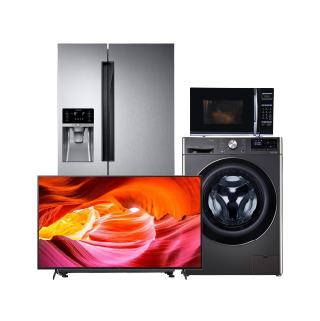
Upgrade to a single door refrigerator—a compact, energy-efficient solution ideal for small families, bachelors, and budget-conscious buyers. To make your purchase smooth and affordable, check your loan eligibility online and get instant access to your pre-approved loan limit. This lets you walk into any store financially prepared and shop without delays. With Bajaj Mall’s vast offline network of 1.5 lakh+ partner stores across 4,000+ cities, you can pay in Easy EMIs—spreading the cost into fixed, manageable monthly installments. On select models, enjoy zero down payment and free home delivery, making it even easier to bring home your new refrigerator without straining your wallet. A single door refrigerator is compact, energy-efficient, and ideal for small families or individuals. It features a built-in freezer, simple controls, and low power consumption. With its affordable price and space-saving design, it is a practical choice for those seeking reliable refrigeration without compromising on functionality or kitchen space.
Frequently Asked Questions
Yes, you can easily bring home your preferred refrigerator using Bajaj Finance’s Easy EMI options. Whether you already have the EMI Network Card or are new to it, here is how to begin:
• Explore refrigerators on Bajaj Mall: Choose from a wide range of the latest and most popular models.
• Visit a partner store: Check out the latest refrigerator in person at any of 1.5 lakh+ partner stores across 4,000 cities.
• Use your EMI Network Card at checkout: Convert the cost of your refrigerator into Easy EMIs that fit your monthly budget.
• Zero down payment on select models: Take your chosen refrigerator home without paying anything upfront.
If you do not have an EMI Network Card:
Check your Insta EMI Card eligibility and take the first step towards enjoying the affordability and convenience of Easy EMIs.
A frost-free refrigerator works by using an automatic defrost system consisting of a fan, evaporator coils, a defrost heater, and a timer. The fan circulates cold air evenly throughout the compartments to maintain consistent temperatures. At regular intervals, the defrost heater activates to melt any frost that has accumulated on the evaporator coils. The melted water drains into a tray at the bottom where it evaporates automatically, keeping the interior completely frost-free at all times.
To clean a frost-free freezer, first switch it off and remove all food items. Take out removable shelves and drawers and wash them separately with mild soap and warm water. Wipe the interior walls with a solution of baking soda and warm water to remove odours and stains. Dry all surfaces thoroughly before switching the refrigerator back on. Regular cleaning every three to four months helps maintain hygiene and optimal cooling performance throughout the year.
Yes, frost-free means you do not need to manually defrost the refrigerator at any point. The built-in automatic defrost system periodically activates to melt any frost that accumulates on the evaporator coils, draining the water away automatically. This completely eliminates the time-consuming process of manually switching off the refrigerator and waiting for ice to melt, making frost-free refrigerators significantly more convenient and low-maintenance compared to direct cool models for everyday household use.
Frost-free refrigerators use an automatic defrost method, also known as auto defrost or cycle defrost. This system uses a defrost heater, a defrost timer, and a defrost thermostat working together to periodically heat the evaporator coils and melt accumulated frost at regular intervals. The timer activates the heater several times a day, the thermostat monitors the temperature to prevent overheating, and the melted water drains into an evaporation tray located at the bottom of the refrigerator.
A frost-free refrigerator typically takes around 2 to 4 hours to produce a full tray of ice cubes under normal operating conditions with the freezer set to the recommended temperature of minus 18°C. The exact time may vary depending on the quantity of water filled, the ambient room temperature, how frequently the freezer door is opened, and the specific model's cooling capacity and compressor efficiency during regular daily household usage.
Frost-free refrigerators may consume more electricity than comparable direct-cool models because they use fans and automatic defrosting components. However, actual consumption depends on capacity, compressor technology, energy rating, usage, and operating conditions. An efficient frost-free model may use less electricity than a less efficient refrigerator of another type. Compare the BEE star rating and annual energy consumption in kilowatt-hours before buying to understand likely running costs.
Choose a frost-free refrigerator based on household size, grocery shopping frequency, cooking habits, and available kitchen space. A capacity of around 200–250 litres may suit couples or small families, while 300–400 litres may work for medium-sized households. Larger families may prefer models above 400 litres. These are general guidelines rather than fixed rules. Compare usable storage, freezer space, dimensions, energy ratings, and compartment layout before selecting a model.
Frost-free refrigerators automatically reduce frost build-up, eliminating the need for regular manual defrosting. Their fan-assisted cooling system helps distribute cold air across compartments, supporting more uniform temperatures. Direct-cool refrigerators generally use simpler cooling systems and may cost less initially, but often require manual defrosting. Frost-free models can consume more electricity because of their fans and defrosting components. Compare capacity, energy ratings, maintenance needs, and price to decide which type best suits your household.
{
"@context": "https://schema.org",
"@type": "FAQPage",
"mainEntity": [
{
"@type": "Question",
"name": "Can I buy a refrigerator on EMI?",
"acceptedAnswer": {
"@type": "Answer",
"text": "Yes, you can easily bring home your preferred refrigerator using Bajaj Finance’s Easy EMI options. Whether you already have the EMI Network Card or are new to it, here is how to begin: </p>
<p><strong>• Explore refrigerators on Bajaj Mall</strong>: Choose from a wide range of the latest and most popular models.</p>
<p><strong>• Visit a partner store</strong>: Check out the latest refrigerator in person at any of 1.5 lakh+ partner stores across 4,000 cities.</p>
<p><strong>• Use your EMI Network Card at checkout</strong>: Convert the cost of your refrigerator into Easy EMIs that fit your monthly budget.</p>
<p><strong>• Zero down payment on select models</strong>: Take your chosen refrigerator home without paying anything upfront.</p>
<p><strong>If you do not have an EMI Network Card:</strong></p>
<p>Check your <a href="https://www.bajajfinserv.in/insta-emi-card?sso-module=adp&dynamic-redirection=false">Insta EMI Card eligibility</a> and take the first step towards enjoying the affordability and convenience of Easy EMIs."
}
},
{
"@type": "Question",
"name": "How does a frost-free refrigerator work?",
"acceptedAnswer": {
"@type": "Answer",
"text": "A frost-free refrigerator works by using an automatic defrost system consisting of a fan, evaporator coils, a defrost heater, and a timer. The fan circulates cold air evenly throughout the compartments to maintain consistent temperatures. At regular intervals, the defrost heater activates to melt any frost that has accumulated on the evaporator coils. The melted water drains into a tray at the bottom where it evaporates automatically, keeping the interior completely frost-free at all times."
}
},
{
"@type": "Question",
"name": "How do I clean a frost-free freezer?",
"acceptedAnswer": {
"@type": "Answer",
"text": "To clean a frost-free freezer, first switch it off and remove all food items. Take out removable shelves and drawers and wash them separately with mild soap and warm water. Wipe the interior walls with a solution of baking soda and warm water to remove odours and stains. Dry all surfaces thoroughly before switching the refrigerator back on. Regular cleaning every three to four months helps maintain hygiene and optimal cooling performance throughout the year."
}
},
{
"@type": "Question",
"name": "Does frost-free mean no defrosting?",
"acceptedAnswer": {
"@type": "Answer",
"text": "Yes, frost-free means you do not need to manually defrost the refrigerator at any point. The built-in automatic defrost system periodically activates to melt any frost that accumulates on the evaporator coils, draining the water away automatically. This completely eliminates the time-consuming process of manually switching off the refrigerator and waiting for ice to melt, making frost-free refrigerators significantly more convenient and low-maintenance compared to direct cool models for everyday household use."
}
},
{
"@type": "Question",
"name": "Which type of defrosting method is used in a frost-free refrigerator?",
"acceptedAnswer": {
"@type": "Answer",
"text": "Frost-free refrigerators use an automatic defrost method, also known as auto defrost or cycle defrost. This system uses a defrost heater, a defrost timer, and a defrost thermostat working together to periodically heat the evaporator coils and melt accumulated frost at regular intervals. The timer activates the heater several times a day, the thermostat monitors the temperature to prevent overheating, and the melted water drains into an evaporation tray located at the bottom of the refrigerator."
}
},
{
"@type": "Question",
"name": "How much time does it take to make ice in a frost-free refrigerator?",
"acceptedAnswer": {
"@type": "Answer",
"text": "A frost-free refrigerator typically takes around 2 to 4 hours to produce a full tray of ice cubes under normal operating conditions with the freezer set to the recommended temperature of minus 18°C. The exact time may vary depending on the quantity of water filled, the ambient room temperature, how frequently the freezer door is opened, and the specific model's cooling capacity and compressor efficiency during regular daily household usage."
}
},
{
"@type": "Question",
"name": "Do frost-free refrigerators consume more electricity than direct-cool models?",
"acceptedAnswer": {
"@type": "Answer",
"text": "Frost-free refrigerators may consume more electricity than comparable direct-cool models because they use fans and automatic defrosting components. However, actual consumption depends on capacity, compressor technology, energy rating, usage, and operating conditions. An efficient frost-free model may use less electricity than a less efficient refrigerator of another type. Compare the BEE star rating and annual energy consumption in kilowatt-hours before buying to understand likely running costs."
}
},
{
"@type": "Question",
"name": "How do I choose the right frost-free refrigerator capacity for my family?",
"acceptedAnswer": {
"@type": "Answer",
"text": "Choose a frost-free refrigerator based on household size, grocery shopping frequency, cooking habits, and available kitchen space. A capacity of around 200–250 litres may suit couples or small families, while 300–400 litres may work for medium-sized households. Larger families may prefer models above 400 litres. These are general guidelines rather than fixed rules. Compare usable storage, freezer space, dimensions, energy ratings, and compartment layout before selecting a model."
}
},
{
"@type": "Question",
"name": "What are the benefits of a frost-free refrigerator compared to direct-cool models?",
"acceptedAnswer": {
"@type": "Answer",
"text": "Frost-free refrigerators automatically reduce frost build-up, eliminating the need for regular manual defrosting. Their fan-assisted cooling system helps distribute cold air across compartments, supporting more uniform temperatures. Direct-cool refrigerators generally use simpler cooling systems and may cost less initially, but often require manual defrosting. Frost-free models can consume more electricity because of their fans and defrosting components. Compare capacity, energy ratings, maintenance needs, and price to decide which type best suits your household."
}
}
]}