
How Many Solar Panels Are Required For A 1kW System

How Many Solar Panels Are Required For A 1kW System

Calculate how many solar panels are required for a 1kW system based on panel wattage, efficiency, and roof space. Fund your solar panel installation on Easy EMIs with Bajaj Finance.

Get a pre-approved loan offer of up to Rs. 5 lakh

Quick approval | Flexible tenure options | Zero approval fees

In summary

A 1kW solar power system is a practical option for homes with modest electricity requirements. The number of solar panels required depends on the panel wattage, available installation space, and expected energy generation. Understanding these factors helps select a system that delivers reliable performance and long-term savings.


  • Learn how many solar panels are typically required to build a 1kW solar power system based on different panel wattages.
  • Compare common solar panel wattages and estimate the number of panels needed for an efficient 1kW installation.
  • Understand the roof space required for a standard 1kW solar system and the factors that influence installation planning.
  • Explore the key benefits, technical specifications, and approximate prices of 1kW solar power systems in India.
  • Choose a suitable 1kW solar setup based on electricity requirements, available installation space, and long-term energy goals.

You can also buy a new solar panel on Easy EMIs at over 1.5 lakh partner stores across 4,000 cities, including Reliance Digital, Croma, and Vijay Sales. 
How does a 1kW solar system work?

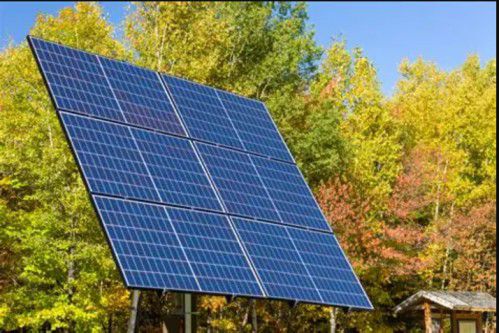
A 1kW solar system works by converting sunlight into electricity that can power basic household appliances and reduce dependence on grid electricity. Solar panels absorb sunlight and generate direct current (DC) electricity, which is sent to a solar inverter. The inverter converts DC electricity into alternating current (AC) for household use. In an on-grid system, surplus electricity can be exported to the grid where net metering is available. Off-grid and hybrid systems can store excess power in batteries for later use. Actual electricity generation depends on sunlight, panel efficiency, shading, and installation conditions.

How many solar panels are required for a 1kW solar system?

A 1kW solar system generally requires 2–4 solar panels, depending on the wattage of each panel. Higher-wattage panels require fewer units and can help reduce the roof space needed for installation.

Panel wattageApproximate number of panels requiredSuitable installation
250 W4 panelsSmall residential solar setups
335 W3 panelsHomes with moderate roof space
400 W3 panelsEfficient residential installations
500 W2 panelsSpace-saving solar installations
550 W2 panelsHigher-capacity rooftop systems

The final panel count depends on the selected panel's rated output and system design. For example, 3 × 400 W panels provide 1.2kW, while 2 × 550 W panels provide 1.1kW, meaning the installed panel capacity may be slightly higher than 1kW.

How to calculate the number of solar panels required for a 1kW solar system?

A 1kW solar system generally requires 2–4 solar panels, depending on each panel's wattage. You can estimate the required number using a simple calculation based on the system capacity.


Formula:

Number of solar panels required = Total system capacity (W) ÷ Panel wattage (W)

  • Convert the system capacity into watts: A 1kW solar system equals 1,000 W, which is the target rated capacity of the system.
  • Check the panel wattage: Identify the rated output of the selected solar panel, such as 250 W, 400 W, 500 W, or 550 W.
  • Calculate the panel count: Divide 1,000 W by the individual panel wattage. For example, 1,000 ÷ 250 = 4 panels, while 1,000 ÷ 500 = 2 panels.
  • Round up when required: If the calculation does not produce a whole number, the panel count may be rounded up, resulting in a slightly oversized solar array.

The final configuration depends on panel specifications, available roof space, inverter sizing, shading, and overall system design.

What are the specifications of a 1kW solar system?

A 1kW solar system combines solar panels, an inverter, and mounting equipment to generate usable electricity. Its exact specifications depend on the panel technology, system type, and installation requirements.

SpecificationDetails
System capacity1kW
Solar panel typeMonocrystalline or polycrystalline panels
Number of panelsTypically 2–4 panels, depending on panel wattage
Inverter capacityAround 1kW, matched to the system design
Mounting structureRooftop or ground-mounted installation
Required roof spaceApproximately 80–100 sq. ft., depending on panel size and layout
Battery optionAvailable for off-grid and hybrid systems
Expected panel lifespanAround 25 years or more
MaintenancePeriodic panel cleaning and system inspection

These specifications provide a useful starting point when comparing 1kW solar systems. The final configuration should consider available roof space, sunlight exposure, electricity requirements, system type, and individual component specifications.

What is the price of a 1kW solar system in India?

A 1kW solar system in India typically costs around Rs. 65,000 to Rs. 1,80,000, depending on the system type, battery requirements, equipment, and installation.


System typeApproximate price
On-grid 1kW solar systemRs. 65,000–Rs. 80,000
Off-grid 1kW solar systemRs. 90,000–Rs. 1,50,000
Hybrid 1kW solar systemRs. 1,00,000–Rs. 1,80,000

Prices may vary based on the solar panel and inverter brand, battery capacity, mounting structure, installation requirements, location, and applicable government incentives. Comparing the complete system cost and components can help you choose a 1kW solar setup that balances upfront investment with long-term electricity savings.

What are my financing options to buy a solar panel?

Bajaj Finance offers two financing options at over 1.5 lakh partner stores across 4,000 cities in India. Here is how they compare:


OptionLimitKey features
Bajaj Finance Insta EMI CardPre-approved card loan offer up to Rs. 6 lakhZero annual fee; 3 to 60 months tenure; works at 1.5 lakh partner stores; 1 million eligible products
Bajaj Finance Easy EMI LoanLoan limit up to Rs. 5 lakhQuick loan approval; 3 to 60 months tenure; basic KYC documents needed; ideal for higher-value purchases

How to choose? Both options require you to be physically present at a partner store. The Insta EMI Card is ideal for shoppers who want to purchase across multiple categories over time. The Easy EMI Loan suits buyers looking to finance a higher-value purchase in a single transaction.

Get electronics and appliances on Easy EMIs with Bajaj Finance

Upgrading your home with the latest electronics and appliances is now easier and more affordable with Bajaj Finance’s flexible financing options. Follow these steps to get started:


  • Explore products on Bajaj Mall: Browse a wide range of electronics and appliances from trusted brands on Bajaj Mall. Compare features like energy ratings, storage capacity, performance settings, and design to choose the right product for your home.
  • Visit a partner store: Once you shortlist a model, step into any of Bajaj Finance’s 1.5 lakh partner stores across 4,000 cities in India. See the product in person, talk to experts, and make a confident decision.
  • Choose the Easy EMI Loan option: At checkout, select the Bajaj Finance Easy EMI Loan. Avail financing of up to Rs. 5 lakh and split the cost into convenient monthly instalments. Some products also come with a zero down payment option.
  • Check your loan eligibility online: Plan better by checking your loan eligibility in minutes. Simply enter your mobile number and OTP to know your pre-approved limit.
  • Use the Insta EMI Card for purchases up to Rs. 3 lakh: Already own the Bajaj Finance Insta EMI Card? Use it for instant, paperless checkout and convert your purchases of up to Rs. 3 lakh into Easy EMIs.

Save more with Smart Savings Calculator

Combine the best offers, EMI plans, and exclusive vouchers with Smart Savings Calculator to save big.

20k+ people used their offers at the store

Frequently asked questions

General

How many solar panels are needed for a 1kW solar system?

A 1kW solar system generally requires around 2 to 4 solar panels, depending on the wattage of each panel. Lower-wattage panels require more units, while higher-capacity panels can achieve the same output with fewer panels. For example, a system using 250 W panels may need four panels, while 500 W panels may require two panels. The exact number depends on panel efficiency, sunlight conditions, and system design.

A 1kW solar system can generally generate around 3 to 5 units of electricity per day, depending on sunlight availability, location, weather conditions, and overall system efficiency. Monthly energy generation may vary due to seasonal changes and installation factors. Proper panel positioning, suitable installation angles, and regular maintenance help improve electricity output and ensure the system delivers reliable long-term performance.

Yes, a 1kW solar system is suitable for small homes with moderate electricity requirements. It can support everyday appliances such as lights, fans, routers, and other low-power devices. However, the suitability depends on daily electricity consumption, available roof space, and sunlight exposure. Homes with higher energy needs may require larger solar systems to meet their electricity requirements effectively.

A 1kW solar system generally requires around 80 to 100 square feet of shadow-free roof space for installation. The exact space requirement depends on panel wattage, efficiency, mounting structure, and spacing between panels. A properly planned installation area ensures better sunlight exposure, easier maintenance, and improved system performance. Open spaces without shade are ideal for maximising electricity generation.

Yes, a 1kW solar system can work without a battery when installed as an on-grid solar system. It can generate electricity during the day and supply power directly to connected appliances while excess energy may be exported to the grid. Battery-based systems are useful when backup power is required during outages. The choice depends on electricity needs, budget, and installation requirements.

Show More Show Less

Disclaimer

While care is taken to update the information, products, and services included in or available on our website and related platforms/websites, there may be inadvertent inaccuracies or typographical errors or delays in updating the information. The material contained in this site, and on associated web pages, is for reference and general information purpose and the details mentioned in the respective product/service document shall prevail in case of any inconsistency. Subscribers and users should seek professional advice before acting on the basis of the information contained herein. Please take an informed decision with respect to any product or service after going through the relevant product/service document and applicable terms and conditions. In case any inconsistencies observed, please click on reach us.

*Terms and conditions apply