330W Solar Panel: Price, Features and Specifications

330W Solar Panel: Price, Features and Specifications

A 330 W solar panel is suitable for residential and small commercial solar setups, offering a balance between power generation, installation space, and cost. Fund your solar panel installation on Easy EMIs with Bajaj Finance.

Get a pre-approved loan offer of up to Rs. 5 lakh

Quick Approval | Flexible Tenure Options | Zero Approval Fees

In summary

A 330 W solar panel can be a practical option for users planning a rooftop system and comparing capacity, output, pricing, and installation requirements.


  • Suitable for residential rooftops and small commercial installations
  • Generates electricity based on sunlight availability, panel orientation, location, and weather conditions
  • Requires fewer panels than lower-wattage models to achieve the same overall system capacity
  • Available in different technologies, including monocrystalline and polycrystalline variants
  • Prices vary depending on the brand, panel technology, efficiency, warranty, and seller
  • Can be used in on-grid, off-grid, or hybrid solar systems based on system requirements
  • Proper installation, inverter selection, and battery requirements can affect overall system performance

You can also buy a new solar panel on Easy EMIs at over 1.5 lakh partner stores across 4,000 cities, including Reliance Digital, Croma, and Vijay Sales. 


What is a 330W solar panel

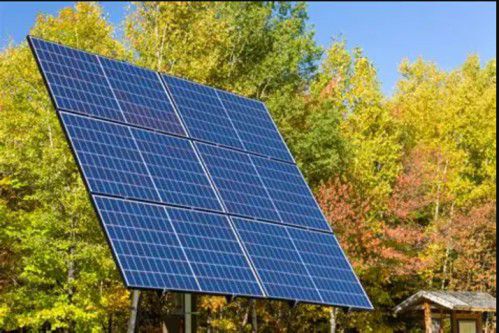
A 330W solar panel is a photovoltaic module designed to produce up to 330 watts of power under standard test conditions. It converts sunlight into electricity using solar cells, typically made from monocrystalline or polycrystalline silicon. These panels can be used in residential rooftop systems, small commercial installations, and off-grid solar setups. Actual electricity generation varies with sunlight, panel orientation, temperature, shading, and system efficiency. Multiple 330W panels can be connected to create a larger solar array based on the required system capacity. When choosing one, consider efficiency, dimensions, warranty, durability, and compatibility with the inverter or charge controller.


What are the key features and specifications of a 330 W solar panel?

A 330 W solar panel combines reliable power output with durable construction for residential, commercial, and off-grid installations. Specifications vary depending on the manufacturer and technology.


Features


  • Rated power: A 330 W solar panel delivers a maximum rated output of 330 watts under standard test conditions.
  • Cell technology: Models may use monocrystalline or polycrystalline cells, with efficiency levels varying according to cell quality and panel construction.
  • Panel efficiency: Typical efficiency generally ranges from approximately 17% to 20%, depending on the manufacturer, cell technology, and module design.
  • Voltage and current: Electrical specifications vary by model, including maximum power voltage, open-circuit voltage, and operating current required for system compatibility.
  • Panel dimensions: Physical dimensions and weight differ across manufacturers, affecting rooftop space requirements, mounting arrangements, and ease of installation during setup.
  • Durability: Most panels feature tempered glass, weather-resistant frames, and protective layers designed to withstand outdoor conditions throughout their operational lifespan.

Specifications


SpecificationTypical value
Rated power330 W
Cell technologyMonocrystalline or polycrystalline
Module efficiencyAround 16%–20%
Cell configurationCommonly 60 or 72 cells
Operating temperatureAround -40°C to +85°C
Frame materialAnodised aluminium
Front coverTempered glass
Performance warrantyOften up to 25 years, depending on brand

How many units of electricity can a 330 W solar panel generate in a day?

A 330 W solar panel's daily electricity generation depends on peak sunlight hours, location, weather, panel orientation, shading, and system losses. 


  • Peak output calculation: Under ideal conditions, a 330 W panel produces 0.33kW of power for every hour of effective peak sunlight.
  • Daily generation estimate: With approximately five peak sunlight hours, a 330 W panel can generate around 1.65kWh, or 1.65 electricity units, daily.
  • Monthly output: At 1.65 units daily, the panel may generate approximately 49.5 units monthly under consistent sunlight and favourable operating conditions.
  • Seasonal variation: Electricity generation may decrease during cloudy or rainy periods and increase when longer, clearer sunlight conditions are available.
  • Panel orientation: Proper tilt and direction help maximise sunlight exposure, while shading from trees or buildings can significantly reduce daily electricity generation.
  • System losses: Inverter losses, wiring resistance, dust accumulation, and high operating temperatures can reduce actual generation below calculated estimates.

Actual output will vary throughout the year based on local conditions and system design. Monitoring real generation helps assess performance and identify maintenance requirements.

What appliances can a 330W solar panel run during daylight?

A 330W solar panel can support low-power appliances during strong sunlight, but actual usage depends on solar output, inverter efficiency, battery storage, and appliance power requirements.


  • LED lights: Several LED bulbs can operate simultaneously because their combined electricity consumption usually remains well below the panel's rated output.
  • Ceiling fans: One energy-efficient ceiling fan may run during strong sunlight, depending on its wattage and the power consumed by other connected appliances.
  • Television: A small or energy-efficient LED television may operate during daylight when sufficient solar power is available and system losses remain manageable.
  • Wi-Fi router: A standard Wi-Fi router consumes relatively little electricity, making it suitable for operation alongside other low-power devices during daylight.
  • Laptop charging: A laptop can usually be charged using solar power during peak sunlight, provided the inverter and connected system support its charging requirements.
  • Mobile charging: Multiple smartphones can be charged because individual chargers generally require relatively low power compared with the panel's rated 330W capacity.

A single 330W panel is generally unsuitable for continuously powering high-wattage appliances. Combining multiple panels and correctly sized system components supports larger household electricity requirements.

What is the price of a 330W solar panel in India?

A 330 W solar panel typically costs around Rs. 7,000 to Rs. 15,000 in India, depending on the brand, cell technology, seller, and availability. Recent examples include Vikram Solar at Rs. 8,999, Tata Solar at Rs. 9,570, Havells at Rs. 12,699, and Adani at Rs. 14,363.


330 W solar panelIndicative price
Vikram Solar Eldora Neo 72Rs. 8,999
Tata Solar TP330Rs. 9,570
Havells 330 WRs. 12,699
Adani 330 WRs. 14,363

These are panel-only prices and do not include the inverter, mounting structure, wiring, installation, or other balance-of-system costs.


Disclaimer: Each model's features, availability, and pricing are subject to change and may vary. For the most accurate and up-to-date information, please visit the official website.

What are my financing options to buy solar panels?

Bajaj Finance offers two financing options at over 1.5 lakh partner stores across 4,000 cities in India. Here is how they compare:

OptionLimitKey features
Bajaj Finance Insta EMI CardPre-approved card loan offer up to Rs. 6 lakh3 to 60 months tenure; works at 1.5 lakh partner stores; 1 million eligible products
Bajaj Finance Easy EMI LoanLoan limit up to Rs. 5 lakhQuick loan approval; 3 to 60 months tenure; basic KYC documents needed; ideal for higher-value purchases

How to choose? Both options require you to be physically present at a partner store. The Insta EMI Card is ideal for shoppers who want to purchase across multiple categories over time. The Easy EMI Loan suits buyers looking to finance a higher-value purchase in a single transaction.

How do I buy a solar panels on EMI at a Bajaj Finance partner store

Upgrading your home with the latest electronics and appliances is now easier and more affordable with Bajaj Finance’s flexible financing options. Follow these steps to get started:


  • Explore products on Bajaj Mall: Browse a wide range of electronics and appliances from trusted brands on Bajaj Mall. Compare features like energy ratings, storage capacity, performance settings, and design to choose the right product for your home.
  • Visit a partner store: Once you shortlist a model, step into any of Bajaj Finance’s 1.5 lakh partner stores across 4,000 cities in India. See the product in person, talk to experts, and make a confident decision.
  • Choose the Easy EMI Loan option: At checkout, select the Bajaj Finance Easy EMI Loan. Avail financing of up to Rs. 5 lakh and split the cost into convenient monthly instalments. Some products also come with a zero down payment option.
  • Check your loan eligibility online: Plan better by checking your loan eligibility in minutes. Simply enter your mobile number and OTP to know your pre-approved limit.
  • Use the Insta EMI Card for purchases up to Rs. 3 lakh: Already own the Bajaj Finance Insta EMI Card? Use it for instant, paperless checkout and convert your purchases of up to Rs. 3 lakh into Easy EMIs.  

FAQs

General

How many units of electricity does a 330 W solar panel produce in a day?

A 330 W solar panel can typically generate around 1.2 to 1.6 units (kWh) per day with approximately 4–5 peak-sun hours. Actual output depends on location, season, shading, temperature, panel orientation, dust, and overall system losses.

Yes. A 330 W solar panel can still generate electricity using diffuse sunlight on cloudy or rainy days, but its output will generally be lower than under clear, direct sunlight. The reduction varies with cloud density, weather conditions, panel technology, and installation.

There is no universal size for a 330 W solar panel. Many older 72-cell models are roughly 2 metres long and 1 metre wide and may weigh around 20–25 kg. Exact dimensions and weight vary by manufacturer and cell configuration, so always check the model's datasheet before installation.

It can be, but compatibility depends on the panel's voltage and current specifications and the inverter or charge controller's input limits. A suitable MPPT charge controller may be required between the panel and battery. Check the panel's Voc and Vmp against the equipment specifications before connecting the system.

Yes, if you want to power standard household AC appliances. A solar panel produces DC electricity, while most home appliances use AC electricity, so an inverter converts DC into usable AC power. DC-only applications may not require an inverter, provided the voltage and other system components are compatible.

Show More Show Less

Disclaimer

While care is taken to update the information, products, and services included in or available on our website and related platforms/websites, there may be inadvertent inaccuracies or typographical errors or delays in updating the information. The material contained in this site, and on associated web pages, is for reference and general information purpose and the details mentioned in the respective product/service document shall prevail in case of any inconsistency. Subscribers and users should seek professional advice before acting on the basis of the information contained herein. Please take an informed decision with respect to any product or service after going through the relevant product/service document and applicable terms and conditions. In case any inconsistencies observed, please click on reach us.

*Terms and conditions apply